The Zone of Interest
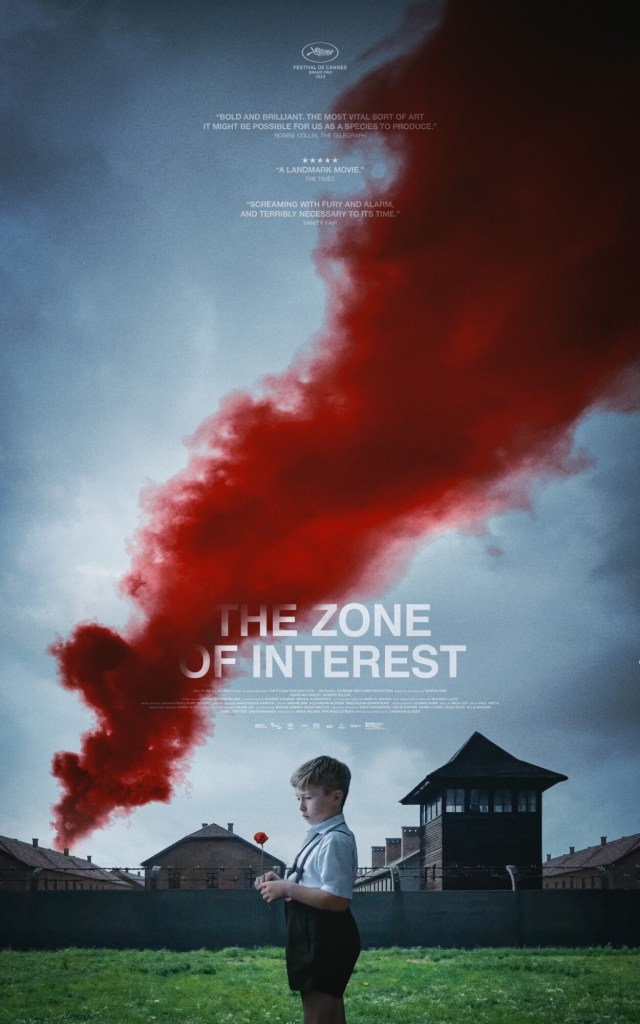
Director: Jonathan Glazer.
Screenplay: Jonathan Glazer.
Starring: Christian Friedel, Sandra Hűller, Johann Karthaus, Luis Noah Witte, Nele Ahrensmeier, Lilli Falk, Anastazja Drobniak, Cecylia Pekala, Kalman Wilson.
“I wasn’t really paying attention… I was too busy thinking how I would gas everyone in the room”
Jonathan Glazer isn’t a director known for being prolific, but he is known for being precise. In over two decades, he’s directed just four feature films, and each one leaves a deep impression. From the volcanic energy of Sexy Beast (2000), to the haunting intimacy of Birth (2004), and the surreal alienation of Under the Skin (2013), Glazer doesn’t just direct movies – he dissects human nature. With The Zone of Interest, he reaches a new pinnacle of controlled horror, presenting perhaps his most unnerving and audacious work yet.
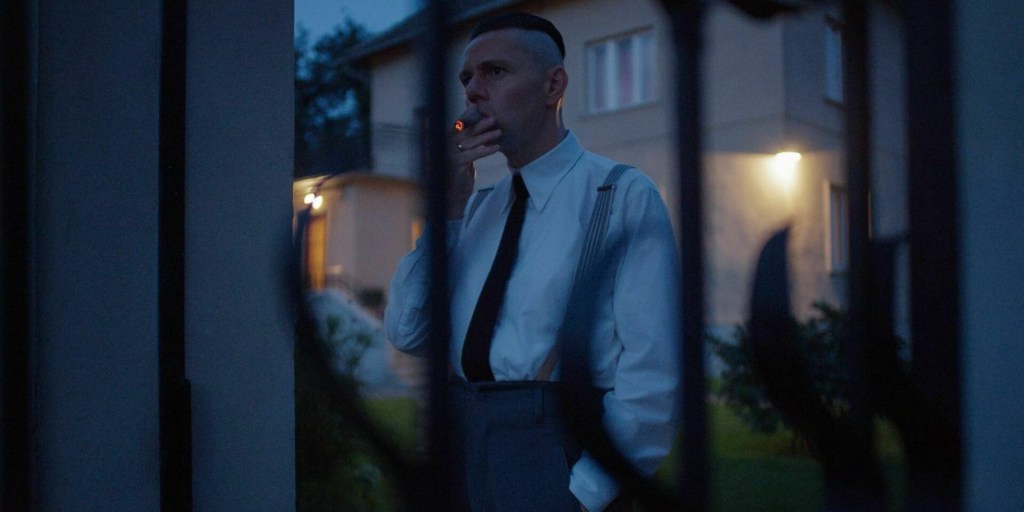
Plot: Set beside the walls of Auschwitz, we follow the lives of Rudolf Höss (Christian Friedel), the camp commandant, and his wife Hedwig (Sandra Hüller), as they raise a family in what could almost be mistaken for an idyllic countryside estate. However, this paradise is next door to one of history’s greatest atrocities.
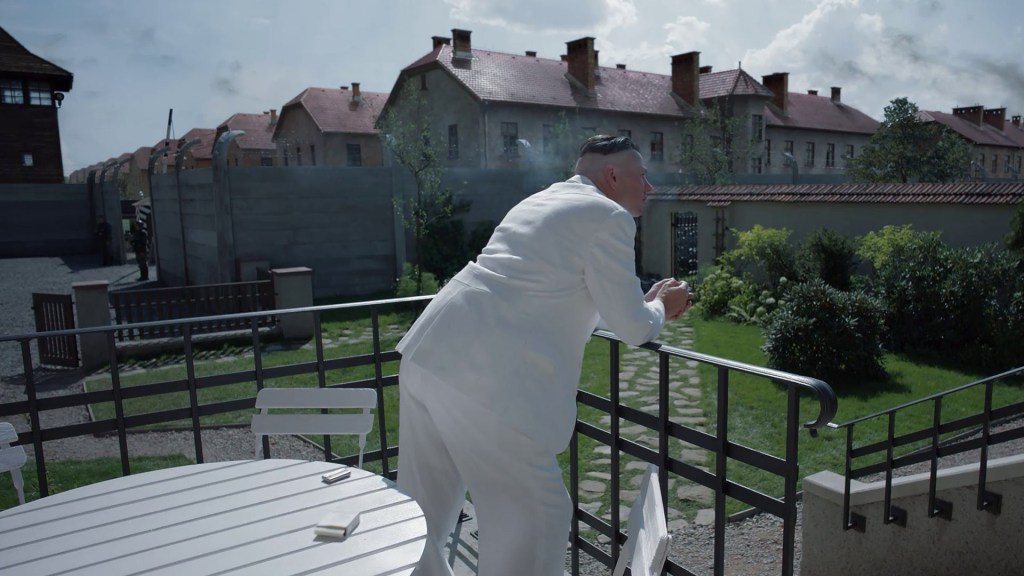
Glazer’s narrative doesn’t unfold in the gas chambers or the barracks – it’s nestled in the house with the red shutters, the garden blooming with life, and the children playing while smoke rises behind them. This isn’t a film about the Holocaust in the conventional sense – it’s about the horrifying normality of the people who lived beside it and he makes stylistic choices that serve as more than just aesthetic – he positions cameras at a distance, often static, creating the sense that we are eavesdropping on domestic life. He utilised this approach to great effect in Under the Skin, whereby he used genuine citizens of Glasgow and filmed them in secret to get an authenticity in their responses in certain scenes which leant the performances to be less “performed” in the traditional sense and more “observed,” as though captured by surveillance. This clinical framing forces us into an uncomfortable role: we are witnesses to lives lived in the shadow of genocide, and our inability to look away implicates us. It’s not just the characters who are complicit, we become complicit too.
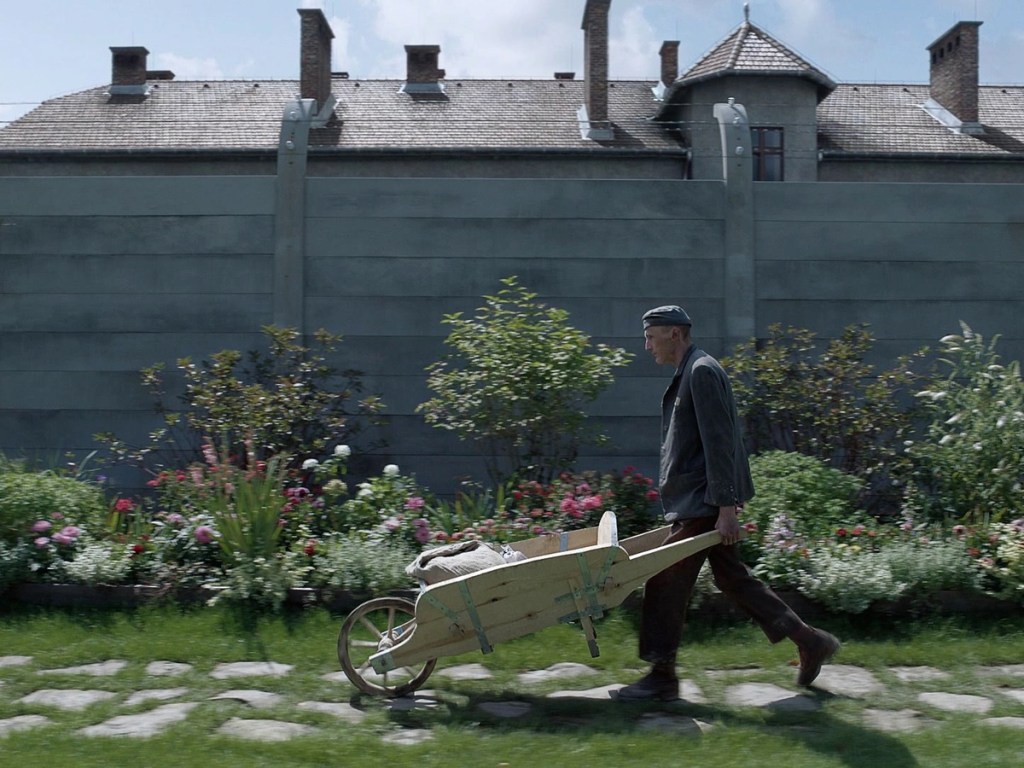
There’s an emotional chill that pervades the film. Conversations about extermination logistics – how to fit more bodies, how to burn them faster – are delivered in the same tone one might use to discuss home renovations. This scene, in particular, involving a casual conversation about improving the cremation process, is incredibly disturbing and sets the tone for entire film where its power lies in its restraint. Auschwitz itself is never seen, and that’s precisely the point. The screams, the gunshots, the ever-present smoke – they all linger at the edges of the frame, just as they linger at the edge of the characters’ consciousness. Glazer weaponises absence. The horror is heard, not seen. Felt, not shown.
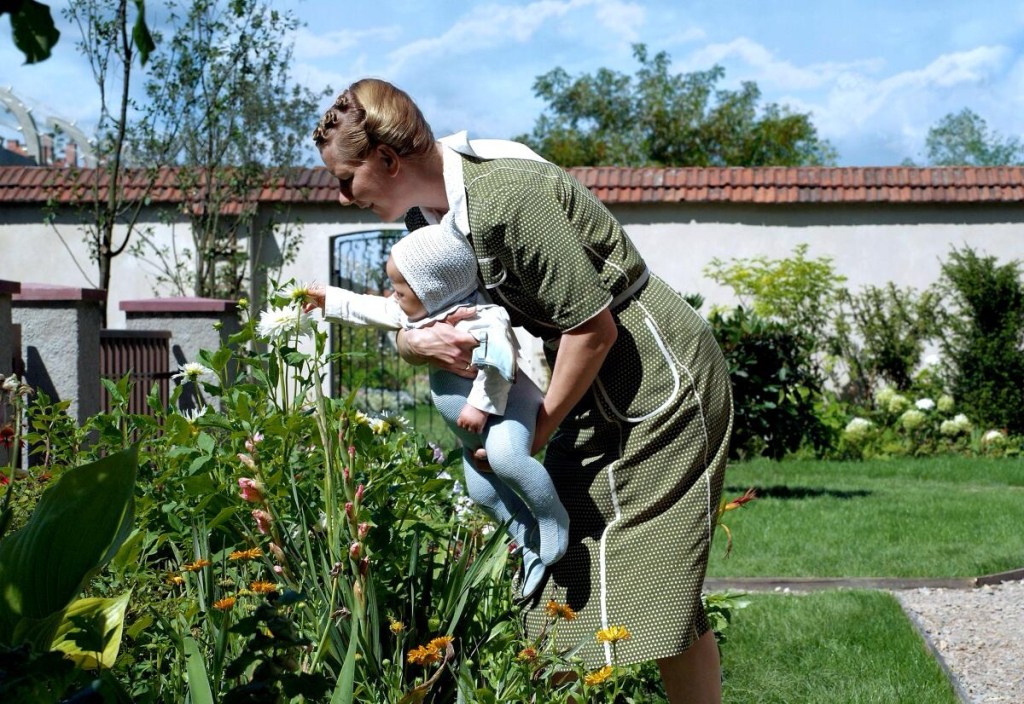
One of the most jarring sequences features images of bees pollinating and flowers blooming, soundtracked by human torment in the background. It’s a devastating juxtaposition: the cycle of nature continues as humanity regresses into mechanised slaughter. Sandra Hüller’s Hedwig has a steely resolve and eerie pride, embodying the moral rot at the heart of the film. She’s dubbed the “Queen of Auschwitz” and seems to revel in the title. Her posture is hunched, her voice hollow, and her worldview chillingly devoid of empathy. She tends to her garden while horrors unfold behind the wall with the garden becoming a metaphor for cultivated ignorance.
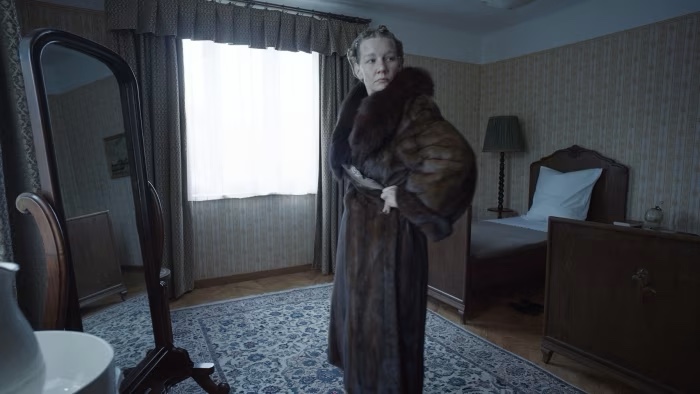
The theme that pulses beneath every scene is the banality of evil. These characters are not mustache-twirling villains; they are parents, spouses, neighbours. They are “normal” people living in grotesquely abnormal circumstances – and rationalising it. Glazer’s message is not only historical but disturbingly contemporary. The parallels he drew in his Oscar speech, where he referenced modern-day atrocities committed against the Palestinians in Gaza, remind us that the seeds of dehumanisation are not a thing of the past.
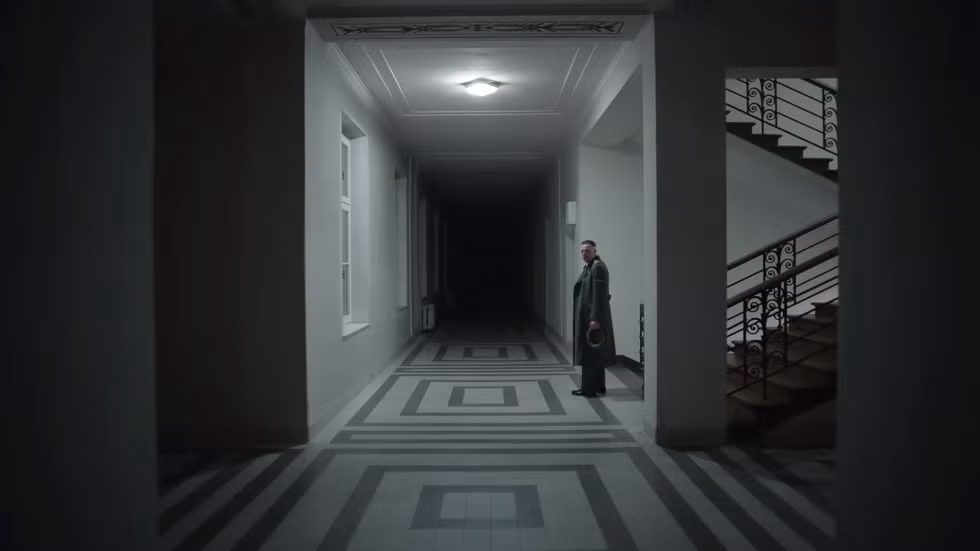
Verdict: A harrowing, cerebral experience. It doesn’t confront you with spectacle – it corrodes you with silence. It’s one of the most unsettling films of the decade, not because of what it shows, but because of what it hides. The horror is out of sight, but never out of mind. This is Glazer’s most restrained and devastating work yet. It may not be an easy watch, and it’s certainly not a conventional one, but it’s absolutely essential. A meditation on cruelty, indifference, and the quiet evil of everyday life, The Zone of Interest is less a film and more a moral interrogation.

Mark Walker
Trivia: The title is an expression used by the Third Reich to refer to the 40 square kilometer area around Auschwitz.
 MARKED MOVIES
Leave a comment