Archive for the Drama Category

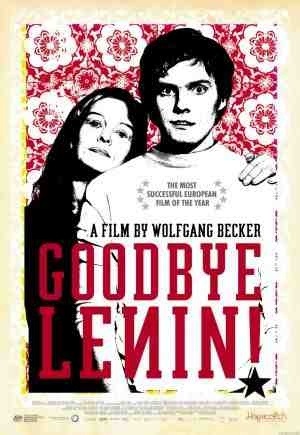
Goodbye Lenin! * * * * *

Posted in Comedy, Drama, Foreign Language with tags on June 17, 2012 by Mark Walker

20120617-172744.jpg

Director: Wolfgang Becker.
Screenplay: Wolfgang Becker, Bernd Lichtenberg.
Starring: Daniel Brühl, Katrin Sass, Chulpan Khamatova, Maria Simon, Florian Lukas, Alexander Beyer, Burghart Klaussner.

Directors Lars von Trier from Denmark, Pedro Almodovar from Spain, Michael Haneke from Germany, Guillermo del Toro from Mexico and most recently Tomas Alfredson from Sweden are a handful of director’s from across the globe that have cemented a fervent following worldwide. These are a notable bunch (and there are many others), so why is it then, that after this little gem of a film from 2003 that German director Wolfgang Becker hasn’t made more of name for himself? If this film is anything to go by, he certainly deserves more recognition.

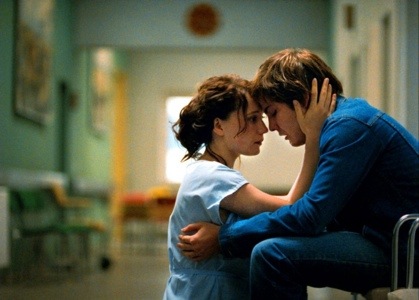
In 1989, East German teenager Alex (Daniel Brühl) feels liberated when the Berlin Wall comes down. His mother, however, is a staunch Communist, who would balk at the thought of westernisation. Just before the collapse of the wall, she has a heart attack and falls into a coma. When she awakens 8 month later and Germany now reunited as a country, Alex along with his older sister are advised by doctors to protect her fragile condition from any form of stress. As a result, they fabricate news bulletins and information to dupe their recuperating mother into believing German reunification never actually happened.

With a music score by Yann Tiersen, who done the wonderful soundtrack to the 2001 French film “Amelie“, you’d be forgiven for having similar feelings to that film while watching this. It’s not just the music that they have in common though. They also share an inventive and highly original approach. This may not contain the fantasy elements of “Amelie” but it’s delivered with such an offbeat creativity that it could hold it’s own against (another notable director) Jean-Pierre Juenet’s aforementioned delight. It has a great mix of humour and pathos with scenes of such tragic sadness combined with a wonderful lightness of touch and sharp observational humour. Despite the title of the film and the political setting of the story, this is essentially a coming-of-tale and less of a commentary on the demise of communism in East Germany. The fall of the Berlin wall serves only as a backdrop to the maturing of the young protagonist. So as not to ostracise his audience writer/director Becker wisely and cleverly, doesn’t side with either East German communism or West German capitalism but instead, skilfully crafts a bittersweet satire and nostalgic tale of life from both sides of the country. He’s also helped immeasurably by two emotionally understated performances from his lead actors; Daniel Bruhl and Katrin Saas.

I was aware of this film when it was released but it should never have taken me as long as it has to get around to viewing it. Now, I’m just glad and hope that others don’t make the same mistake of ignoring this profound and poignant pleasure.

Mark Walker
20120617-172859.jpg

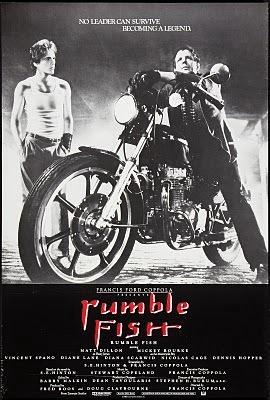
Rumble Fish * * * *

Posted in Drama with tags on June 13, 2012 by Mark Walker

20120614-003201.jpg

Director: Francis Ford Coppola.
Screenplay: S.E. Hinton, Francis Ford Coppola.
Starring: Matt Dillon, Mickey Rourke, Nicolas Cage, Dennis Hopper, Diane Lane, Chris Penn, Laurence Fishburne, Diana Scarwid Vincent Spano, Glenn Withrow, Sofia Coppola, William Smith, Michael Higgins, Tracey Walter, S.E. Hinton, Tom Waits.

Released back-to-back with his previous ‘teen-novel’ adaptation “The Outsiders“, Francis Ford Coppola attempted another of S.E. Hinton’s books. Like his previous release, he assembled a brilliant cast but approached it in a different style. This time, the results were far more impressive.

Rusty James (Matt Dillon) is a troubled young man from a broken background. His mother left him years ago and his father (Dennis Hopper) has turned to alcohol. He’s the leader of a small gang in a time where gang fights are dying out and most people of his generation still idolise his absent older brother ‘The Motorcycle Boy’ (Mickey Rourke). Rusty James refuses to accept and believes he can make as much a name for himself as his legendary sibling. When his brother returns to town, the life that Rusty James envisioned begins to change.

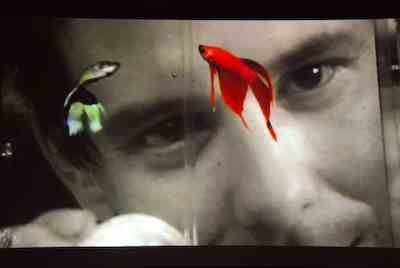
Admittedly, I never got around to reading the book on this one and given Coppola’s sumptuous visual take on it, I’m sure it would have made for an interesting comparison. Much like “The Outsiders“, this also has a feeling of a teenage audience at heart but is executed with much more darkness and depth. Coppola’s use of monochrome – with momentary flashes of vibrant technicolor – is simply astounding and quite beautiful to observe. Several scenes throughout the film border on surreal and dreamlike and the intense performances add to this; Matt Dillon is on great form as the tearaway teenager who can’t stay out of trouble and as his brother, Mickey Rourke delivers a character of quiet, tortured intensity. The rest of the cast are great also with Dennis Hopper playing the alcoholic father and Laurence Fishburne, Chris Penn and Nicolas Cage making up the rest of Rusty James’ crew. Added to which, there is a welcome cameo appearance by Tom Waits, mumbling his way through a short but memorable character. Coppola once described this film as “an art-film for teenagers” and coming from the man himself, there is no better description. It might have been experimental or ambitious for him at this time but it still stands as one of his most visually refined pieces of work. Special mention must also go to Stephen H. Burum for his ethereally stunning cinematography and Stewart Copeland (from the band “The Police“), for his unsettling and impressionistic score.

This makes a perfectly dark companion piece to the lighter side of “The Outsiders“. They couldn’t have been shot any more different and if viewed together, would make a great double bill.

Mark Walker

20120614-003337.jpg

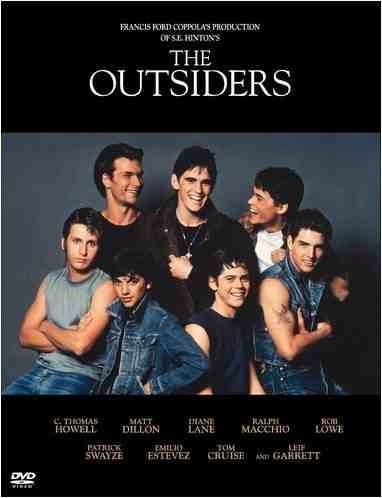
The Outsiders * * *

Posted in Drama with tags on June 13, 2012 by Mark Walker

20120614-002722.jpg

Director: Francis Ford Coppola.
Screenplay: Kathleen Rowell, Francis Ford Coppola.
Starring: C. Thomas Howell, Matt Dillon, Ralph Macchio, Patrick Swayze, Tom Cruise, Rob Lowe, Emilio Estevez, Diane Lane, Leif Garrett, Darren Dalton, Glenn Withrow, Gailard Sartain, William Smith, Sofia Coppola, S.E. Hinton, Tom Waits.

After “One From The Heart” in 1982 and his subsequent bankruptcy following that film’s spiralling production costs, director Francis Ford Coppola turned his hand to a couple of adaptations of ‘teen-novels’ by S.E. Hinton. This was the first (followed by “Rumble Fish“) and although it doesn’t quite hold up today, it still shows how Coppola had an eye for acting ensembles.

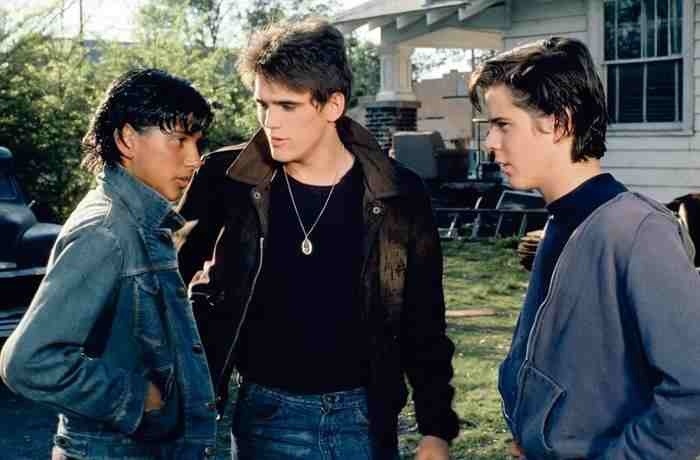
In 1960’s Oklahoma, 14 year old Ponyboy Curtis (C. Thomas Howell) is part of a gang known as “The Greasers”. At heart though, he has an interest in poetry and “Gone With The Wind” and believes in a better life. However, one evening him and his friend Johnny Cade (Ralph Macchio) are attacked by rival gang “The Socs”. In defence, Johnny is forced to kill one of them and with the help of Dallas Winston (Matt Dillon), they go on the run. While away though, the tension mounts between the two rival gangs.

I remember reading S.E. Hinton’s book in school when I was about 13 years old and as much as I loved it then, it is ultimately a sentimental and romanticised view of adolescence. Upon reflection, there are several cringe-worthy moments and Coppola approaches the material with such a melodramatic and unashamed style. In fairness though, he sticks very closely to Hinton’s novel (which she wrote when she was 15) and I don’t suppose it was meant to appeal to anyone other than those harbouring their teenage angst. It’s just a shame, that with such potential, the director of “The Godfather” couldn’t have dropped some of the self-indulgent innocence and added a little more bite. However, it doesn’t proclaim to be anything other than what it is and it’s target audience should still find plenty to enjoy. I know I did – 20 years ago. A lot of scenes still retain a certain power and the music score by Carmine Coppola compliments it well. As does, the use of Stevie Wonder’s marvellous song “Stay Gold“. The most impressive thing about it though, is the ensemble of young actors that Coppola managed to assemble. A lot of them went on to bigger and better things while some crashed and burned but at the very least, it was a cast of familiar faces that were at the forefront of many successful movies of the 80’s and 90’s. Coppola released a director’s cut in 2005 that restored almost half an hour of footage. I haven’t seen that cut and whether or not it improves the film remains to be seen but I would be interested in viewing it nonetheless.

As a big fan of the novel in my youth, this is a bit of a guilty pleasure for me. Coppola portrays the characters and sets the scenes with admiration but now that time has passed and my critical faculties have developed, there’s no doubt that youth and idealism played a part in my, more favourable, opinion back then.

Mark Walker

20120614-002904.jpg

Coriolanus * * * *

Posted in Drama, thriller, War with tags on June 4, 2012 by Mark Walker

20120604-112310.jpg

Director: Ralph Fiennes.
Screenplay: John Logan.
Starring: Ralph Fiennes, Gerard Butler, Brian Cox, Vanessa Redgrave, Jessica Chastain, James Nesbitt, Paul Jesson, Lubna Azabal, Ashraf Barhom, Dragan Mieanovie, Jon Snow.

As a personal rule, I don’t watch adaptations of William Shakespeare’s works unless I’ve read the play beforehand. I like to have a frame of reference when it comes to the bard but in this case, I capitulated and couldn’t resist putting the film off any longer. I’ll always wish that I had found the time but that doesn’t diminish the overall quality or power of this interpretation from first time director Ralph Fiennes.

In a war ravished modern state calling itself Rome, where the people and the military have taken to the streets, hero General Caius Martius (Ralph Fiennes) is set to become the leader of the republic. Opponents across the political scale have other ideas though and attempt to orchestrate his downfall and banishment. Once exiled, the furious General forms an alliance with former nemesis Tullus Aufidius (Gerard Butler) and returns home, intent on taking revenge on the city that has scorned him.

Despite the modern alternative setting that Fiennes chooses for his adaptation, he still manages to retain the feel of a play. Some scenes reflect a classic BBC dramatisation and he employs some high quality actors to provide the goods. The classically trained actress Vanessa Redgrave is the most comfortable amongst the ensemble as the influential matriarch Volumunia. She delivers her lines with absolute confidence and such an understanding of Shakespeare’s iambic pentameter. She’s not alone though; for as little time as they get, the ubiquitous Jessica Chastain delivers a reserved performance as Coriolanus’ disconsolate wife Virgilia and Gerard Butler proves that his talents lie beyond mere rom-com’s and mindless action movies as Aufidius, the rebel leader of the Volscian army. Butler’s fellow Scotsman Brian Cox also shows some real presence in one of his better roles of recent years as the Roman senator Menenius. But as the tortured and unrelenting protagonist Caius Martius Coriolanus, it’s Fiennes that takes centre stage, chewing it up in the process and delivering an intense and ferocious performance. It’s often forgotten how good an actor Fiennes really is but this is proof, once again, that given some meaty material, he can really sink his teeth into it. Shakespeare’s works tend to be all about the prose and the performers and as much as this film delivers on that front, it also delivers an effective modern setting with surprisingly brilliant action set-pieces. There is a real intensity to the politics involved and Fiennes wisely chooses to stick with the original material. It’s hard to balance Shakespeare’s writing’s in a contemporary way and for the most part, it works impressively. However, as the original play is based on a supposed Roman general during the 5th century BC, there are regular references to the common beliefs of this time. “The gods” is an often used piece of dialogue that doesn’t quite fit with the chosen setting and whenever the actors deliver lines with such, it jars slightly. The rest of the film though, is a towering and mesmerising take on the machinations and intrigue of political power.

As always with Shakespeare, it takes a while to tune your ear but the visuals are so effective and the performances so good, that it brings one of his lesser known tragedies, comfortably, to a wider audience. It also heralds the arrival of exemplary actor Ralph Fiennes as an exemplary new director.

Mark Walker

20120604-112906.jpg

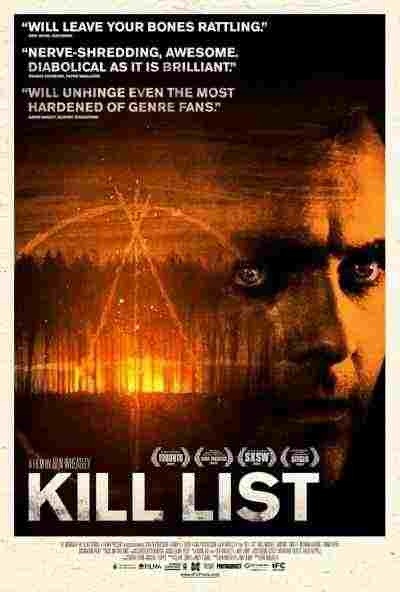
Kill List * * * *

Posted in Crime, Drama, Horror, Mystery with tags on May 25, 2012 by Mark Walker

20120525-145453.jpg

Director: Ben Wheatley.
Screenplay: Ben Wheatley.
Starring: Neil Maskell, Michael Smiley, MyAnna Buring, Harry Simpson, Emma Fryer, Struan Rodger, Ben Crompton, Robin Hill,

In 2009, Ben Wheatley made his directorial debut with crime drama “Down Terrace“. It gained him some recognition but he wasn’t overly talked about. A mere two years later, he delivered this. Like it or not, Wheatley has now captured the attention of many.

Having not worked for nearly a year, contract killer Jay (Neil Maskell) is nagged by his wife Shel (MyAnna Buring) to start earning again. As a result, he takes on a new assignment with his partner Gal (Michael Smiley) to kill three successive targets that will pay lucratively. Things look simple on the surface but darker events soon begin to unravel.

As the movie opens, a white symbol scribes upon a black background. It almost resembles one of Anarchy or possibly the Occult. It could easily be ignored but it would be wise to pay heed as it may give you a better understanding of this discordant mystery. As quick as the symbol appears… it’s gone. We then delve straight into working class British drama territory; an arguing dysfunctional family, financial constraints and characters with dangerous demeanours. Credit must go to the director for his use of a rarely static camera in the opening. It adds to the complete involvement of the viewer and the contribution from his editor Robin Hill also deserves mention. The clever editing techniques add to an ever growing intensity as we become embroiled in bigger and more deadly affairs.
In gritty urban drama’s there are normally tortured or struggling souls but rarely is a deeper moral scale explored from the perspective of the everyday man. The lead character of Jay loves his family but he also happens to be a hired killer. Him and his friend Gal are painted as being human with in-human actions and they even see their murders as justifiable. They don’t conform to society as a whole and as we observe their “Kill List“, white captions appear on-screen informing us of who the intended victims are – “The Priest“, “The Librarian” and “The M.P.” Do these ‘hits’ reflect or allude to their eradication of religion, academia and politics from society? Their anarchistic behaviour alluding to the film’s opening symbol? That’s only part of the ambiguity involved here. Some actions from the key characters are unexplained, not to mention the unravelling of the film. There is an extreme shift in genre. It discards it’s dramatic approach completely and heads full-on into horror territory as it explores the possibility of inner demons and evil at work – this time, the allusion of the symbol being related to the occult. This in turn throughs up questions as to the stability of the protagonists mental health. The shift in tone is uneasy and it’s audacity throws you off but it’s nonetheless intriguing.
Whether there is a message involved or not, it will no doubt confound and provoke debate. That, in my eyes, is always a good thing and at the very least, there’s no denying this type of unconventional filmmaking is admirable and well delivered.
Director Ben Wheatley could very well have a big future ahead if this is anything to go by. The same could be said of the leads in Neil Maskell and Michael Smiley; they show a good camaraderie together and deliver realistic and powerful performances.

Be aware that the ending of this film travels far down the road of ambiguity. Don’t expect it to make complete sense but what you can expect, is for it to deliver visceral, unsettling and thought provoking material.

Mark Walker

20120525-145632.jpg

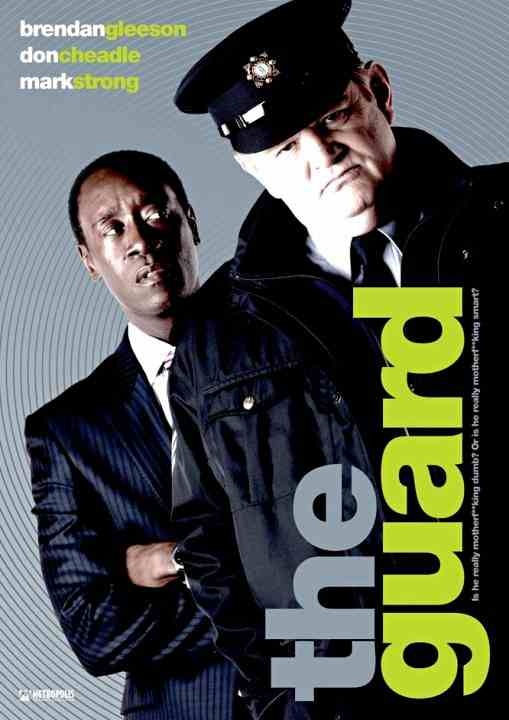
The Guard * * * *

Posted in Comedy, Crime, Drama with tags on May 14, 2012 by Mark Walker

20120514-122542.jpg

Director: Jonathan Michael McDonagh.
Screenplay: Jonathan Michael McDonagh.
Starring: Brendan Gleeson, Don Cheadle, Liam Cunningham, Mark Strong, David Wilmot, Fionnula Flanagan, Rory Keenan, Declan Mannlen, Laurence Kinlan, Katarina Cas, Gary Lydon.

There’s something that seems to run through the family of the McDonagh’s; Martin made an impressive debut with the lively, comedy crime drama “In Bruges” in 2008. Now his sibling Jonathan does the same with this. Combining genres can so easily go wrong but both the McDonagh’s seem to be rather good at it.

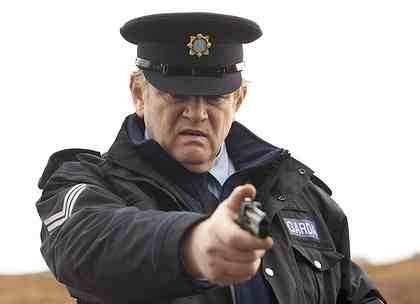
In Galway, the west coast of Ireland a seemingly random murder occurs. Sgt. Gerry Boyle (Brendan Gleeson) investigates and soon believes it to be part of a drug-smuggling ring. The case becomes so important that the FBI get involved and send over agent Wendell Everett (Don Cheadle) to mount a large scale operation in bringing the drug ring down. The two law enforcers don’t exactly see eye-to-eye and have completely different approaches to their professions but manage to find common ground in working together.

As we are introduced to the character of Sgt. Gerry Boyle, he’s just come across a crime scene. He searches through the pockets of a deceased young man and helps himself to a tab of LSD. Within minutes this towering character and his unconventional methods are established. It takes a good actor to pull this off and Gleeson is more than up to the task. It’s his solid performance that’s at the centre of this off-beat and cynical comedy. Gleeson has become ubiquitous of late, appearing in film’s internationally and having already worked with the likes of Steven Spielberg (“A.I. Artificial Intelligence“) and Martin Scorsese (“Gangs Of New York“). He has worked with these directors for good reason, as he can seemingly turn his hand to any role. He’s not alone here though, fine support is delivered by the always reliable Don Cheadle, who’s not afraid to take a step back and allow Gleeson to shine and as the three dangerous, drug-running killers, Liam Cunningham, David Wilmot and Mark Strong are given small but memorable roles. It’s fun to listen to them discuss philosophy before cold-bloodedly despatching of innocent people. It’s the balance of danger and humour that keeps director McDonagh’s film fresh and able to play with the usual genre conventions. The laughs are genuine and never forced and the sharp Irish humour that courses through it is hilarious. Toward the end, it threatens to succumb to cliche but still has enough up it’s sleeve to leave you contented.

The mismatched buddy-cop movie has been done many times before but this still manages to find some mileage in it. That’s thanks to it’s balanced approach and contemptuous brand of humour.

Mark Walker

20120514-122832.jpg

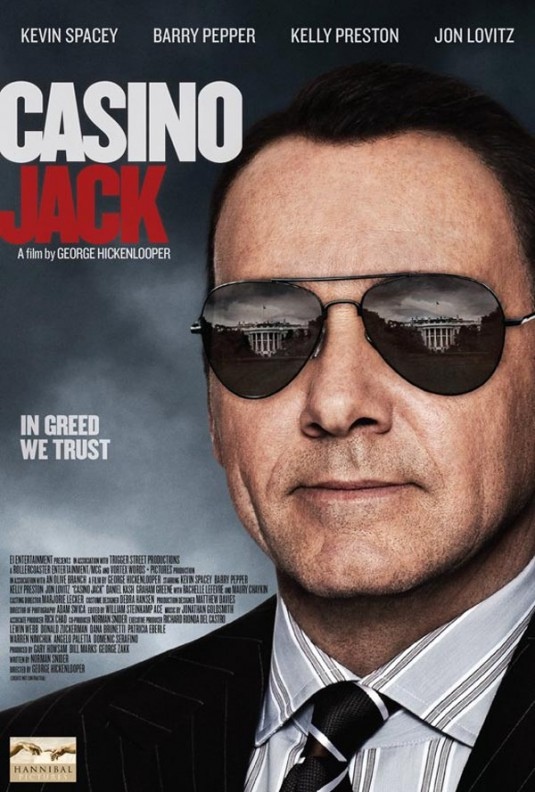
Casino Jack * * * 1/2

Posted in Comedy, Drama with tags on May 10, 2012 by Mark Walker

20120510-111705.jpg

Director: George Hickenlooper.
Screenplay: Norman Snider.
Starring: Kevin Spacey, Barry Pepper, Kelly Preston, Jon Lovitz, Rachelle Lefevre, Maury Chaykin, Spencer Garrett, Eric Schweig, Graham Greene, Christian Campbell, Yannick Bisson.

Throughout his career, director George Hickenlooper would switch from documentaries to feature films. He is probably better known for “Hearts Of Darkness: A Filmmakers Apocalypse” where he brilliantly documented the trouble that Francis Ford Coppola had in making “Apocalypse Now“. His abilities in delving into true murky situations are also reflected in this account of a 2006 Washington D.C. political scandal.

Jack Abramoff (Kevin Spacey) is a self proclaimed family man, Republican and devout Jew. He also happens to be a lobbyist who wields a lot of influence with politicians and businessmen. Along with partner Michael Scanlon (Barry Pepper), he decides to lobby a casino for a Native American tribe, stealing millions from them in the process. He also sets up an illegal chain of offshore casinos that involve gangsters and eventual murder. Abramoff is highly ambitious and lacks morals and that’s exactly what leads to his conviction on charges of conspiracy and mail fraud and the downfall of many politicians who were happy to do business with him.

If you’ve ever seen Kevin Spacey get interviewed then you’ll know that he has an ability to do impressions. This is a role where he is given a bit of leeway to show a few of them; Al Pacino, Ronald Regan and Bill Clinton among others. It’s also a role that allows him to give a few of the cocksure Spacey rants that we have become accustomed to. It’s one of the better roles that he’s had over recent years and he makes the most of it. It’s him that keeps this film anchored as it attempts to cover more ground than it can handle. It can’t be easy covering true events and trying to be as honest about them as you possibly can, without losing sight of a few things. Hickenlooper has a good go and doesn’t shy away from naming names involved in the scandal. He doesn’t change anything; Abramoff and Michael Scanlon are put under the microscope and political big-hitters like President George W. Bush (of course) and Senator John McCain are also implicated. It’s a brave move and Hickenlooper and screenwriter Norman Snider deserve credit for their bravery. Speaking of which, Snider’s writing is fast-paced and snappy. He starts with a bang and never really let’s up. He drops names into the mix and moves from person to person in quick succession, showing the extent and depth of the corruption that political figures, so often, finds themselves in. However, this is also part of the film’s problem: there’s too much going on and it attempts to move into comedy territory that doesn’t suit the seriousness of the characters’ downfalls. The inclusion of the highly irritating comedic actor Jon Lovitz was a bad move entirely. He seems as if he’s walked on to the wrong set. As mentioned though, Spacey keeps the film interesting and despite an underwritten role, Barry Pepper lends some excellent support as his partner in crime. What I found most intriguing though, was the story itself. Maybe I’ve been leading a sheltered life but I don’t recall this corruption being broadcasted or reported, despite it being compared to the scale of the Watergate scandal of 1972. I’d never heard of Abramoff either, who has been a colourful and highly influential figure in recent American politics. Not to mention, a producer and writer of the Dolph Lundgren movie “Red Scorpion”. Truth does indeed have a funny way of being stranger than fiction.

Political backhanders and downfalls are exposed in a fast-paced and comedic style. It’s doesn’t succeed on all accounts but remains an intriguing story.

Mark Walker

20120510-112045.jpg

Shame * * * * *

Posted in Drama with tags on May 6, 2012 by Mark Walker

20120506-130334.jpg

Director: Steve McQueen.
Screenplay: Steve McQueen, Abi Morgan.
Starring: Michael Fassbender, Carey Mulligan, James Badge Dale, Nicole Beharie, Lucy Walters, Alex Manette, Hannah Ware, Elizabeth Masucci, Rachel Farrar, Mari-Ange Ramirez, Robert Montano.

In 2008, director Steve McQueen made his directorial debut with the devastating drama “Hunger” about the last six weeks in the life of Irish hunger striker Bobby Sands. Michael Fassbender was his lead in that unflinching portrayal. Three years later, they reunite for this equally powerful drama about sex-addiction.

Brandon Sullivan (Fassbender) is a successful New York businessman. He leads a comfortable lifestyle, including that of a bachelor, where he spends most of his evenings sleeping with different women. It all seems normal on the surface but the unexpected arrival of his sister Sissy (Carey Mulligan) upturns a deeper side to him. It appears that his sexual appetite may be more serious than he’s been willing to confront.

Michael Fassbender has been steadily building a reputation for himself since he came to attention in McQueen’s debut and followed it up with consistent turns in Andrea Arnold’s “Fish Tank” and Quentin Tarantino’s “Inglorious Basterds“. He’s an actor in very high demand at the moment and judging by this performance alone, you can see why. This is as good as any he has delivered. If not better. Sometimes actors go above and beyond the call of duty; Harvey Keitel in “Bad Lieutenant” and Charlotte Gainsbourg in “AntiChrist” are a notable couple. Fassbender can be, courageously, included amongst them. He exposes himself in every sense of the word and delivers the most fearless and vulnerable performance of 2011. His portrayal of Brandon is a deeply complex piece of work. He’s an enigmatic character that grooms and dresses immaculately. He takes pride in his appearance but not his actions. He cannot connect with people on an intimate level and as a result, develops a voracious appetite for sexual encounters and material. His lack of connection also extends to his emotionally fragile sister, who so obviously needs his help and it’s the very arrival of his sibling that brings his shame to the forefront. His use of pornography, prostitutes and masterbation can’t be hidden anymore. This is when he has to confront his own self-loathing and sexual addictions. His encounters are all meaningless and any that do show meaning, he can’t perform. This is a truly harrowing character study of the failure or inability to truly connect with people – especially in the times and congested environments we live in. Despite the numerous sexual encounters, there is nothing erotic about this film. It’s purely focused on the turmoil of one man’s spiralling journey of self-harm. Carey Mulligan cannot go unmentioned for her emotional performance here also. Her role is not as in depth as the protagonist and she has less to work with but she’s the catalyst for the unravelling of the film and brings a much needed heart into the mix.
McQueen’s direction is near flawless and meticulous in it’s detail. He takes a step back from his actors and captures moments in facial expressions and eye contact. Words don’t always need to be said and if anything, it’s all the better for it. He allows an intelligence from his audience and he’s aided by some stark and clinical cinematography by Sean Bobbitt, in capturing the emptiness in these damaged peoples lives.
I have now lost count of the amount of film’s and performances of 2011 that were, unforgivably, overlooked at the Oscars. This is most certainly one of them. The title of this film should be shouted continuously in the faces of the Academy voters. It’s a disgrace it was omitted.

This may prove to be a difficult or controversial film for some people. It’s certainly not for the prudish or sensitive of heart but I, for one, think it’s essential viewing. A powerful and provocative collaboration between Steve McQueen and Michael Fassbender has developed and I can only hope they continue to make more films in the future.

Mark Walker
20120506-130433.jpg

Crazy, Stupid, Love. * * * 1/2

Posted in Comedy, Drama, Romance with tags on May 5, 2012 by Mark Walker

20120505-170841.jpg

Directors: Glenn Ficarra, John Requa.
Screenplay: Dan Fogelman.
Starring: Steve Carell, Ryan Gosling, Julianne Moore, Emma Stone, Marisa Tomei, Kevin Bacon, Analeigh Tipton, Jonah Bobo, Joey King, Liza Lapira, John Carroll Lynch, Beth Littleford, Josh Groban.

When the black-comedy “Bad Santa” was released in 2003, it brought some attention to it’s writers Glenn Ficarra and John Requa. They went on to make their co-directing debut in 2009 with “I Love You Phillip Morris” and showed that they are as good at direction as they are with words. This one, marks their second directing collaboration together and a different change of style.

Cal Weaver (Steve Carell) is a seemingly happy husband until one evening during dinner, Sally (Julianne Moore), his wife of 25 years, tells him she wants a divorce. Suddenly finding himself on his own and struggling, Cal meets lounge lizard Jacob Palmer (Ryan Gosling), a young man who decides to take him under his wing and teach him the ways of being single, and how to seduce any woman he wants.

This may be slightly new territory for the directing duo of Ficarra and Requa but as they have proven in the past with “Bad News Bears” they are able to tone down their lewd humour for a more accessible audience. As a result they lose some of the risqué humour that makes their writing so appealing but another new thing is, they didn’t write this film. However, the directors still know how to deliver the laughs, even if they are toned down. Put simply, this is a romantic comedy and I’m not a fan of the genre. However, this aims a little higher than usual for the formula and hits the mark on more than a few occasions. That’s thank in large to it not being your standard boy-meets-girl scenario. Of course, it has elements of this but it’s structured in such a teasingly elaborate way that it keeps it fresh and maintains your interest. It also has a good understanding of the pathos involved with relationships, giving the actors some dramatic material to counteract the comedy. It’s finely tuned with good characterisation and handled well by endearing performances from an impressively assembled cast. With the exception of an underused Kevin Bacon, everyone else gets their fare share of screen time. Gosling shows some good comedic talents despite being better known in dramatic roles and Carell can do the tragic everyman in his sleep. The real comedy highlight though, is a scorned and neurotic Marisa Tomei. She delivers regular laughs whenever on-screen. Overall it’s a collective piece of work though and a real surprise that I enjoyed it as much as I did. Be warned though, the first half-hour is standard rom-com territory but if persevered with, it picks up after that.

It lacks the provocative and outrageous humour “I Love You Phillip Morris” benefited from but still has plenty of genuinely funny scenes. One of the better romantic-comedies.

Mark Walker

20120505-170954.jpg

Rampart * * *

Posted in Drama with tags on May 5, 2012 by Mark Walker

20120505-135027.jpg

Director: Oren Moverman.
Screenplay: James Ellroy, Oren Moverman.
Starring: Woody Harrelson, Robin Wright, Ned Beatty, Anne Heche, Cynthia Nixon, Sigourney Weaver, Ice Cube, Ben Foster, Steve Buscemi, Brie Larson, Audra McDonald, Robert Wisdom, Jon Bernthal, Jon Foster, Stella Schnabel.

L.A. Confidential” was an exceptional adaptation of hard-boiled, crime writer James Ellroy’s novel. Most other adaptations tend to be flawed. “Dark Blue“, “The Black Dahlia” and “Street Kings” had decent material but didn’t grip as well as they should have. This is another that suffers from a similar problem.

In 1999, the Rampart division of the Los Angeles Police Force is rife with corruption. Amongst, the main culprits is ‘Date Rape’ Dave Brown (Woody Harrelson). He’s a cop that plays by his own rules and lives by an old-school code. His reputation precedes him and is heightened even further when he’s caught on video assaulting a driver who crashes into him. To try and thwart the attention of the media and ever increasing public frustration, his superiors suggest retirement. Dave refuses and attempts a legal case but it only draws him deeper into his murky past.

Three years previously, Woody Harrelson, Ben Foster and Steve Buscemi were all involved in Oren Moverman’s brilliant directorial debut “The Messenger“. They all assemble again for this but where Moverman showed a skilful subtlety in his debut, he decides to get a bit flashy with this one. That’s his first mistake. He teases a powerful performance from Harrelson – like he did before – but he doesn’t utilise Foster or Buscemi the way he should. That’s his second mistake. And as if that’s not enough, he has James Ellroy himself, co-writing the screenplay with him, yet the focus is on one character – rather than tapping into Ellroy’s abilities in convoluted narrative arcs. Three strikes and you’re out Oren. That being said though, the character of Dave Brown and Harrelson’s strong central performance provide enough powerful material to hold your interest. There’s a real intensity to the man and Harrelson delivers the perfect balance of a man teetering on the brink of the immorality. He received an Oscar nomination for “The Messenger” but I actually think this is a better performance. Moverman doesn’t do him any favours though. He employs a flamboyant handheld approach that’s so distracting that is verges on awful and it detracts from the drama. A good director shouldn’t be noticed before his performers. Speaking of which, the supporting cast is impressively assembled but few get any substantial screen time, leaving the descent of Dave Brown the film’s main focus, much in the same way as Harvey Keitel’s “Bad Lieutenant“. Where that film succeeded though was in having the courage of it’s convictions. This threatens to but draws to a less than satisfactory conclusion.

If it wasn’t for Harrelson, this film wouldn’t have worked as well as it does. Moverman rightly received plaudits for his debut but he has gotten a bit ahead of himself here. Hopefully he’ll learn his lesson for next time.

Mark Walker
20120505-135147.jpg

This Must Be The Place * * * *

Posted in Drama with tags on April 27, 2012 by Mark Walker

20120427-122016.jpg

Director: Paolo Sorrentino.
Screenplay: Paolo Sorrentino, Umberto Contarello.
Starring: Sean Penn, Frances McDormand, Judd Hirsch, Shea Wigham, Kerry Condon, Eve Hewson, Joyce Van Patten, Olwen Fouere, Liron Livo, Grant Goodman, Simon Delaney, David Byrne, Harry Dean Stanton.

The joy in watching American road-movies tends to be the unexpected and vast array of colourful characters. This English language debut by Italian director Paolo Sorrentino is no exception. It has all the hallmarks of the sub-genre and also benefits from a commanding and touching performance from it’s lead.

Cheyenne (Sean Penn) was once a 80’s glam rocker whose life and career came to a halt when two fans committed suicide after listening to his lyrics. He feels a deep sense of responsibility and guilt for the boys’ deaths and struggles to get on with his own life. Years after the event, he hides away in Dublin with his understanding wife (Frances McDormand) but when news comes that his father has recently died, he heads back to America. It’s here he finds a purpose and reawakening in himself, in hunting down an old Nazi war criminal that his late father had committed his life to finding.

You just need to take one look at Sean Penn – with his straggly black wig and eye make-up – and you’d be forgiven for expecting this film for being some form of a comedy or parody of Glam Rock. It’s not. What it is, is an off-kilter little that drama that possesses some real moments of beauty. It probably comes under the umbrella of an art-house road-movie and despite Penn’s appearance, he delivers a heartfelt portrayal of a distant, childlike man, suffering from boredom and an unrelieved depression. It’s, once again, a reminder of the unique abilities that Penn has as an actor and ranks as one of his best and bravest performances. It’s also the catalyst for a lot of this film’s believability. Although his character very rarely cracks a smile, this still elicits some genuine laughs with odd behaviour from an eclectic collection of very off-beat characters. As well as “Talking Heads” frontman David Byrne providing the songs and receiving a welcome and effective cameo appearance into the bargain. Harry Dean Stanton popping in late on, doesn’t hamper it in any way either. Essentially, the film is about the journey though. Not just the physical, but the psychological and emotional ones as well and cinematographer Luca Bigazzi adds several welcome scenes of surreal beauty on the travels. However, it takes a sharp right-turn with the Nazi sub-plot that doesn’t entirely convince and threatens to undo the whole film. It feels a bit disjointed with what came before but as this film plays with conventions, it still seems strangely acceptable.

A poignant and odd little drama about self discovery. It will not appeal to everyone but if you open your mind and your heart, it might just surprise you.

Mark Walker
20120427-122158.jpg

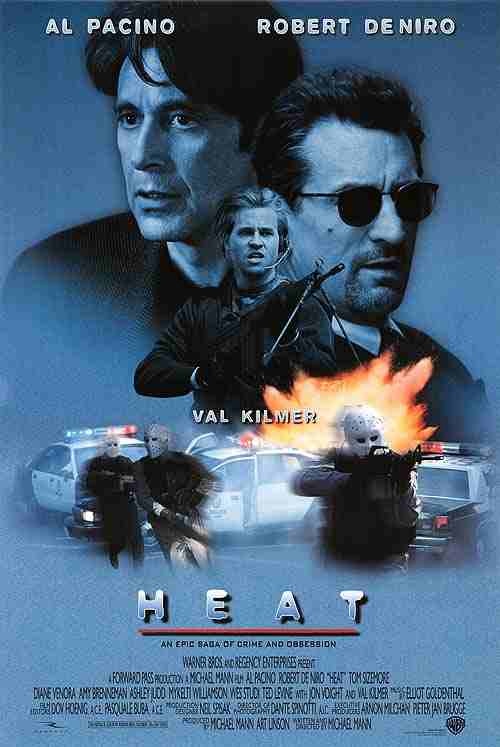
Heat * * * * *

Posted in Crime, Drama, thriller with tags on April 26, 2012 by Mark Walker

20120426-170610.jpg

Director: Michael Mann.
Screenplay: Michael Mann.
Starring: Robert DeNiro, Al Pacino, Tom Sizemore, Val Kilmer, Jon Voight, Kevin Gage, Diane Venora, Amy Brenneman, Ashley Judd, Mykelti Williamson, Wes Studi, Ted Levine, Danny Trejo, Dennis Haysbert, William Fichtner, Natalie Portman, Tom Noonan, Hank Azaria, Henry Rollins, Tone Loc, Jeremy Piven, Xander Berkeley, Martin Ferrero, Bud Cort.

When this was released in 1995, most people believed it to be an original idea. It wasn’t. It was actually a more fleshed out and elborate version of Michael Mann’s 80’s TV movie “L.A. Takedown“. He obviously didn’t have the budget or the actors, to realise his vision at this time, so with a second chance, Mann grabs it with both hands and both of the best actors in the business.

Professional and precise thief Neil McCauley (Robert DeNiro) lives by a strict code and doesn’t take chances. He has a tight-knit crew that takedown big jobs for big money but he ends up drawing the attention of determined and obsessive robbery/homicide cop Vincent Hanna (Al Pacino). The two of them have more in common than one might think and as their worlds draw closer, they are led to an inevitable confrontation.

At it’s core, “Heat” can be viewed as an old fashioned cops-and-robbers tale but it’s done with such vastness and great attention to detail that it rises above most, if not all, of the genre. It not only focuses on the the lives of the two main characters – at opposite ends of the moral scale – but it pays attention to the city and environment in which they operate. What almost overshadowed the storyline, was the anticipation of seeing DeNiro and Pacino share the screen for the first time (They were both in “The Godfather part II” but never had any scenes together). Comparisons between their acting styles will obviously be made and without focusing too much on their different approaches, I found DeNiro’s more subtle, calculating delivery far more convincing than Pacino’s tendency to overact with random, explosive outbursts, bellowing at everyone he meets. There, I said it. However, the film is far more than just these two great actors. It’s a multi-layered character study and the supporting roles, particularly Sizemore and Kilmer (in a role originally intended for Keanu Reeves) are given a substantial amount of work and the female parts of Venora, Brenneman and Judd play a massive part in shaping the leads also. We are given a glimpse into their home lives and the struggle they all face in maintaining a ‘normal’ life – when it goes against their nature. The actors are all given roles to work with, allowing us to identify and care about them. It’s because of this, that when the action is delivered, it’s edge of your seat stuff. There are three great ‘Getaway’ scenes from movies that I found particularly powerful; Kathryn Bigelow’s “Point Break” had Keanu Reeves and Patrick Swayze (on foot) running through suburban houses and backyards; The opening of Nicolas Winding Refn’s “Drive” had Ryan Gosling (in a car) careening and speeding through a darkened urban jungle and this… the major characters (with weapons) shooting it out through a busy congested Los Angeles street. As much as this isn’t just about the two leads, it’s not just about the action either. It’s more about the city itself and it’s inhabitants. The refined dialogue allows these inhabitants to come alive and Mann’s meticulous, hypnotic direction and ethereal choice of music breathes life into the city as well.

An exciting and methodical piece of work from a highly accomplished cast and director. A near masterpiece of modern cinema.

Mark Walker

20120426-171544.jpg

We Bought A Zoo * 1/2

Posted in Drama, Family with tags on April 26, 2012 by Mark Walker

20120426-120748.jpg

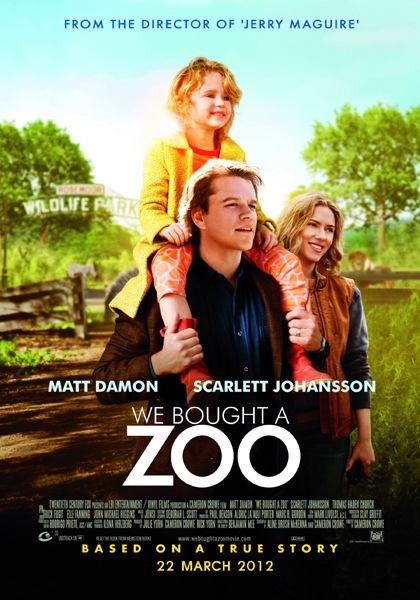
Director: Cameron Crowe.
Screenplay: Cameron Crowe, Aline Brosh McKenna.
Starring: Matt Damon, Scarlett Johansson, Thomas Haden Church, Angus MacFadyen, Patrick Fugit, Colin Ford, Elle Fanning, Maggie Elizabeth Jones, John Michael Higgins, Peter Riegert, Stephanie Szostak, J.B. Smoove.

Director Cameron Crowe is certainly no stranger to maudlin sentimentality. I have found a few of his films rather good though. I enjoyed “Singles” and “Almost Famous” and despite some critical panning, I found “Vanilla Sky” to be a bit of a darker delicacy from him. Even “Jerry Maguire” was decent. However, the abysmal “Elizabethtown” didn’t sit too well at all and I thought Crowe couldn’t crank up the excessive mushiness any further after that. I was wrong.

Benjamin Mee (Matt Damon) is a widowed father, bringing up his two children by himself after losing his wife to cancer. Things aren’t going well though as his son gets expelled from school and he feels the need to quit his job on an L.A. newspaper. He decides that a fresh start is needed for them all and takes his two kids off to live in a run-down country house with a run- down zoo attached. It seems like lunacy at first but Benjamin decides to refurbish the place and bring the zoo back to life.

There is a question that’s asked between two characters at the end of this film… “If you had to choose between people and animals. Who would you pick?” On this evidence, I’d chose the animals. The cheese factor is so high on the people that they may as well be walking chunks of four week old camembert. I swear I could see the mould on them. The performances aren’t bad per se but Cameron’s direction is so high on the schmaltz that I was crying out for a Travis Bickle to come and wash this scum out of the park. Someone to just take this zoo and just… just flush it down the fuckin’ toilet. Damon puts in his usual, likeable, everyman job and shows good emotive moments. The rest of the cast are also quite appealing and even Johansson’s pout is kept to a minimum. The only glimmer of anything natural here though, is the animals. Everything else is completely manufactured tosh. As mentioned, the problem lies in Crowe’s direction. He doesn’t let the characters breathe and develop on their own. He forces you to feel for them. He feeds you more shit than it’s possible to shovel at a zoo and my emotional state felt violated at his insistence. Subtle, this film is not. Stereotypical and predictable, it is. There’s an integral, recurrent, piece of fatherly advice that runs throughout…”You know, sometimes all you need is twenty seconds of insane courage. Just literally twenty seconds of just embarrassing bravery. And I promise you, something great will come of it.” Maybe Crowe shouldn’t have actually applied this advice to himself. He may have taken that twenty seconds of insane courage but something ‘great’, certainly, DID NOT come of it. There is one word that’s correct about that quote though… ‘Embarrassing’. Crowe must be in the midst of mid-life crisis or something. It’s the only way you can explain such nauseating cloyingness. Is he compensating for something, or did mommy and daddy not pay him enough attention when he was a child?

If you have a sweet tooth, then this will be a real treat but otherwise, stick to something with a bit more zest and sharpness.

Mark Walker

20120426-120901.jpg

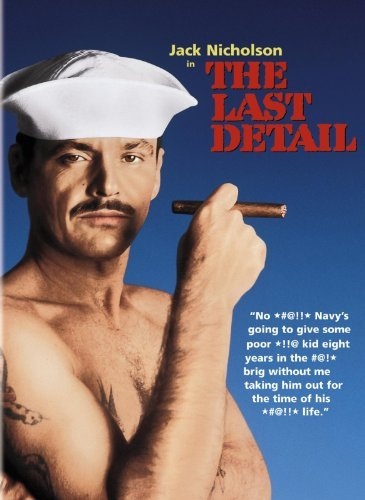
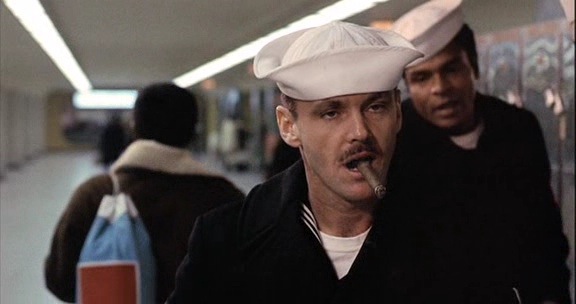
The Last Detail * * * * 1/2

Posted in Comedy, Drama with tags on April 23, 2012 by Mark Walker
20120423-205719.jpg

Director: Hal Ashby.
Screenplay: Robert Towne.
Starring: Jack Nicholson, Otis Young, Randy Quaid, Clifton James, Carol Kane, Michael Moriarty, Nancy Allen, Gilda Radner.

The 1970’s is arguably the best decade for classic American films. It produced such quality as “The Godfather parts I & II“, “Dog Day Afternoon“, “Serpico“, “Mean Streets“, “Jaws” and “One Flew Over The Cuckoo’s Nest“, to name a few. It heralded the reputation of the likes of Robert DeNiro, Al Pacino and this film’s star Jack Nicholson. This is another, that could be included amongst the greats of that decade.

Two career Navy men, “Bad-Ass” Buddusky (Jack Nicholson) and “Mule” Mulhall (Otis Young) are commissioned to escort young kleptomaniac Meadows (Randy Quaid) to the brig for petty theft. En-route, the two lifers realise that young Meadows is actually quite a naive and innocent young man, who hasn’t experienced much of life. Before they deliver him to an eight year sentence in prison, they decide to show him a good time and teach him a little of life’s pleasures.

“…I knew a whore once in Wilmington. She had a glass eye… used to take it out and wink people off for a dollar.” Where else can you get a quote like that, delivered in such dead-pan style from the great Jack Nicholson? In fact, for that matter, most of Nicholson’s performances deliver at least one choice quote. His career is full of them and few can deliver a line like he can. If you appreciate such moments, then this film delivers plenty of them. It’s mainly dialogue driven and character based, providing another classic Nicholson performance. As well as, fine support in Otis Young and a young Randy Quaid. All three of them are an absolute joy to spend time with. The dialogue is razor-sharp from screenwriter Robert Towne (a year before another 70’s classic “Chinatown“) and director Hal Ashby skilfully combines the comedy and the drama to near perfection. Ashby was a director that consistently delivered superb human drama’s throughout his career (“Harold And Maude” and “Coming Home” are a couple of notable ones) but he didn’t quite get the plaudits or reputation that his peers received. However, with films of this calibre, his abilities still stand the test of time.

Humour and pathos can be a marvellous combination when done right and Ashby certainly does that… he gets it spot on.
It may be their ‘Last Detail’ but I for one, wish it was their first.

Mark Walker

20120423-205902.jpg

Cashback * * * *

Posted in Comedy, Drama, Fantasy with tags on April 22, 2012 by Mark Walker

20120422-155123.jpg

Director: Sean Ellis.
Screenplay: Sean Ellis.
Starring: Sean Biggerstaff, Emilia Fox, Michelle Ryan, Michael Dixon, Michael Lambourne, Stuart Goodwin, Shaun Evans, Marc Pickering, Nick Hancock, Keeley Hazell.

Director Sean Ellis made an 18 minute short film in 2004 that won a plethora of International awards and received an Oscar nomination. Because of this, he decided to expand it to feature length and delivers a delightful little independent film.

Young artist Ben Willis (Sean Biggerstaff) breaks up with girlfriend Suzy (Michelle Ryan) which leads to him developing insomnia. As sleep is hard to come by, he takes on a night-shift at the local supermarket where he develops ways to alter time and indulge in his artistic imagination.

The best way to describe this film lies in a direct quote from the protagonist himself; “Within this frozen world I’m able to walk freely and unnoticed. Nobody would even know that time has stopped. And when it started back up again, the invisible join would be seamless except for a slight shudder. Not unlike the feeling of somebody walking over your grave”. And so begins, the journey of insomniac Ben Willis who stops time and undresses women to paint and sketch their female form. This is an imaginative and thoroughly rewarding little film from a promising new director. The New York Post compared Sean Ellis to “Clerks” director Kevin Smith, if he had “… a background in poetry and painting instead of comic-books and bestiality jokes“. It’s a good comparison as this film is as fresh and engaging as Smith’s earlier work. However, it’s also a prime example of how films can be almost completely buried if they don’t receive the right marketing campaign. Such a shame, that this hasn’t gained a wider audience. It’s a cleverly constructed and stylish debut with sharp dialogue and genuinely touching and hilarious moments. Ellis is a director that has now caught my attention and he draws excellent performances from a relatively unknown cast. The only apparent problem is over-length. To go from an 18min short to a 100min feature is a bit of a stretch and as a result, the film meanders toward it’s conclusion. However, this is a small gripe in what is otherwise an inventive and sophisticated little drama.

Skilfully handled by everyone involved and the kind of film that warrants more attention. A vastly underrated little gem.

Mark Walker

20120422-155302.jpg

Young Adult * * *

Posted in Drama with tags on April 21, 2012 by Mark Walker
20120421-192907.jpg

Director: Jason Reitman.
Screenplay: Diablo Cody.
Starring: Charlize Theron, Patton Oswalt, Patrick Wilson, Elizabeth Reaser, Mary Beth Hurt, Collette Wolfe, Jill Eikenberry, Richard Bekins, Emily Meade, Brady Smith, Louisa Krause, Jenny Dare Paulin, John Forest, J.K. Simmons.

Following the success of their previous collaboration “Juno“, director Jason Reitman and writer Diablo Cody reunite to bring us another slice of small-town American life. Whether or not is as good as their last outing, depends on your expectations.

Mavis Gary (Charlize Theron) is a pathological, self-absorbed bitch. She’s already divorced, and dependent on alcohol as she tries to maintain her job as a ghost-writer for a failing series of adolescent books. Having received an e-mail, one day, of news of her ex-boyfriend Buddy (Patrick Wilson) becoming a new father, she heads for her home town determined to reclaim him back from his wife Beth (Elizabeth Reaser) and newborn baby. Mavis will stop at nothing but ultimately, it’s herself that she’s harming most.

Since her Oscar winning role in “Monster” in 2003, Charlize Theron has had a couple of notable roles but nothing she could really sink her teeth into. This, however, is the best role she’s had since then. It’s a character she grabs with the scruff of the neck and delivers an excellent and potent performance. Other than her though, I didn’t find much else to write home about. Maybe this was because my expectations were too high.? I really enjoyed “Juno” for it’s likeable characters and quirky sense of humour and I expected much of the same here but there’s very little humour involved. It’s actually more of a down-beat character study, dealing with failed aspirations, depression and a path of self destruction. It doesn’t make for happy viewing and also doesn’t shed much of a positive light on the choices the characters have made in life. To achieve happiness in life is a matter of relevance. At least, that’s what I think the message was supposed to be but it could have at least had a character that embodied this. Sure, Buddy and Beth seem like a happy couple on the surface but there’s a bit of ambiguity involved. Patton Oswalt delivers some light comic relief as Mavis’ new friend and drinking buddy Matt but despite some lighthearted moments from him, he’s also quite a tragic character. What chance have you got, when your comic-relief is even struggling in life? As I mentioned, maybe if I was prepared for the down-beat approach beforehand, I’d have settled more into this. It’s not a bad film, by any means, but it is a bit sluggish and disheartening.

I’ve heard this described as a ‘tragi-comedy’. It’s a good description but I think the emphasis is on the former rather than the latter.Theron is on excellent form and the real highlight here but the material is a little tough to swallow. It has moments of brilliance but too few to fully satisfy.

Mark Walker
20120421-193008.jpg

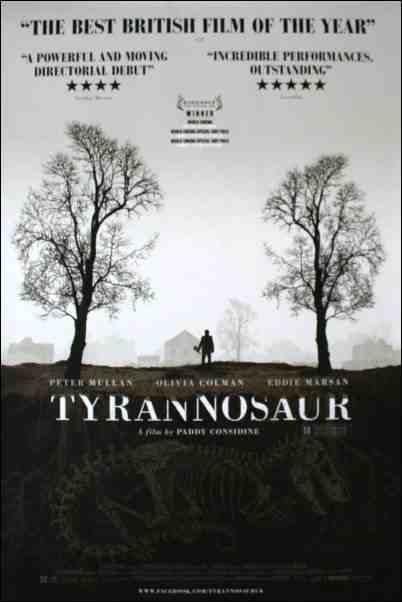
Tyrannosaur * * * * 1/2

Posted in Drama with tags on April 17, 2012 by Mark Walker
20120417-172708.jpg

Director: Paddy Considine.
Screenplay: Paddy Considine.
Starring: Peter Mullan, Olivia Colman, Eddie Marsan, Paul Popplewell, Ned Dennehy, Samuel Bottomley, Sally Carman, Sian Breckin.
Paddy Considine made a name for himself with dynamic performances in director Shane Meadows’ British, working-class drama’s “A Room For Romeo Brass” and “Dead Man’s Shoes“. Those were two great films that benefited from his intense input. Now, as a director himself, he makes his debut behind the camera and adds another fine addition to the realism and style he’s accustomed to acting in.

Joseph (Peter Mullan) is a widower living on a housing estate and prone to fits of uncontrollable rage. One day, in a charity shop, he meets devout Christian, Hannah (Olivia Colman), who offers to pray for him. Hannah has her own problems at home though, as she is being physically and emotionally abused by her husband James (Eddie Marsan). Joseph offers to help her, in return for her kindness, and allows her to take refuge with him but the consequences of violence still linger despite the chance of redemption.

When British cinema is afforded the best of it’s talents, it can deliver some very hard-hitting drama’s. This can be included amongst the finest of recent years, or any year for that matter. It’s raw, emotional storytelling, anchored by excellent central performances; Peter Mullan has rarely been better as a damaged and brutal man, full of inner rage and Eddie Marsan is perfect as an abusive and cowardly creep. It’s Olivia Colman – who’s better known from the Simon Pegg/Nick Frost TV comedy show “Spaced” – that’s the real revelation though. She is absolutely superb. Going on this evidence, Colman thoroughly deserves more dramatic roles in future. It’s quite simply, one of the finest female performances from 2011. Speaking of which, could somebody please explain why this was, yet another, quality drama with searing performances, that was omitted when the Academy awards were being dished out? Proof, yet again, that films of this type are so often overlooked across the pond. Thankfully though, Considine and Colman recieved Bafta’s for their outstanding work. Having already proved his writing potential with “Dead Man Shoe’s” this is another powerful drama that augers very well for Considine’s writing and directing future. If he continues to deliver work like this, he can consider himself amongst the great UK auteurs like Ken Loach and Mike Leigh.

A stark and depressingly ferocious film that also has heart and a real sense of hope. Like most films of this type, it can be difficult viewing but also worth it. British, working-class “Kitchen-sink” drama’s have rarely been better.

Mark Walker

20120417-172838.jpg

Titanic * 1/2

Posted in Drama, Romance with tags on April 9, 2012 by Mark Walker

20120409-141717.jpg

Director: James Cameron.
Screenplay: James Cameron.
Starring: Leonardo DiCaprio, Kate Winslet, Billy Zane, Frances Fisher, Kathy Bates, David Warner, Danny Nucci, Victor Garber, Gloria Stuart, Bernard Hill, Bernard Fox, Jonathan Hyde, Suzy Amis, Bill Paxton.

Woohoo! “Titanic“, the 1997 romantic epic that won 11 Academy Awards, has been re-released on an even grander scale. We are, once again, treated to over three hours of the most wearisome and banal piece of cinema to ever grace our screens. But wait… it’s in 3D. I’m so happy, I could shit myself.

An old woman, Rose DeWitt Bukater (Gloria Stuart) recounts her past to April, 1912 when she boarded the most advanced liner ever built – the Royal Mail Ship Titanic. It departed from Southampton with over 2,000 passengers aboard and we are taken back to when she was a younger woman (Kate Winslet), due to be married to aristocrat Cal Hockley (Billy Zane). On board though, she meets young, adventurous artist Jack Dawson (Leonardo DiCaprio) who she falls in love with. But there is trouble ahead, in the shape of a giant iceberg that forces the ship and it’s passengers into desperate survival.

This, for me, stands as the most ridiculous and overrated of films. Amongst the (unwarranted) awards it received, there is only one that it could truly justify: Best Visual Effects. How the triteness of this film could overshadow the superb and labyrinthine “L.A. Confidential” during awards season, is beyond me. Anyone familiar with British pulp romantic novels, will known what I mean when I say, this is just “Mills & Boon” on a boat – the chivalrous Jack pursuing the chastised damsel Rose. The only thing that’s missing, is the gardener with a rippling torso. DiCaprio and Winslet are fine actors and two that I admire greatly but they totally ham it up in this absolute peace of trash. It’s very stereotypical in everything it does; the impoverished Irish, dance a jig below deck; the band plays on when everyone else is panicking; the steamed-up car, were Jack and Rose consummate their relationship; even Jack’s little Italian friend get’s to shout the obligatory “Bastardo”, as the shit is about to hit the propellers. The characterisation is frankly insulting and for the most part, the film is uneventful. That is, until the long-awaited Iceberg makes a welcome appearance. When it does, Cameron’s use of visual effects really kick-in and they’re undeniably impressive but by this point, I couldn’t care less. If anything, it was quite enjoyable watching the irritating and underwritten characters plummet and drown to a slow and painful death. Shame the footage of this film couldn’t have went down with the ship also.

Originally released in 1997, James Cameron then followed it up in 2003 with documentary “Ghosts Of The Abyss” and now we get it again in 3D. Really James, let it go man… let it go.

Woefully Bad. Even the film’s caption “Nothing on earth could come between them” is misleading. For a start, a massive Iceberg didn’t find it too difficult, not to mention a makeshift raft that wasn’t big enough to hold them both. A * 1/2 star rating for the visuals and a solid supporting performance from the large glacial deposit. But being dazzled with special effects and technical achievements, ultimately doesn’t change anything. You still can’t polish a turd.

Mark Walker

20120409-142142.jpg

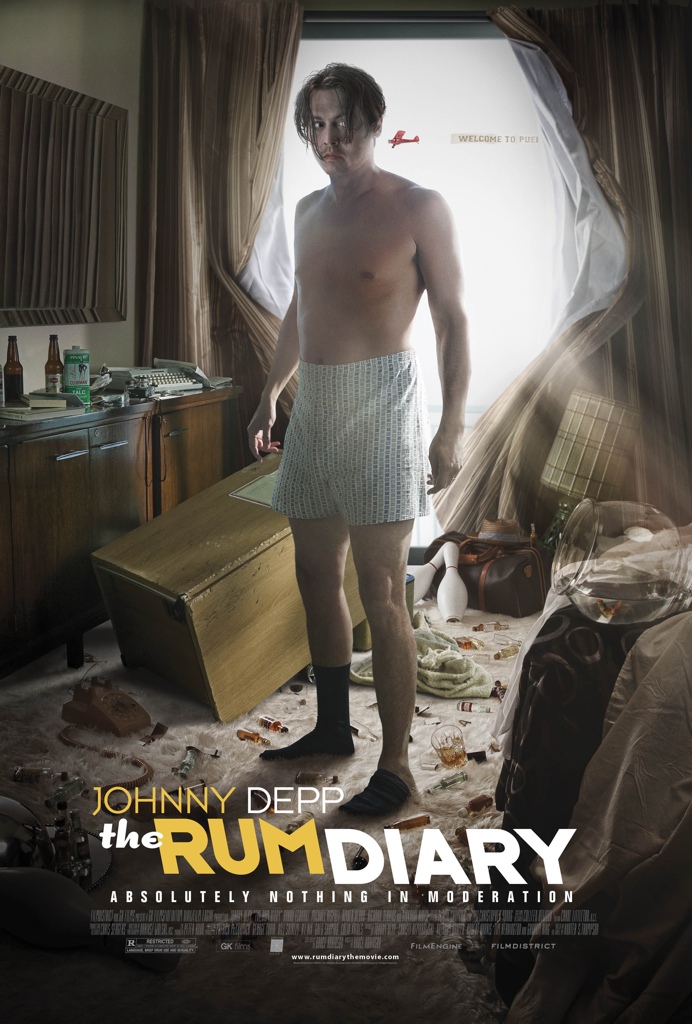
The Rum Diary * * 1/2

Posted in Comedy, Drama with tags on April 4, 2012 by Mark Walker

20120404-212247.jpg

Director: Bruce Robinson.
Screenplay: Bruce Robinson.
Starring: Johnny Depp, Aaron Eckhart, Michael Rispoli, Amber Heard, Richard Jenkins, Giovanni Ribisi, Amaury Nolasco, Marshall Bell, Bill Smitrovich.

The last adaptation of a Hunter S. Thompson novel was Terry Gilliam’s “Fear And Loathing In Las Vegas“. It had the talent in front of and behind the camera but ended up a real mixed-bag. This second adaptation by “Withnail And I” director Bruce Robinson, again, looks like it’s in good hands but doesn’t fair much better.

In San Juan, Puerto Rico in 1960, Paul Kemp (Johnny Depp) gets a job on a local newspaper. He also rooms up with fellow reporter Bob Sala (Michael Rispoli) and gets a little too indulgent in drugs and alcohol. Another job falls his way though, from local, ruthless businessman Sanderson (Aaron Eckhart), who hires him to do some public relations work on a secret hotel development that will undoubtedly exploit the natives. Kemp soon finds out that everyone on this island is pretty much out for themselves.

Fear and Loathing…” didn’t have a coherent storyline and suffered because of it. This plays out Hunter S. Thompson’s story in a more tame and linear fashion but even this doesn’t work. Maybe Thompson is just one of those writers whose prose don’t transfer well to the screen. On this evidence, that would seem to be the case. It keeps threatening to deliver some chaotic behaviour from it’s drug and alcohol induced characters but never follows through. Instead, it meanders and ultimately ends up a real slog. This is surprising, as Robinson had covered similar ground with the boozy eccentricity of “Withnail And I“, yet he never really gets a handle on this one. The performances are good; Depp can do these off-beat characters in his sleep and there is fine support from Rispoli as his new friend and drinking partner. The highlights come from two of my favourite supporting actors though, in Richard Jenkins and Giovanni Ribisi. Jenkins, as always, is a treat as the short-tempered editor, throwing out line after line of sharp dialogue, adding much of the humour in the early part of the film. He soon disappears from view though which leaves it up to Ribisi to flourish. He’s the most interesting character, as a crazed and constantly drug-idled reporter, but unfortunately, he never really gets let loose the way he should.

It depicts both the glitz and the grime of Puerto Rico and has all the makings of a lunacy filled adventure but, sadly, doesn’t live up to expectations. Director Robinson hadn’t made a film for nearly 20 years… it shows.

Mark Walker

20120404-212432.jpg

Doubt * * * * 1/2

Posted in Drama, Mystery with tags on April 2, 2012 by Mark Walker

20120402-133424.jpg

Director: John Patrick Shanley.
Screenplay: John Patrick Shanley.
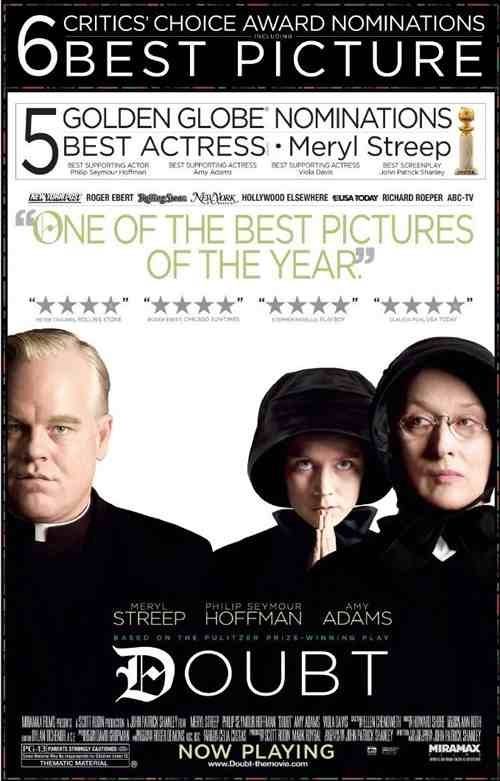
Starring: Meryl Streep, Philip Seymour Hoffman, Amy Adams, Viola Davis, Alice Drummond, Audrie Neenan, Joseph Foster II, Paulie Litt.

John Patrick Shanley is probably better known for the 1987 film “Moonstruck” which garnered Cher a best actress Oscar and also one for himself in the screenplay department. He went on to direct “Joe Versus The Volcano” in 1990, to mixed results, but here he’s back to his native New York, doing what he does best and taking only his second stab at directing.

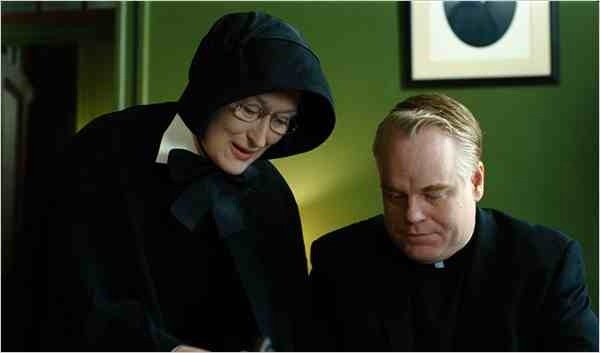
In a Bronx Catholic school in the 1960’s, stern and moralistic school principal Sister Aloysius Beauvier (Meryl Streep) suspects that gregarious priest Father Flynn (Philip Seymour Hoffman) has shown an unnatural and indecent interest in one of the school’s alter boys. She is so certain of her suspicions but lacks the evidence to prove it, leading to a battle-of-wits between them.

There are, easily, three main reasons why I enjoyed this film so much and they are: the three actors involved. Amy Adams is one of the strongest young actresses around at present and Streep and Hoffman are two of my all-time favourites. I never tire of watching them and to see them go head-to-head, chewing up the screen with powerful roles, is dramatic gold as far as I’m concerned. Such choice material though, ultimately rests with Shanley. His writing, not only has the characters in doubt but the omission of integral plot developments cleverly leaves the audience with doubts also. Is Father Flynn guilty of such indecency? Or, is Sister Aloysius bitter and slanderous toward the outgoing priest in order to retain her hierarchy? It’s an intriguing confrontation, masterfully played out buy a relentless Streep and victimised Hoffman. Adams, meanwhile, is caught between the two in a wonderful show of innocence and hope. All three were Oscar nominated for their performances, and deservedly so. Viola Davis, as the alter boys struggling mother, also deserves mention with some strong displays of emotion. It’s a film of performances and everyone is up to the task. Roger Deakins is another deserving of praise, with his exquisite cinematography. As always, his use of the camera captures the mood beautifully with some simple but lush and quaint images.

Ambiguous and tantalising. Some may find the ambiguity frustrating but I found that it kept entirely in-touch with the theme of the film. That being, quite simply… doubt.

Mark Walker

20120402-133522.jpg