Archive for the Drama Category

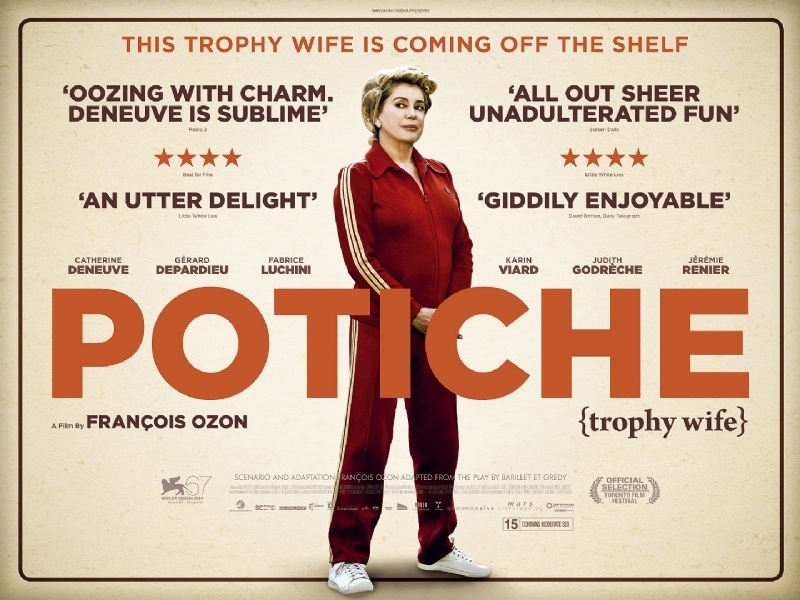
Potiche * * * 1/2

Posted in Comedy, Drama, Foreign Language with tags on June 16, 2013 by Mark Walker

20130616-103623.jpg

Director: François Ozon.
Screenplay: François Ozon.
Starring: Catherine Denueve, Gerard Depardieu, Fabrice Luchini, Jérémie Rénier, Karin Viard, Judith Godrèche, Sergi López.

French performers Catherine Deneuve and Gerard Depardieu are two household names in their native France but will also be familiar with English language filmgoers. Basically, they’ve been around and have delivered an incalculable amount of great performances throughout their careers. This is a film that brings them both together (although not for the first time) and serves as a reminder of how skilful and commanding they are on screen.

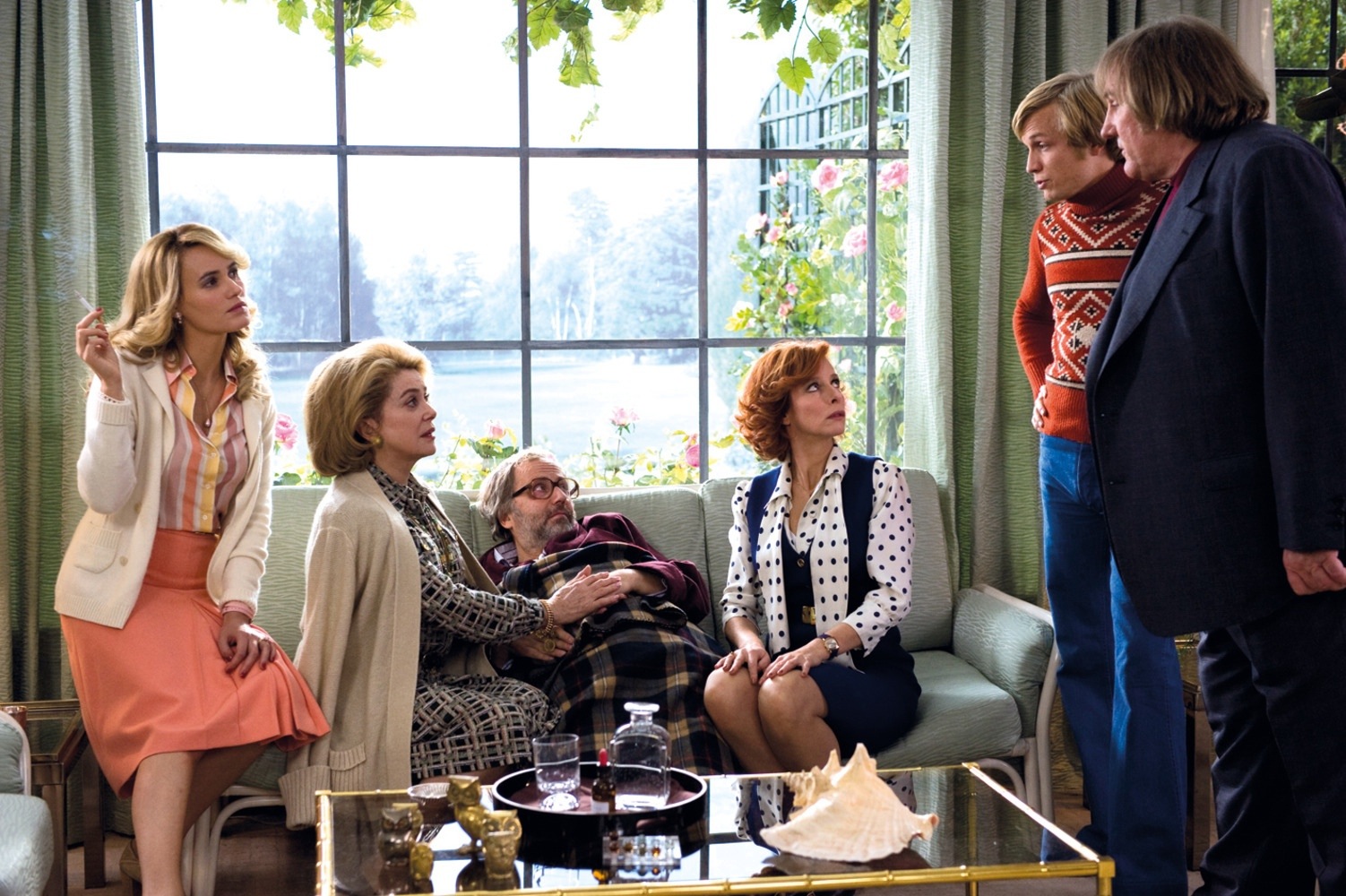
Suzanne Pujol (Catherine Denueve) is a “Potiche” – a decorative, trophy wife – who runs a household, while her husband Robert (Fabrice Luchini) runs the family umbrella factory and philanders with his secretary. A workers strike breaks out which leads to Robert having a heart attack and while he recuperates, Suzanne reluctantly takes control of the family business with her two adult children. However, Suzanne is more shrewd and clever than given credit for and she manages to regain the trust of the workers and turn the fortunes of the business around while steadily gaining respect from numerous corners of society including Maurice Babin (Gerard Depardieu), the influential Mayor.

It takes a little time to work up to “Potiche” as it’s very dialogue driven. So much so, that it’s quite difficult to keep up with the subtitles and it’s constant stream of verbal exchanges. However, it’s confidently handled and when it does get going it throws in many facets of an individuals life and the complexities and challenges that life throws at us all.
Where it’s strengths lie is in it’s perfectly pitched commentary on the struggle that women faced throughout the 1970’s in order to achieve the same equality as men. Denueve’s Suzanne Pujol is the perfect embodiment of a woman hanging up her apron and reclaiming her respect and dignity. It also shows a balance between the strength and vulnerability involved in such a time; on the surface, Suzanne is seen as weak yet she grows in confidence and even considers divorcing her husband. Meanwhile, her daughter Joëlle (Judith Godrèche) is seen as strong and independent yet ultimately can’t bear to be alone. One of the few decent male figures is Suzanne’s son, Laurent (Jérémie Rénier). He’s a prominent supporting character and even though he’s male and serves as his mothers rock, he seems to carry a certain femininity. This is one of the many clever little devices that provide this film with an astute commentary of the politics and the cognitive shift between the sexes during the 1970’s.
The only issue I had was the pacing; despite the wonderful story, quirky humour and solid performances, it fails to completely hold your attention. This is a small gripe but still one that I couldn’t ignore. If it delivered itself with a bit more urgency, then this would have been top class.

A subtly handled little dramatic comedy that manages to incorporate many facets of life and has a sumptuous rendering of the 70’s era. It could have been tighter, but it’s still a lot of fun.

Mark Walker
20130616-103652.jpg

Dead Poets Society

Posted in Drama with tags on June 12, 2013 by Mark Walker

20130611-144636.jpg

Director: Peter Weir.
Screenplay: Tom Schulman.
Starring: Robin Williams, Ethan Hawke, Robert Sean Leonard, Josh Charles, Gale Hansen, Dylan Kussman, Allelon Ruggiero, James Waterston, Norman Lloyd, Kurtwood Smith, Melora Walters, Lara Flynn Boyle.

“But only in their dreams can men be truly free. ‘Twas always thus, and always thus will be.”

Robin Williams was predominantly known for his hilarity and exuberant sense of fun before he finally started to show that he had acting chops. In 1987, he received an Oscar nomination for “Good Morning Vietnam” and then, two years later, followed that up with another Best Actor nomination for “Dead Poets Society“. To this day, this still stands as one of his most appealing characters and performances.

Continue reading

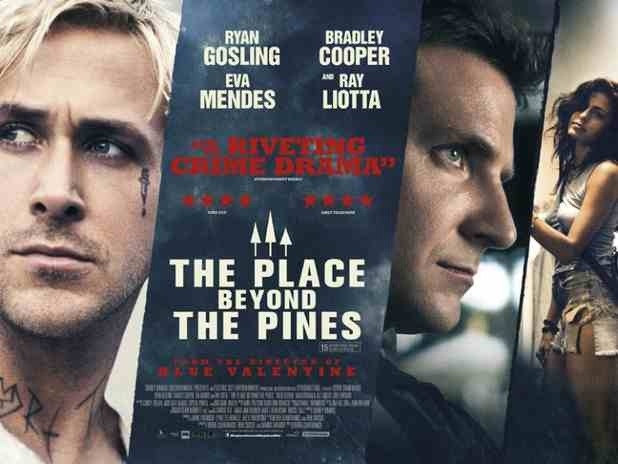
The Place Beyond The Pines * * * * 1/2

Posted in Crime, Drama with tags on June 7, 2013 by Mark Walker

20130607-152145.jpg

Director: Derek Cianfrance.
Screenplay: Derek Cianfrance, Ben Coccio, Darius Marder.
Starring: Ryan Gosling, Bradley Cooper, Eva Mendes, Ray Liotta, Ben Mendelsohn, Dane DeHaan, Emory Cohen, Bruce Greenwood, Harris Yulin, Rose Byrne, Mahershala Ali, Robert Clohessy.

When director Derek Cianfrance and star Ryan Gosling collaborated on the grim, but excellent “Blue Valentine” in 2010, they explored the dissolution of a married couple’s relationship. Two years later, they’re at it again with yet another personal journey about the relationship between fathers and sons. The results are no less impressive than their previous delivery and, this time, arguably better.

Motorcycle stunt rider Luke (Ryan Gosling), meets one of his old flames Romina (Eva Mendes). It turns out that Romina has a son and Luke is the father. Luke then decides that he wants to provide for him but it leads him into robbing banks where he crosses the path of a rookie but ambitious policeman (Bradley Cooper). Their altercation ends up affecting more people than they ever expected.

A triptych movie – divided into three parts – where Cianfrance adopts a deliberate pace and allows his characters the space to grow and develop. First off, this is the most impressive element to the film; the characters are all three-dimensional with deeply emotional drives and motivations as Gosling, Cooper, Dane DeHaan and relative newcomer Emory Cohen, all get ample time to find their feet and get into their roles in each of the chapters. Despite the maleness on show, an impressive Eva Mendes flits in between them with a solid turn in what is a very underwritten role. It’s through the committed performances that we are easily able to identify with each of the characters and become embroiled in their tangled relationship that spans a generation. Cianfrance’s scope is highly ambitious and for the most part, very successful. In the first third he focuses on Gosling’s, Luke and his life of crime while striving to support his family and delivers some very intense heist scenes, one after another (all the more impressive as they were apparently done in one take). Much like his performance in “Drive“, Gosling combines good and bad so well. He’s able to exude an innocence but also an underlying darkness that few actors can achieve. It’s this very combination of qualities that has Gosling at the forefront of contemporary performers. There is an absolute smouldering intensity to him. Then, just as we’re getting to know Luke, the film takes a shift towards Cooper’s tortured police officer, Avery Cross, in the mid-section. The blending and shift in tone is seamless and impressively delivered but as much as I was a big admirer of Cooper’s recent, Oscar nominated performance, in “Silver Linings Playbook“, he doesn’t quite have the gravitas to make this role work for him in the same way. He does well and can’t be faulted too much, but he’s too blue-eyed to cut it as a tortured soul here. The intensity that Gosling brings to his role is the very thing that Cooper fails to capture. This may be slightly unfair on Cooper as he’s by no means bad, but it only serves to show how strong Gosling is. His performance actually permeates the remainder of the film once he’s gone but it does still stumble without his presence.
Cianfrance then goes on to finish the saga by audaciously jumping 15 years ahead. At this point, the director fully states his ambition and although admirable, he also stretches credulity somewhat. That being said, the film is so well delivered that it’s acceptable and just about gets away with it. Unfortunately, the father/son relationship that runs deep within becomes a little muddled and relies far too heavily on a coincidental encounter. With Cianfrance stretching his canvas so far it almost tears apart, held only with the most tenuous of threads. His ambition is almost too vast in relation to his material or more appropriately his running time. I could easily have watched another half hour for the latter characters to be fully rounded and any shaky plot developments ironed out.
However, the more I’m writing this, the more I’m realising that I’m being quite critical. It’s not my intention to put this film down, I’m merely pointing out the things that stop this film from being a five star experience. It’s very nearly there and I enjoyed it enormously.

Vast, immersive and marvellouslly assembled. With “Blue Valentine” and now this, Cianfrance is proving to be a very exciting director to look out for. It’s early doors, but so far, this is the best of 2013.

Mark Walker

20130607-152208.jpg

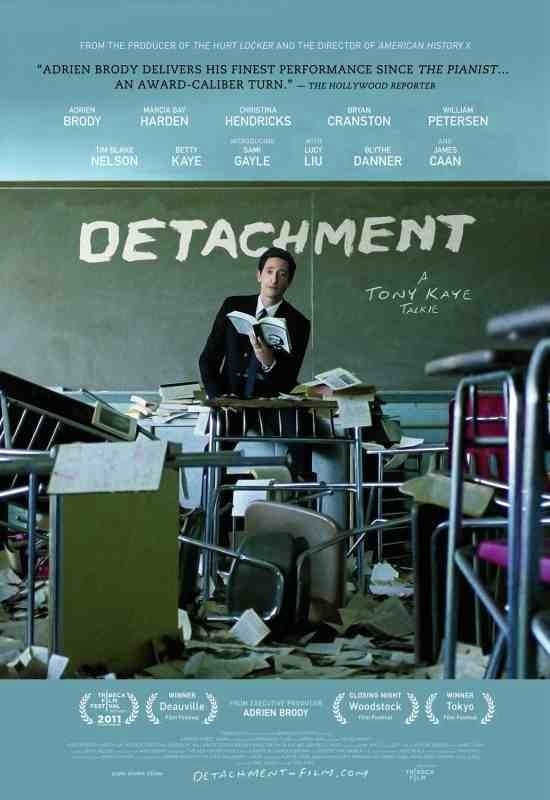
Detachment * * * 1/2

Posted in Drama with tags on May 29, 2013 by Mark Walker

20130529-120537.jpg

Director: Tony Kaye.
Screenplay: Carl Lund.
Starring: Adrien Brody, Marcia Gay Harden, James Caan, Christina Hendricks, Lucy Liu, Blythe Danner, Tim Blake Nelson, William Petersen, Bryan Cranston, Sami Gayle, Betty Kaye, Louis Zorich.

Having been a big fan of “American History X” in 1998, I was eager to see what else director Tony Kaye had in store. Unfortunately, he didn’t make that many films and those that he did – “Lobby Lobster” and “Black Water Transit” – didn’t quite reach a bigger audience. As a result, I was happy to come across “Detachment” which proves that Kaye hasn’t lost any of his style or starkness.

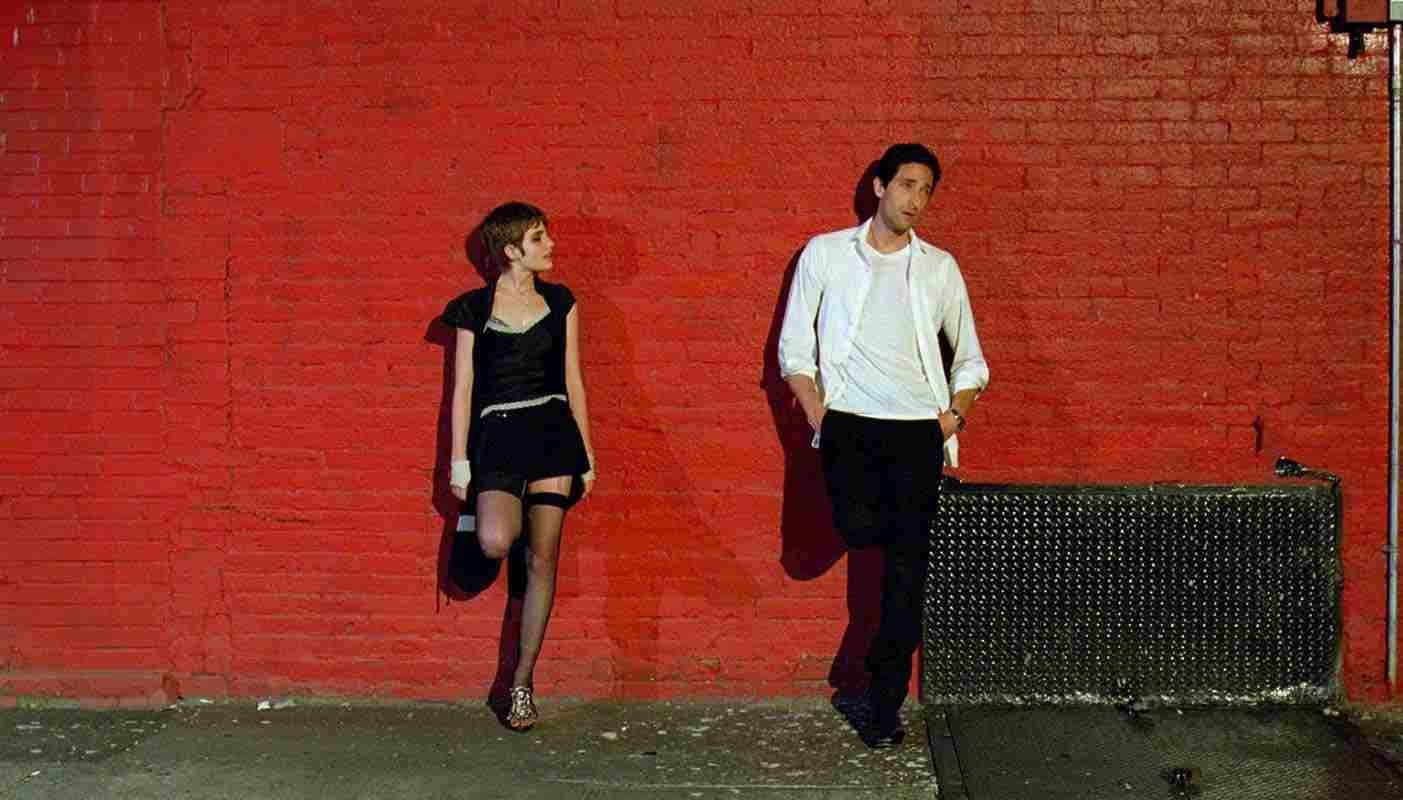
Henry Barthes (Adrien Brody) is a substitute teacher brought into a struggling urban high school to teach English and work with kids who are performing at a very low grade. Being a substitute is exactly the way Henry likes it as he deliberately tries to avoid making genuine connections with people (and that includes his pupils). As time goes on, though, Mr. Barthes realises the pupils’ need for his input and which forces him to confront his own demons and isolation.

And never have I felt so deeply at one and the same time so detached from myself and so present in the world.

As the film opens, this is the quote from French philosopher Albert Camus that’s scribed onto a blackboard before we are introduced to the protagonist and the personal conflict he finds himself in. On the one hand, he’s a caring individual but on the other, he deliberately keeps a distance from people as he’s consumed by a guilt that doesn’t belong to him. His detachment is also reflected in the frustrated and disillusioned pupils he teaches, making this a melting pot of emotionally dysfunctional people. It’s this very mirroring in the individuals that make this quite a thought provoking character study, as well as a diatribe on the state of the American educational system and the problems therein.
Kaye shoots the film with an edgy, fly on the wall approach, utilising the shaky-cam technique and numerous close-ups that bring you closer to the characters and their inner turmoil. There’s also the assembly of a very impressive cast, all-be-it, a lot of them are wasted in thankless, underwritten roles. The likes of Bryan Cranston, Blythe Danner and William Petersen needn’t have turned up at all, but James Caan lightens the mood whenever he’s onscreen and the young unknowns get a chance to shine instead; particularly, (the director’s daughter) Betty Kaye, who develops a crush on her teacher and Sami Gayle as a young prostitute who develops a similar infatuation. The real star, though, is a brooding and commanding Brody. He’s rarely offscreen for the entirety of the film and even though it’s no surprise that he delivers his usual reliability, he’s especially good with a very powerful and charismatic performance. However, the cast and the impressive handling of the material can’t save the film from being overly depressing, or when drawing to it’s conclusion, descending into melodrama from which it never fully recovers.

Cut from the same cloth as the, Oscar nominated, Ryan Gosling movie “Half Nelson“, director Tony Kaye delivers a good insight into the difficulties of teaching and the importance of instilling a good childhood and sense of self in our youth.

Mark Walker

20130529-120604.jpg

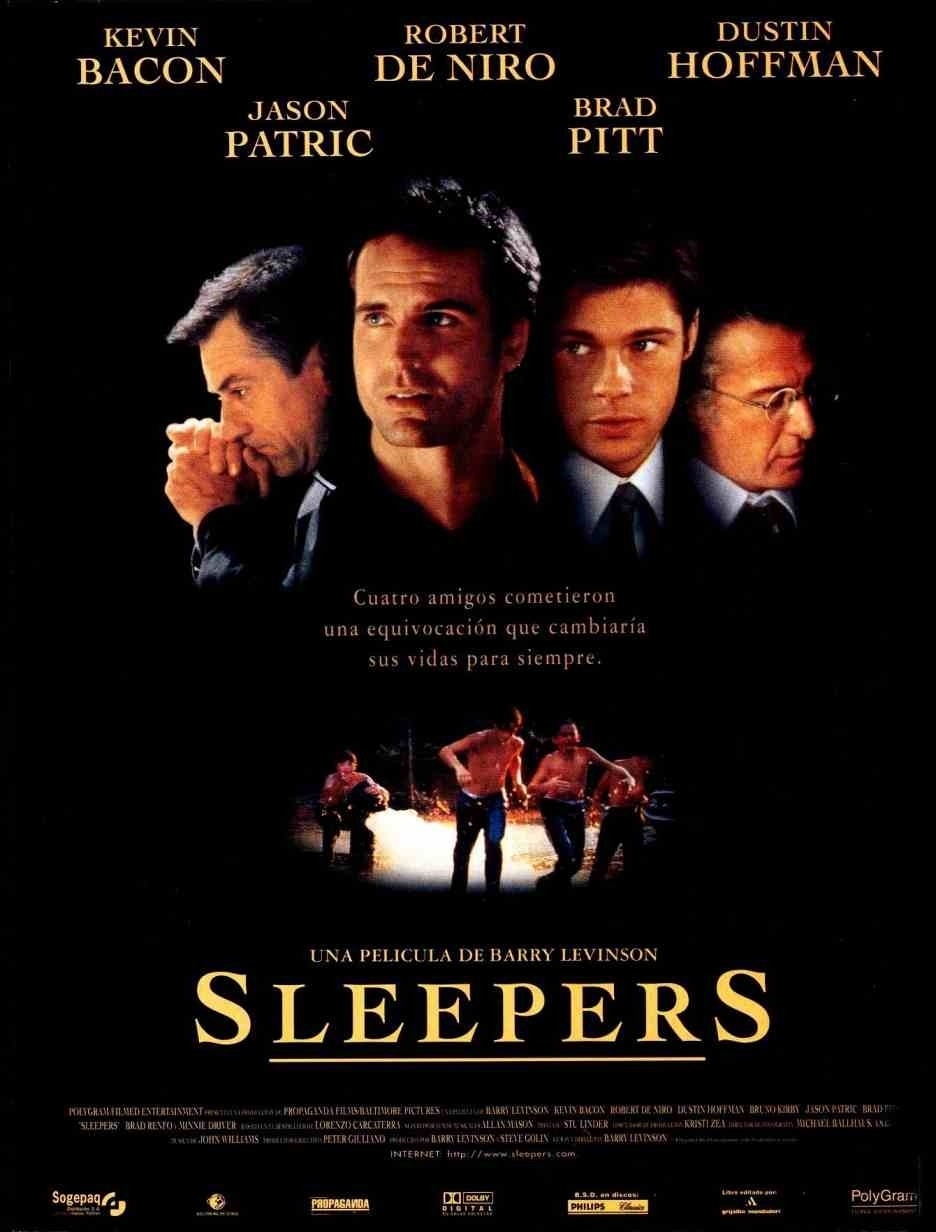
Sleepers * * * 1/2

Posted in Crime, Drama with tags on May 8, 2013 by Mark Walker

20130508-121512.jpg

Director: Barry Levinson.
Screenplay: Barry Levinson.
Starring: Jason Patric, Robert DeNiro, Brad Pitt, Dustin Hoffman, Kevin Bacon, Minnie Driver, Ron Eldard, Billy Crudup, Brad Renfro, Joe Perrino, Geoffrey Wigdor, Jonathan Tucker, Bruno Kirby, Vittorio Gassman, Terry Kinney, Frank Medrano, Aida Turturro, Dash Mihok.

After the massive box-office flop of “Toys” in 1992 and the overlooked, straight to dvd, “Jimmy Hollywood“, director Barry Levinson seemed to be in need of some stronger material. As a result, he decided on a couple of adaptations; the first was Michael Crichton’s “Disclosure” followed by “Sleepers“, the controversial novel by Lorenzo Carcaterra, which served as a reminder that Levinson still had something to offer.

Growing up in Hell’s Kitchen, four close friends, Shakes (Joe Perinno), Michael (Brad Renfro), John (Geoffrey Wigdor) and Tommy (Jonathan Tucker) fill their days playing pranks and making their own entertainment. However, one of their pranks lead to a man getting seriously injured and they are sentenced to time in the Wilkenson Detention Centre in upstate New York. In the centre they are subjected to beatings and sexual abuse by the guards. Over ten years later, two of the boys take revenge on one of them (Kevin Bacon), which drags up the past and involves everyone they know.

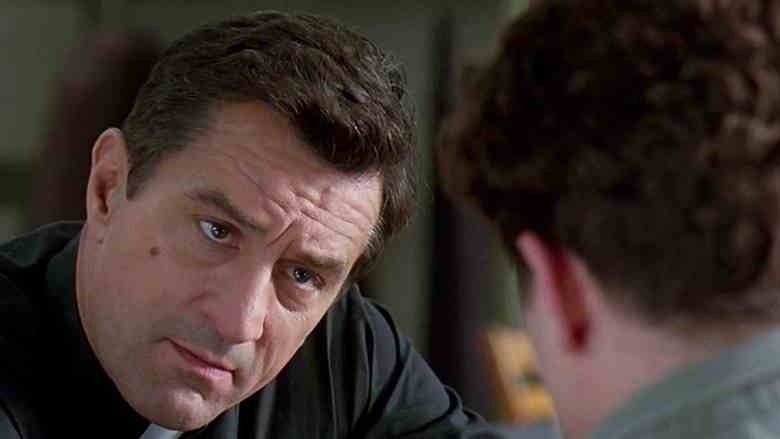
What we have with “Sleepers” is a stellar cast, a more than capable director and a story that’s purportedly based on fact. There’s really not that far you can wrong in these instances but, unfortunately, it’s the “based on fact” angle that let’s this film down. Everything else is handled with skill, but no matter how well it’s delivered, it leaves an aroma that smells vaguely of garbage. It’s too far fetched and under closer scrutiny and investigation, the events that writer Lorenzo Carcaterra claims to be true, are unfounded. There simply isn’t any evidence of them. Now, if this film just played out as a piece of storytelling then that issue wouldn’t exist and you’d be able to sit back and enjoy what this film has to offer. And what it has to offer is plentiful. The cinematography by (Scorsese regular) Michael Ballhaus, captures the look and feel for the times that reflect, in some ways, an urban version of “Stand By Me” in the earlier part of the film and Levinson does a very professional job on his direction duties. Where his strength lies is in drawing out brilliant performances from his impressively assembled cast: Throughout an abundance of familiar names, it’s Patric (playing writer, Carcaterra) that get’s the most focus but the rest still get enough to work with; Bacon verges on the stereotypical side but still channels an effective sadistic presence; Pitt, in a lesser role (when he was still on the rise) captures the cocksure arrogance required and the always reliable and masterful Hoffman brings a lot of depth and humour with his subtle mannerisms. At the risk of sounding biased, though, it’s DeNiro that impresses most as the avuncular priest, Father Bobby. He delivers one of the most endearing and charismatic performances of his career and happens to have a moment in the film where his expression is solely focussed on, as he hears about the tragic and abusive events that took place. He doesn’t utter a word, but his pain, anguish and compassion is expressed entirely and powerfully within his eyes. The only drawback amongst the performances is that the greats of DeNiro and Hoffman don’t get a chance to share much screen time together. (In fairness, Levinson rectified this in his later movie “Wag The Dog” and subsequently they have shared the screen in the “Meet The Parents” sequels). These two fantastic actors have never really went toe-to-toe on dramatic terms, though, and this film seems like a missed opportunity on that level. As for the structure itself, it’s a film of two halves; the first concentrating on the boys’ high jinks (again, with great performances from it’s young actors – Joe Perrino and Brad Renfro being the standouts) while the latter half descends into a formulaic courtroom drama which stretches credulity and eschews any form of logic in order to further the plot. It’s during this, that the “true” nature of the story becomes seriously questionable and we’re also left with an overhanging, dubious message on justice. Despite these issues, though, there are many highlights to be found and at nearly two and half hours long, it’s never dull. Whether or not it’s true is another matter, but at the very least, Carcaterra has written an emotional and involving tale.

Flawed and uneven, with a conclusion that simply doesn’t convince, but if you’re able to sidestep these faults then there’s still a very good film at it’s core.

Mark Walker

20130508-121951.jpg

The Secret In Their Eyes * * * * 1/2

Posted in Drama, Foreign Language, Mystery, thriller with tags on May 4, 2013 by Mark Walker

20130504-171456.jpg
Director: Juan José Campanella.
Screenplay: Eduardo Sacheri, Juan José Campanella.
Starring: Ricardo Darin, Soledad Villamil, Guillermo Francella, Pablo Rago, Javier Godino, José Luis Gioia, Carla Quevedo.

The 2010 Academy Awards category for Best Foreign Language film contained some strong contenders with the likes of Jacques Audiard’s “A Prophet” and Michael Haneke’s “The White Ribbon“; two films that could easily have laid claim to the award. However, it was this film that crept up from under their noses and took the Oscar. Whether or nor you pay any credence to the Oscars is neither here nor there as there’s no doubt that this is solid and absorbing filmmaking.

In 1999, retired criminal justice officer Benjamin Esposito (Ricardo Darìn) decides to write a novel about a murder case that he investigated in 1974. He decides to visit his old colleague Irene Hastings (Soledad Villamil) to talk it over. The case had repercussions for everyone involved but Benjamin didn’t realise the direct effect it had on him or his deep, suppressed feelings for Irene.

With a title like “The Secret In Their Eyes“, this film states it’s intentions and stands by them. Director Juan José Campanella lingers long on shots and wisely focuses on the eyes of his performers. For a film that’s predominately dialogue driven, the abundance of close-up’s add another dimension where the eyes speak a thousand words. It’s a great technique that conveys a myriad of hidden meanings in the relationship between the two main characters, Benjamin and Irene. However, this relationship is not entirely apparent from the off-set. It’s only when the film’s layers are revealed that this comes to the surface, as in the meantime you’re too preoccupied with it’s murder-mystery plot developments. This mystery progresses into a manhunt, while taking time to explore the judicial system and political corruption that was rife in Argentina in 1970’s. It’s during this, that Campanella takes advantage of the thriller element in the story, delivery an absolutely astounding and very skilfully handled tracking shot through a football stadium, leading to an impressively assembled chase sequence. Just how they managed to do it is beyond me and needs to be seen to be believed. There are many moments of intensity when it matters (including a nerve-racking elevator moment that’s hard to forget) but it also knows how to ground itself and that’s were the performances come in; Ricardo Darin is a charismatic presence who more than holds your interest with unshakable ideals and a strong moral compass, while Soledad Villamil delivers a strong and reserved show. It’s the chemistry between these two wonderful actors that play a big part in the film’s, effortless, tonal shifts. It’s also not without humour or tragedy which is provided by Guillermo Francella as Benjamin’s alcoholic, but loyal and reliable colleague, Pablo.
Quite simply, it’s easy to see why this film took the Oscar, it’s has a bit of everything; a sharp and involving script that pays great attention to detail; skilful direction; rich cinematography and natural, committed performances.

A complex tapestry about life, love and chances rued, that’s built around the constructs of a thriller. It excels in everything it challenges and that’s exactly where it’s strengths lie.

Mark Walker

20130504-171646.jpg

Gangster Squad * * *

Posted in Action, Crime, Drama, thriller with tags on May 1, 2013 by Mark Walker

20130501-120646.jpg

Director: Ruben Fleischer.
Screenplay: Will Beall.
Starring: Josh Brolin, Ryan Gosling, Sean Penn, Nick Nolte, Emma Stone, Giovanni Ribisi, Robert Patrick, Anthony Mackie, Michael Peña, Jack McGee, Jon Polito, Josh Pence, Mireille Enos, Sullivan Stapleton, John Aylward, James Carpinello, Don Harvey, Ambyr Childers, Frank Grillo, James Landry Hébert.

Although I’ve yet to see director Ruben Fleischer’s previous comedy film “30 Minutes Or Less“, I did manage to catch his debut “Zombieland” which injected a lot of humour and style in the zombie sub-genre. For his third film, he assembles one of the year’s most impressive casts and decides to drop the comedy and focus on a real-life crime story. His stylish approach is, once again, on show but unfortunately, his film suffers from a dreadfully threadbare script that fails to utilise his very talented ensemble or elaborate on a story with massive potential.

Los Angeles, 1949. Mickey Cohen (Sean Penn) is determined to take hold of the city and muscle out any competition. Police Chief William Parker (Nick Nolte) has other ideas, though. He forms a squad of no-nonsense cops to fight back and puts World War II veteran John O’Mara (Josh Brolin) in charge of the operation. O’Mara assembles his crew and tackles Cohen’s organisation with the same brute force that the criminal acquired it with.

From the off-set, Fleischer doesn’t waste time in getting down to business. The brutality of Mickey Cohen is captured within the first few minutes by a scenery-chewing Sean Penn, on menacing form. Following suit, we are then introduced to Brolin’s strong arm of the law, charged with bringing this notorious gangster to justice. Straight away, Dion Beebe’s gorgeous cinematography and production designer Mather Ahmad manage to capture the glitz and grime of late 1940’s L.A. and it looks like we could be treated to something akin to Curtis Hanson’s sublime “L.A. Confidential“. Unfortunately, the look and feel is where the comparison ends. This isn’t anywhere near as tightly constructed as James Ellroy’s labyrinthine thriller and that’s the most frustrating part; it could have been. The elements are in place but the all-important script seems to have it’s concrete shoes on. The writing is repetitious and lazily strung together and for a film that’s seemingly focused on it’s characters, it ultimately fails to deliver anything that resembles a three-dimensional role for any of the impressive cast on show. Brolin, Gosling and Penn get most of the screen time but this is a role that’s completely beneath the abilities of Gosling as he takes a back seat to the other two and the talented likes of Ribisi, Mackie and especially Peña needn’t have turned up at all. It all but completely abandons the good work it sets out to do and resorts to stylistic action scenes that are drawn out and devour the latter half of the movie – eventually leading to nothing more than a shoot-em-up and an obligatory toe-to-toe thrown in for good bad measure. Quite simply, the whole thing comes across as a poor case of cut-and-paste and squanders what little powerful scenes and performances it does possess.

It’s a real shame that this ended up so superficial when it had so much potential. Instead of being a passable piece of pulp with too much reliance on it’s star wattage, it could have been a solid addition to the gangster genre. I’m sure Fleischer believed in the material at one point but my Tommy-Gun’s not convinced.

Mark Walker

20130501-120536.jpg

Things To Do In Denver When You’re Dead * * * *

Posted in Crime, Drama with tags on April 22, 2013 by Mark Walker

20130422-150435.jpg

Director: Gary Fleder.
Screenplay: Scott Rosenberg.
Starring: Andy Garcia, Christopher Walken, Treat Williams, Christopher Lloyd, William Forsythe, Bill Nunn, Steve Buscemi, Gabrielle Anwar, Fairuza Balk, Jack Warden, Bill Cobbs, Michael Nicolosi, Marshall Bell, Glenn Plummer, Josh Charles, Sarah Trigger, Don Stark, Tommy ‘Tiny’ Lister, Don Cheadle.

Post Quentin Tarantino and “Reservoir Dogs” there was an influx of stylish and fast-talking crime movies. It became the fad during the 90’s and beyond. “True Romance“, “Pulp Fiction” and “The Usual Suspects” were another few. Some fell by the way side while others genuinely succeeded and “Things To Do In Denver…” is one of those films that creates a positive, lasting memory. Crime escapades and colourful characters are what this film has in abundance.

In order to fund his small business, Jimmy the Saint (Andy Garcia) is in debt to lone sharks. However, his debt is bought over by an old venomous cohort from the past (Christopher Walken) who drags Jimmy back into a life of crime and orders him to scare off the new boyfriend of the ex-fiancée of the boss’s simple-minded son and heir. Jimmy assembles a tight-knit crew to keep the job simple but things don’t go to plan, leaving him and his friends with contracts on their heads.

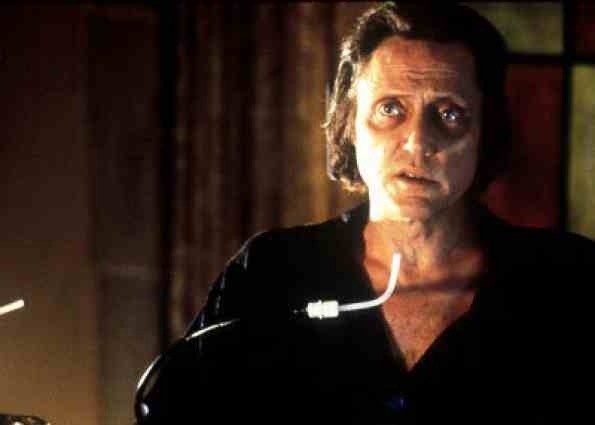
As the lively and spirited Tom Waits song “Jockey Full of Bourbon” is played overhead we are introduced to our suave, confident, wheeler/dealer protagonist ‘Jimmy the Saint‘ and given an almost instant idea of this films stylish intentions. Like Jimmy, this film moves fast and talks fast. However, this isn’t strictly down to him. Where this film succeeds is not just in one particular character or it’s particularly cool demeanour. Where it succeeds, is in it’s plethora of interesting and delicately written supporting roles and a whole hot of quality actors to embody them. A lot of them get limited screen time but it’s still a testament to the writing qualities of Scott Rosenberg who manages to give them enough of a backstory to make them stand out and the actors bring the right amount of presence required for us to invest in them. The real standouts from Jimmy’s crew are: Christopher Lloyd’s leper – nicknamed ‘Pieces’ on account of his fingers and toes falling off from a circulatory disease and a completely on-edge Treat Williams as ‘Critical Bill’ – a psychopath, who can’t seem to stop harming people. He even uses funeral parlour corpses as punchbags to relieve his tension. There is also excellent support in Christopher Walken’s crippled mob leader ‘The Man With The Plan’, who’s so ruthless, he even threatens to have his henchmen pull out his “dead dick” for Jimmy to suck on. He’s a lamentable nasty but one that Walken excels at, and all the more, because he acts only from the neck up. On the sidelines – but no less memorable – is Steve Buscemi’s clinical hitman ‘Mr. Shhh’, who’s brought in to despatch of Jimmy and his crew. Buscemi gets the least amount of dialogue and screen time but anyone familiar his role in “The Big Lebowski” will know that this is never a problem for him to still make a lasting impression.
At times, there is an elusive nature to the sharply written dialogue and the characters’ use of a distinctive vocabulary but it only helps to convey a strong bond and understanding between them. On closer inspection, their patois is explained and the camaraderie and altercations throughout the film are driven by paying as much as attention as it does, to such a vernacular approach.

Fast talking dialogue with fast and colourful characters in the fast and dangerous Denver underbelly. This film has the goods to satisfy fans of the crime genre and manages just the right amount of cool that Quentin Tarantino made his name on. An overlooked and thoroughly entertaining addition to the genus.

Mark Walker

20130422-150458.jpg

Sightseers * * * *

Posted in Comedy, Drama with tags on April 17, 2013 by Mark Walker

20130417-124622.jpg

Director: Ben Wheatley.
Screenplay: Steve Oram, Alice Lowe.
Starring: Steve Oram, Alice Lowe, Eileen Davies, Richard Glover, Monica Dolan, Jonathan Aris, Richard Lumsden, Tony Way, Rachel Austin, Gareth Jones.

After the dark crime thriller “Kill List” in 2011, writer/director Ben Wheatley has decided on a slightly lighter approach for his follow-up. Just ‘slightly’ mind you, as the premise of this tale is equally as dark and deranged. However, it does contain a lot of humour and will most likely remain one of the blackest comedies all year. It’s also confirmation that Wheatley is definitely a talent to watch.

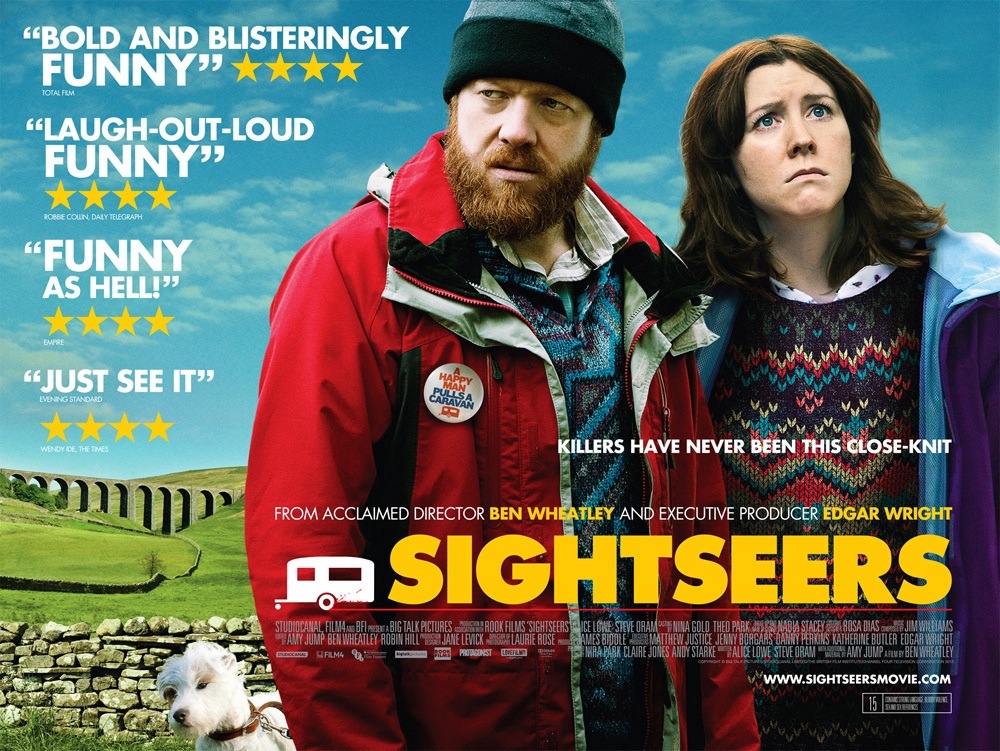
After accidentally killing her mother’s beloved dog with a knitting needle Tina (Alice Lowe), makes a decision to leave her domineering mother and go on a caravan holiday with her new boyfriend Chris (Steve Oram). What Tina doesn’t know is that Chris has a penchant for killing people who upset him. Tina soon becomes influenced by him and as they tour the English countryside, they leaves bodies in their wake at the camp sites, museums and tourist destinations that they visit.

After a brief introduction to our travelling odd-couple, Wheatley gets down to his turgid roadtrip where all manner of darkness ensues. Despite the, blacker-than-black, nature of the story he infuses it with a deadpan humour that counterbalances the events, disturbed behaviour and thought processes of the characters. After casually and callously despatching of unsuspecting, innocent victims our couple share their thoughts and warped sense of justification; at one point over dinner Tina suggests that “by reducing their life span you’re reducing their omissions“, to which Chris responds “so what you mean is… murder is green? I never thought of it like that“. Tina is also a character who likes to have intercourse while sticking her face in a bowl of pot-pourri and wearing hand-knitted, crotchless lingerie. These are just a couple of examples of their deluded outlook and off-the-wall behaviour. Believe me, there are plenty more on their travels. What aids the film immeasurably is the two superb central performances from Steve Oram and Alice Lowe who also happen to have written the screenplay. While playing out their own characters, it shows that they fully understand the material and what’s required to make them three dimensional. Meanwhile, Wheatley handles the extreme shifts in tone with absolute ease. There are some genuinely, hilarious moments that are coupled with a very twisted nature. For a film to have you laughing at it’s darkness, is a testament to all involved here. Black comedies don’t come much darker than this.

Having proved beforehand with “Kill List” that he could craft a sense of realism imbued with absolute horror. This time, Ben Wheatley shows excellent skill in balancing humour with an altogether different kind of horror and lunacy. It has been compared to the likes of “Natural Born Killers” and Mike Leigh’s “Nuts In May” but I’d refer to this thoroughly rewarding little treat, as “Badlands” in the Midlands.

Mark Walker

20130417-124657.jpg

Casino

Posted in Crime, Drama with tags on April 8, 2013 by Mark Walker

Director: Martin Scorsese.
Screenplay: Nicholas Pileggi.
Starring: Robert DeNiro, Sharon Stone, Joe Pesci, James Woods, Frank Vincent, Don Rickles, Alan King, Kevin Pollak, L. Q. Jones, Dick Smothers, Melissa Prophet, John Bloom, Pasquale Cajano, Vinny Vella, Frankie Avalon.

“Listen to me very carefully. There are three ways of doing things around here: the right way, the wrong way, and the way that I do it. You understand?”

Five years after delivering one the mob genre’s finest films in “GoodFellas“, director Martin Scorsese reunited with screenwriter Nicholas Pileggi and several of the same actors – mainly Robert DeNiro and Joe Pesci – to focus on another true-life crime story. This time he takes it away from the mean streets of New York and focuses on the deserts of Las Vegas. The results may be highly similar but they’re just as impressive. Continue reading

Le Donk & Scor-Zay-Zee * * *

Posted in Comedy, Documentary, Drama with tags on April 6, 2013 by Mark Walker

20130406-115821.jpg

Director: Shane Meadows.
Screenplay: Shane Meadows.
Starring: Paddy Considine, Dean Palinczuk, Olivia Colman, Shane Meadows, Richard Graham, Seamus O’Neill, Alex Hunter, Matt Helders, Nick O’Malley, Jamie Cook, Nigel Reeks.

Director Shane Meadows is no stranger to low-budget filmmaking. In fact, most of his films to date have been made with relativity tight constraints. This time around, he goes that one step further and makes an all-out, fly on the wall mockumentary, which also happens to be his third collaboration with actor Paddy Considine.

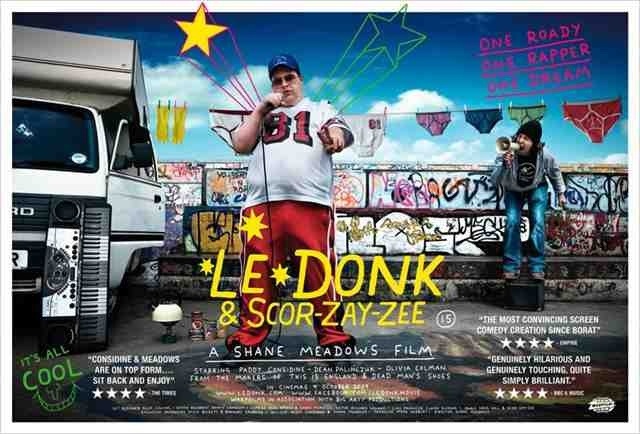
Documentary maker Shane Meadows (playing himself) follow the life of music manager Le Donk (Paddy Considine), who reckons he’s unearthed a new talent in rapper Scor-Zay-Zee (Dean Palinczuk). As a slot with band The Arctic Monkeys opens up, the would-be manager and his protege hit the road to try and make a name for themselves.

If the brilliant “A Room For Romeo Brass” and “Dead Man’s Shoes” were anything to go by, you’d be forgiven for getting very excited about the prospect of Meadows and Considine working together again. I know I certainly was. Unfortunately, this film isn’t quite up to their previous high standards. In fairness, they’ve adopted a different approach but for a film with a running time of just over an hour you’d expect it to move briskly and get down to telling it’s story. In the early stages it does this, with some hilarious observational humour and “kitchen sink” drama that’s reminiscent of Ricky Gervais’ “The Office” but the delivery soon becomes a bit stale. The idea is good, the performances are good but for a film to enter into this mould it needs to provide more laughs than it does. I’m sure it probably will appeal to many people but for me, as a big fan of Meadows, I had set my sites too high. It loses it momentum and relies too heavily on the presence of Considine and his perfect balance of ambition and desperation. He’s most definitely the highlight here. However, there’s only so much one man can carry. The humour and awkward situations are well captured but it essentially there isn’t much of a story and becomes not much more than a showcase for real-life rap artist and freestyler Scor-Zay-Zee, who’s not that appealing to begin with.

An interesting, if unsuccessful, project from Meadows. He’s not made many bad movies and I wouldn’t say this is bad either. It’s just not as eventful as it could have been.

Mark Walker

20130406-115848.jpg

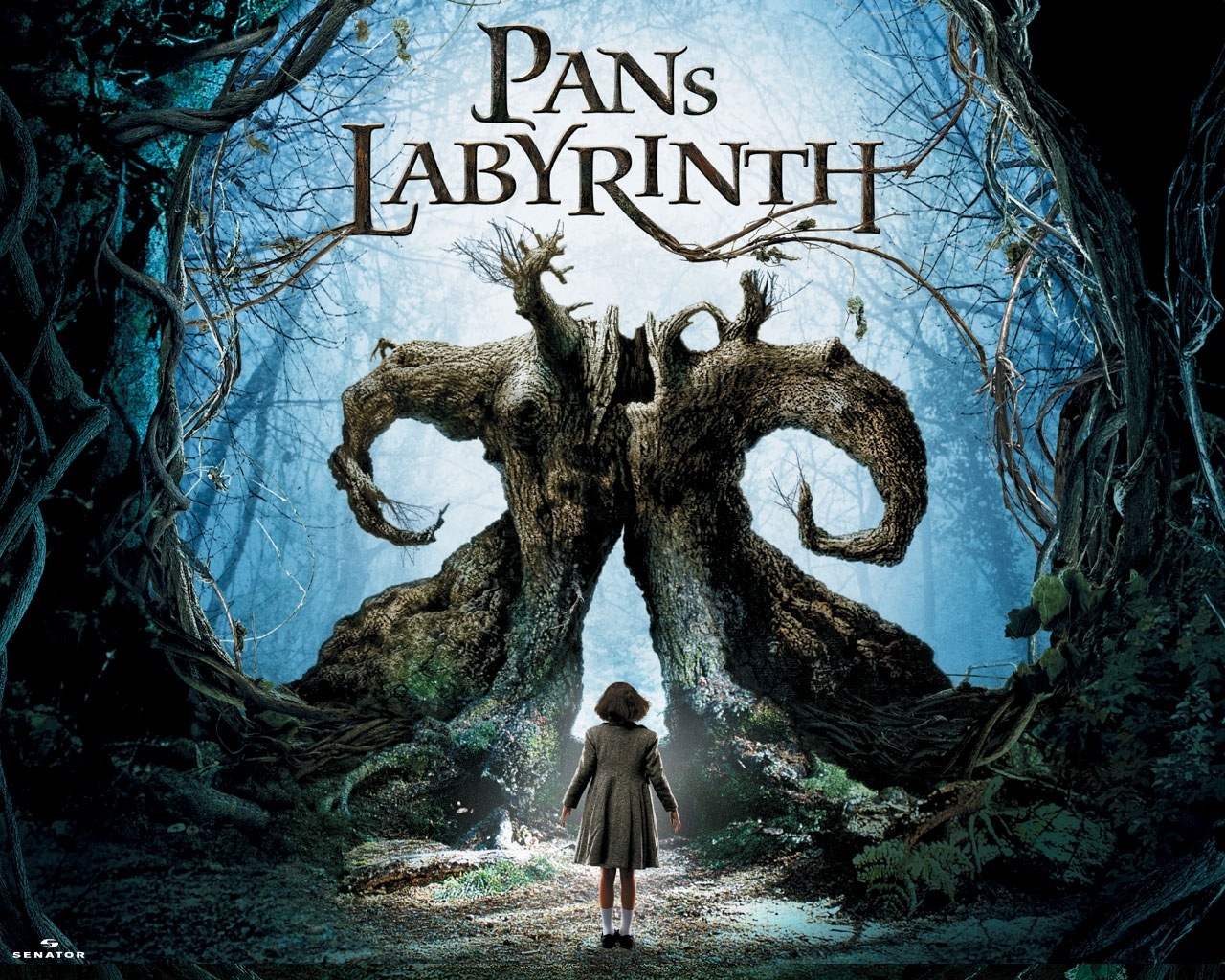
Pan’s Labyrinth

Posted in Drama, Fantasy, Horror, War on March 28, 2013 by Mark Walker

20130328-121736.jpgDirector: Guillermo del Toro.
Screenplay: Guillermo del Toro.
Starring: Sergi López, Ivana Baquero, Maribel Verdú, Álex Angulo, Doug Jones, Ariadne Gil, Manolo Solo, Roger Casamajor.

“You’re getting older, and you’ll see that life isn’t like your fairy tales. The world is a cruel place. And you’ll learn that, even if it hurts”

Despite being quite a prominent name in cinema just now, director Guillermo del Toro hasn’t actually made that many movies. He came to attention in 1993 with his excellent feature debut “Cronos” before Hollywood quickly took note and employed him on such films as “Mimic” and “Blade II“. However, his strengths lie in his own original work where he retains creative control. Of which, there are three that really stand out; the aforementioned “Cronos” is one, “The Devil’s Backbone” another and “Pan’s Labyrinth” – which to this day, remains his masterpiece. Continue reading

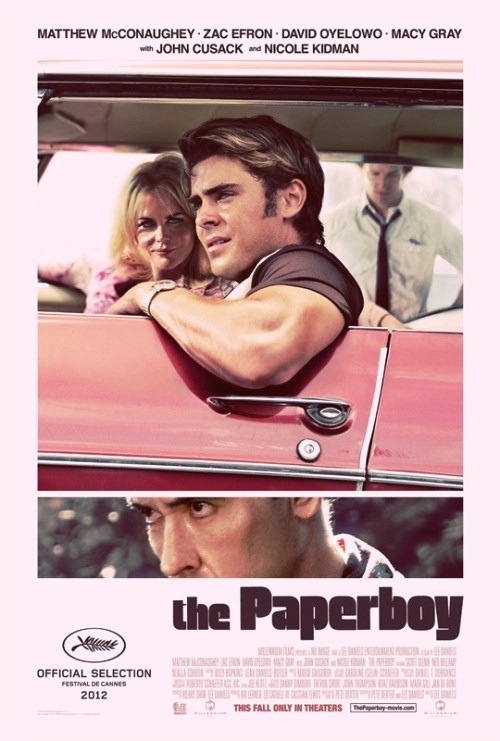
The Paperboy * * * 1/2

Posted in Crime, Drama with tags on March 27, 2013 by Mark Walker

20130327-140752.jpg

Director: Lee Daniels.
Screenplay: Pete Dexter, Lee Daniels.
Starring: Matthew McConaughey, Zac Efron, Nicole Kidman, John Cusack, Macy Gray, David Oyelowo, Scott Glenn, Ned Bellamy, Nealla Gordon, Gary Clarke, Faison Love, Grace Hightower.

After his Oscar winning film “Precious“, which was an adaptation of Sapphire’s novel “Push“, director Lee Daniels decides to follow that up with another adaptation. This time it’s the 1995 novel “The Paperboy” by Pete Dexter and another exploration of highly dysfunctional personalities.

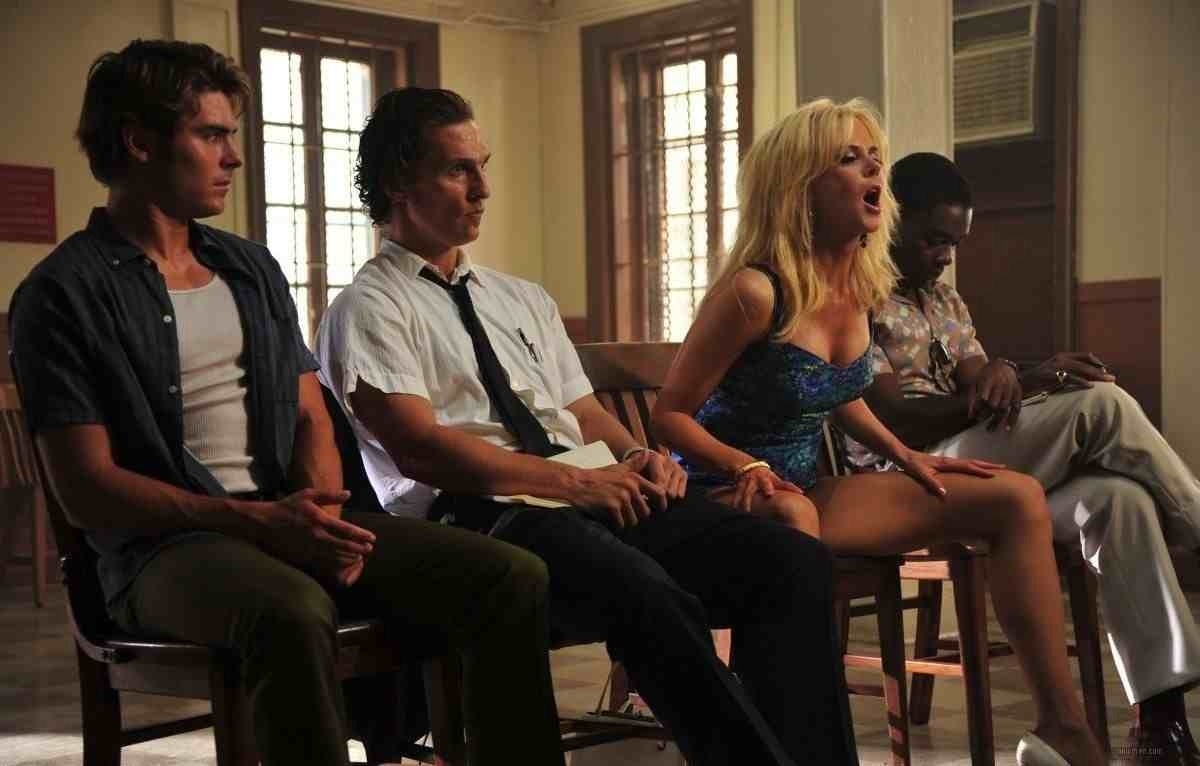
Naive reporter Ward Jansen (Matthew McConaughey) heads back to his home town of Lately, where he’s determined to exonerate convict Hillary Van Wetter (John Cusack), who awaits execution on death row for the supposed murder of a local Sheriff. Ward is accompanied by his brother Jack (Zac Efron), ambitious colleague Yardley Acheman (David Oyelowo) and flashy seductress Charlotte Bless (Nicole Kidman) – who has a fetish for incarcerated men and Van Wetter is her latest obsession. The murky details of the investigation soon uncover truths about everyone involved and truths that were better left alone.

This is a film that’s very much a mixed bag and it’s easy to see why some people just didn’t take to it. First off, the narrative is disjointed. At times, it doesn’t seem know to which direction it’s going in and the tacked-on, voiceover narration, doesn’t really help matters. In the earlier part there’s humour and it gives the impression that it’s got it’s tongue stuck firmly in it’s cheek. As the film and characters grow, though, it becomes progressively darker. So much so, that it will having you wincing in both disgust and horror. These shifts in tone are less than effortless and also threaten to undo the film as a whole. However, even though the tone is uneven it’s throws up many memorable moments; Kidman urinating on Efron’s face, Cusack and Kidman engaging in masturbation while 10 feet apart and other brutal and shocking revelations, which I’ll allow you to find out for yourself. It’s in these memorable moments that you realise where the film’s strengths lie; the characters are all three dimensional and the brave cast are uniformly brilliant. Efron has come a long way since his “High School Musical” days and looks like proper leading actor material; McConaughey continues his recent run of seedy and risqué roles; Cusack captures the intensity of a loutish psychopath and Kidman is a revelation as an oversexed floozie. Fine support is also delivered by a surprisingly talented Macy Gray and the enigmatic David Olywewo. It’s the very commitment from these actors that has you believing in the material even when their characters’ motivations are not always clear or convincing. Another big player in the proceedings is cinematographer Roberto Schaefer. He captures the searing heat and uncomfortableness of backwoods Florida to perfection while balancing the class divide and racial tension that drips from every pore.
Daniels’ direction may be a little hyperstylised at times and his grasp on the film’s structure is less than convincing. Incoherence does creep in and the film sags around the midriff, becoming in danger of losing itself entirely. At one point, when it should be wrapping up, it throws in further complications and character developments but to give the director his due, he knows how to drop subtle hints without revealing too much, leaving the story’s denouement more satisfying than first thought. There’s no doubt that this is a flawed endeavour but the scathing opinions of it are a little unwarranted – all-be-it, understandable. There is much to admire here. Yes, it’s trashy, tawdry and most certainly deranged but it’s also edgy and unpredictable, which is more than you can say for a lot of studio releases these days.

Sexploitation, exploitation and telekinetic masturbation. What more can you can ask from a film that doesn’t pretend to be anything more than a deranged venture into the American south with a committed cast that are game for anything?
This might have been booed at the Cannes film festival but for it’s trashy audacity alone, it deserves applause.

Mark Walker
20130327-140822.jpg

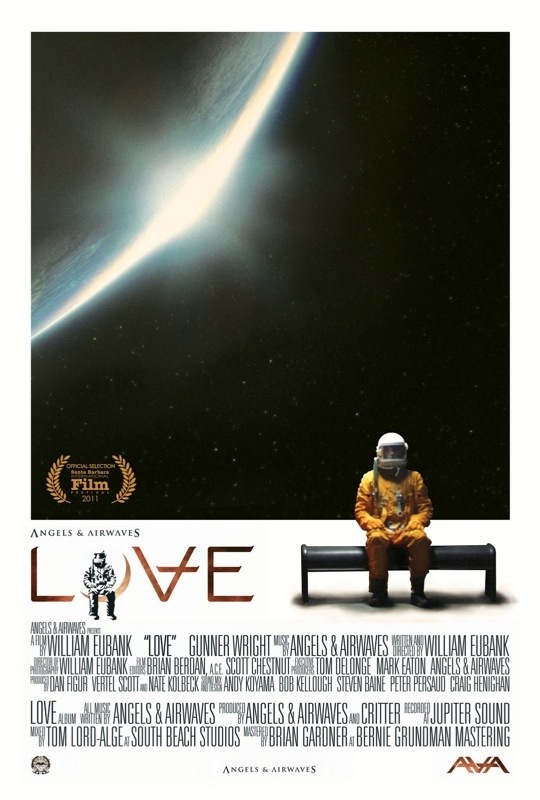
Love * *

Posted in Drama, Science Fiction with tags on March 14, 2013 by Mark Walker
20130314-131159.jpg

Director: William Eubank.
Screenplay: William Eubank.
Starring: Gunner Wright, Corey Richardson, Bradley Horne, Nancy Stelle, Roger E. Fanter, Ambyr Childers.

I often find it difficult giving my opinion on independent films as I’m aware of the struggles that have been faced in order to bring it to the screen. They are hard to criticise, as the filmmaker certainly doesn’t get the same luxuries or benefits that the financial backing from a big studio would bring. However, when all is said and done, it’s ultimately the material that it should be judged upon. Such is the case with this film; it’s undeniably impressive in it’s assembly but found wanting in it’s substance.

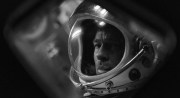
As I can’t really be bothered to write the plot summary, I’ll leave you with the director’s own description of the story… “After losing contact with Earth, Astronaut Lee Miller becomes stranded in orbit alone aboard the International Space Station. As time passes and life support systems dwindle, Lee battles to maintain his sanity – and simply stay alive. His world is a claustrophobic and lonely existence, until he makes a strange discovery aboard the ship”.

As the film opens, we find ourselves in the midst of the American Civil War and a commentary that’s reminiscent of the work of Terrence Malick. Visually, it looks spectacular and you wouldn’t think for a second that this was shot on a shoestring budget. Debutant director, William Eubank certainly knows how to capture a scene and his work here is exceptionally well handled. There’s a good sense of atmosphere and overall, ethereal, feel to the film.
From the battlefields we are then taken to a space station that is orbiting earth and we are introduced to our protagonist who wanders his enclosed environment and ruminates on his lonely existence much like Duncan Jones’ “Moon” or Stanley Kubrick’s “2001: A Space Odyssey“. It’s not just the setting but also the existential nature of those films that this tries to emulate. Sadly, it’s nowhere near as good as either of them. The isolation of our protagonist brings about a monotony in his daily routine and that monotony is soon shared by the viewer. To put it simply, very little happens. I got the point of his dilemma and the effect that it had on his psyche but it’s laboured too strongly and the connection between the astronaut and the civil war is tenuous at best. There are many verbal musings throughout, whereby some lovely passages of words are weaved together but it sounds more poetic than it does philosophical and I think that’s where the problem lies. The film has airs and graces of having challenging, philosophical, ideas but doesn’t really have anything concrete to cling on to. I kept waiting for some revelation that would tie everything, meaningfully, together but when it arrived, it didn’t deliver the punch I was hoping for and only confirmed my suspicions of how pretentious the film really is. The only thing that really makes sense is that it was funded entirely by the band “Angels and Airwaves” (who also provide the soundtrack) and it comes across as an exercise in marketing their own stuff and no more than a glorified music video.
In fairness, it does manage to hold your interest on the visual front with some stunningly captured images and moments. However, impressive visuals do not a good film make. If it continued how it began, then it might have had something going for it but it didn’t and it doesn’t.

The major issue with Love, is that it believes itself to be deeper and more profound than it actually is.
There is such a thing in the cosmos known as a ‘Black hole‘. This certainly has a hole, and it’s head is too far up it.

Mark Walker
20130314-131227.jpg

Robot & Frank * * * *

Posted in Drama, Science Fiction with tags on March 12, 2013 by Mark Walker
20130306-123904.jpg

Director: Jake Schreier.
Screenplay: Christopher D. Ford.
Starring: Frank Langella, Peter Sarsgaard (voice), Susan Sarandon, James Marsden, Liv Tyler, Jeremy Sisto, Jeremy Strong, Bonnie Bentley, Dario Barosso.

Robot & Frank” is the type of film that could, unfortunately, suffer a lot of preconceptions beforehand. Judging it by it’s cover or title, could lead to it being written off as some low-budget, ridiculous science-fiction film. If this does happen, then more fool those that do judge, as they’d be missing out on a marvellous human drama that has a great balance between humour and pathos.

In the near future, Frank is a retired cat burglar who lives alone, while his daughter Madison (Liv Tyler) is travelling the world and his son Hunter (James Marsden) is more focused on his career. Frank also happens to be going through the early stages of dementia, so in order to help him, Hunter buys him a robot caretaker, who will tend to his every need. Frank realises the potential in this, though, and plans to restart his old profession by using the robot as his aide to burgle more properties.

First off, this is a film about memories; the fading ones of it’s lead character and the expendable ones of an automaton. What makes it work, though, is the sensitive and convincing relationship at it’s core. There’s a genuine friendship that’s built between the characters and Christopher D. Ford’s screenplay takes time to touch upon the similarities between them. Robot is entirely reflective of Frank and they could be viewed as one and the same, while lightly skimming over the philosophical theories of Descartes’ cartesian doubt. Does the fact that Frank struggles to remember the past make him any less alive than the robot, who has no past? It’s this type of attention and delicate handling of the material that brings a genuine heart (and head) to the film. It’s an earnest portrait of Alzeihmer’s while also managing to incorporate some fun by it’s schematic caper sub-plot. It’s success is largely down to the strong and convincing actors; Langella delivers a fabulously nuanced performance of a man that once led a colourful life but now finds himself with a failing memory and refuses to accept it. He’s onscreen for almost the entirety of the movie, and throughout, he’s mostly talking to piece of tin. That piece of tin is also miraculously brought to life, though, with the gentle and perfectly fitting voice of Peter Sarsgaard. For this little character (who is never given a name) to win you over is a testament to everyone involved here. Director Jake Schreier handles the material beautifully – in his directorial debut – delivering a depth and profundity with touching family moments, memories reawakened and the importance of them in relation to what it means to be alive.

Although the film deals with a superficial automaton there’s a heart that lies within and that heart beats very strongly.
It’s early doors in 2013 but this is a film that I will fondly remember for the rest of the year and beyond.

Mark Walker

20130306-124017.jpg

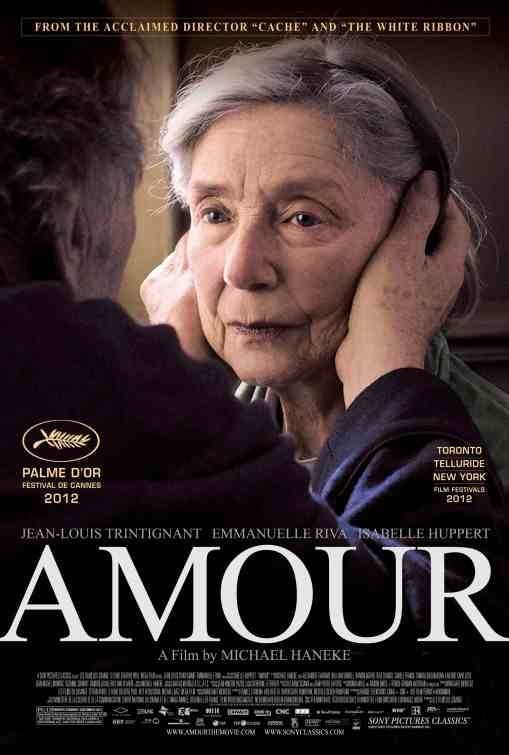
Amour * * * * *

Posted in Drama, Foreign Language with tags on February 28, 2013 by Mark Walker

20130228-125944.jpg

Director: Michael Haneke.
Screenplay: Michael Haneke.
Starring: Jean-Louis Trintignant, Emmanuelle Riva, Isabelle Huppert, Alexandre Tharaud, William Shimell, Ramón Agirre, Rita Blanco.

Danish director Bille August was the only director to win back-to-back Palme d’Or awards at the Cannes Film Festival (in 1988 & 1992) with his film’s “Pelle The Conqueror” and “The Best Intentions“. That was, until Austrian director Michael Haneke recently equalled that achievement. His first came in 2009 with “The White Ribbon” and he done it again in 2012 with this deeply emotional and profound film that’s been heralded by many as a masterpiece.

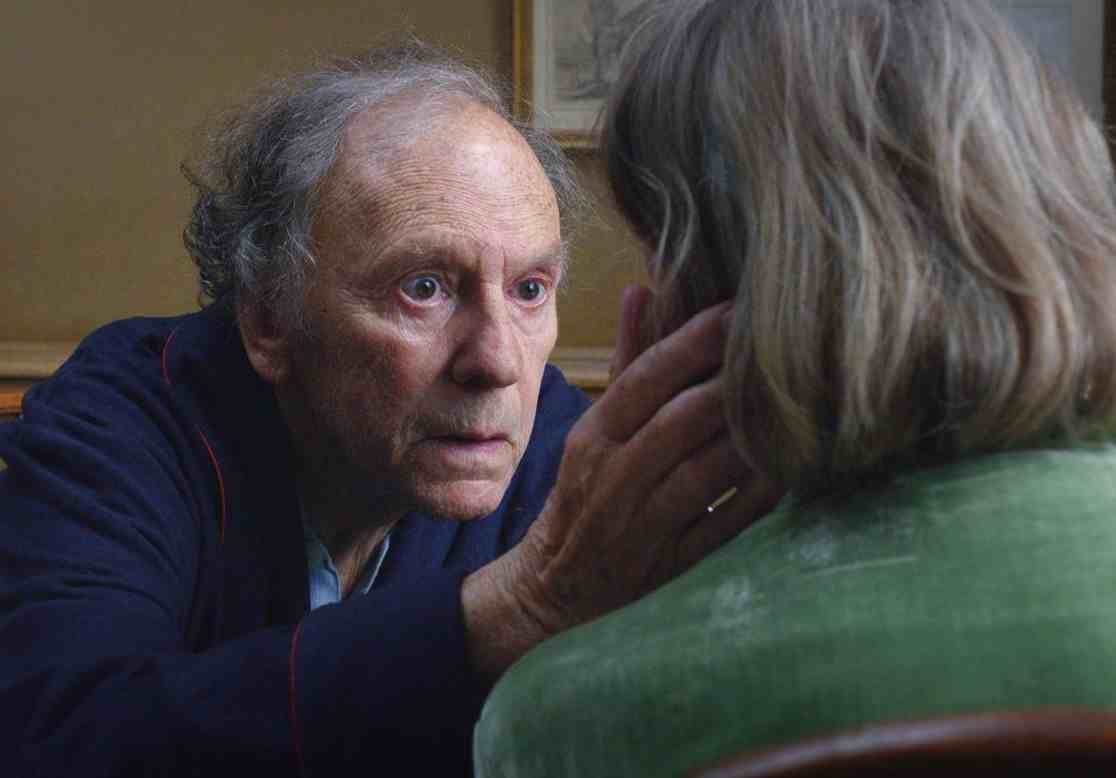
Georges (Jean-Louis Trintignant) and Anne (Emmanuelle Riva) are couple of retired music teachers who have been married a long time and are now enjoying life in their eighties. One morning at breakfast, Anne displays some unusual behaviour and becomes momentarily distant without any memory of doing so. It’s transpires that she has suffered a stroke which leads to symptoms of dementia. Georges takes on her care but the very close relationship this couple once shared, is put to it’s greatest test.

I’m not one for giving away spoilers but that decision is taken out of my hands straight away by Michael Haneke. He gives us an opening scene of firemen breaking down an apartment door to find the deceased body of an elderly woman lying on her bed with flower arrangements around her. Following this – in bold letters – the seemingly contradictory title of the film is displayed; “Amour” – or the English translation; “Love“. It’s a powerful opening and from the off-set Haneke shows his confidence by delivering the ending at the very beginning. However, it’s the journey up to this point that’s the real story behind this film.
When we are introduced to our protagonists, Georges and Anne, we are given a glimpse into their daily lives and how familiar and comfortable they are in each others company. It’s obvious that they’ve shared a lot of time together but it’s also this sense of realism that packs the real punch, when the health of Anne rapidly deteriorates.
Set, almost entirely, within the couples’ household, Haneke uses the space and setting masterfully. It’s subtly done but on slightly closer inspection you can see that the house is in slight disrepair much like the failing health of this elderly couple. Despite time being against these people in their twilight years, time also seems to slow right down in their home. Haneke builds slowly and refuses to be rushed. He lingers long on shots and reactions and refuses to use any form of a music score to manipulate or force you to feel. What you witness is raw and uncompromising and rarely is such reality and authenticity captured on screen.
This a profound and honest exploration of mortality and the nature of ageing; the loneliness involved and the humiliation and inability to maintain dignity. It’s heartbreaking to witness the deterioration of an individual and the performance of the Oscar nominated, veteran French actress, Emmanuelle Riva is an astounding piece of acting. Trintignant also puts in some very fine work as the loving husband who finds himself out of his depth and his frustration begins to show in his level of care and compassion.
As is normally the case in Haneke’s film’s, all is not plain sailing. There’s a depth and ambiguity involved. The couples’ relationship with their daughter seems distant and strained and there’s a recurring, symbolic, appearance of a pigeon that keeps entering the household. On the surface, it would seem that this film is simply an honest commentary of flailing health and fading memories but it also operates at a depth beyond this.

A deserved Oscar winner for Best Foreign Language Film. This is sensitive, emotional and deeply involving filmmaking which tackles a part of life that’s rarely touched upon. It’s a beautiful piece of work but also the most devastating love story you’re likely to see.

Mark Walker
20130228-130039.jpg

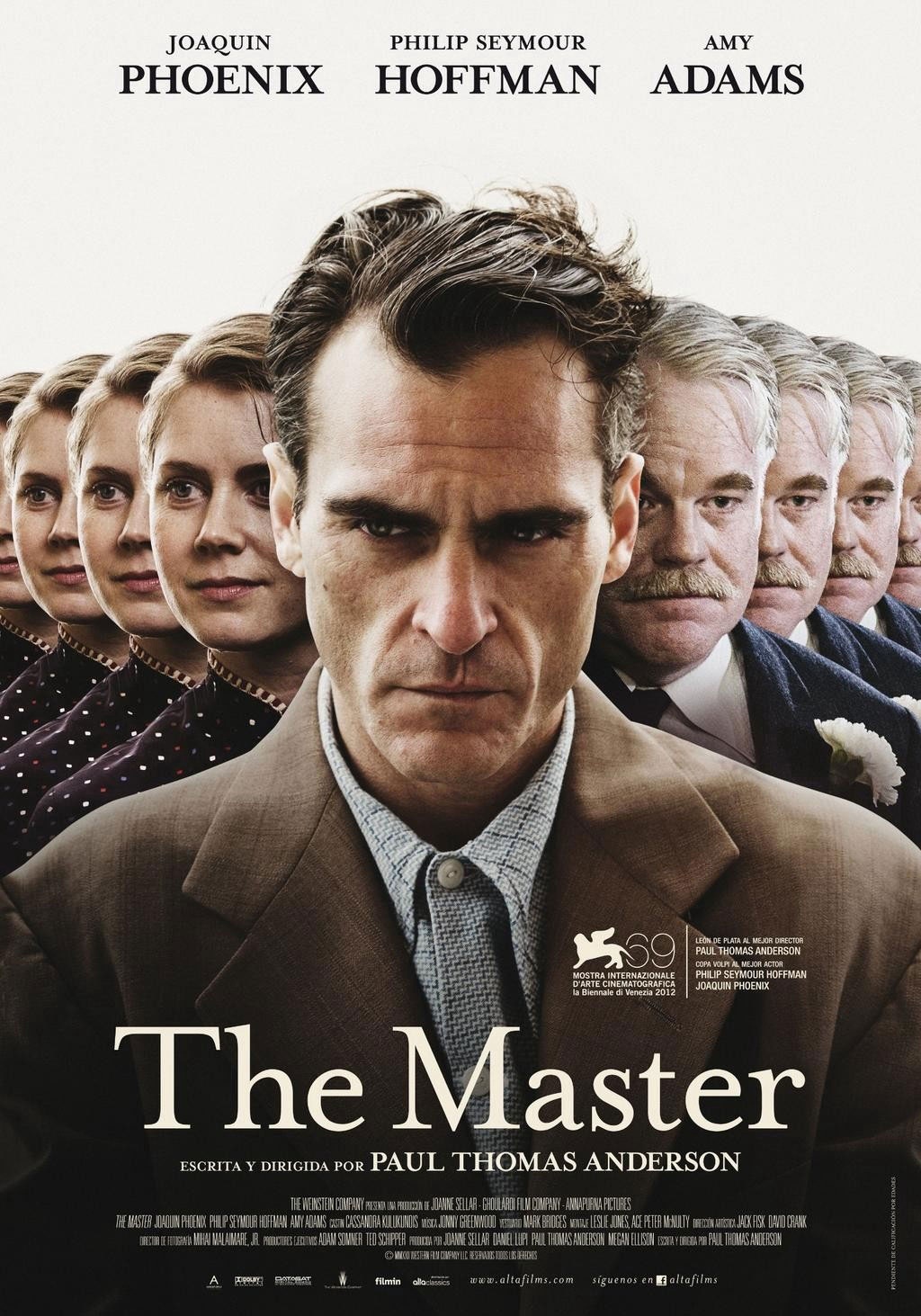
The Master * * * * *

Posted in Drama with tags on February 27, 2013 by Mark Walker

20130227-094308.jpg

Director: Paul Thomas Anderson.
Screenplay: Paul Thomas Anderson.
Starring: Joaquin Phoenix, Philip Seymour Hoffman, Amy Adams, Laura Dern, Jesse Plemons, David Warshofsky, Lena Endre, Madisen Beaty, Kevin J. O’Connor, Ambyr Childers.

Paul Thomas Anderson has only done a handful of films since his 1997 directorial debut “Hard Eight” but has he really got anything more to prove after such strong and consistent deliveries? Maybe only one thing… that he can keep up the very high standard he has set himself. If “The Master” is anything to go by, then it looks like his reputation is more than secure.

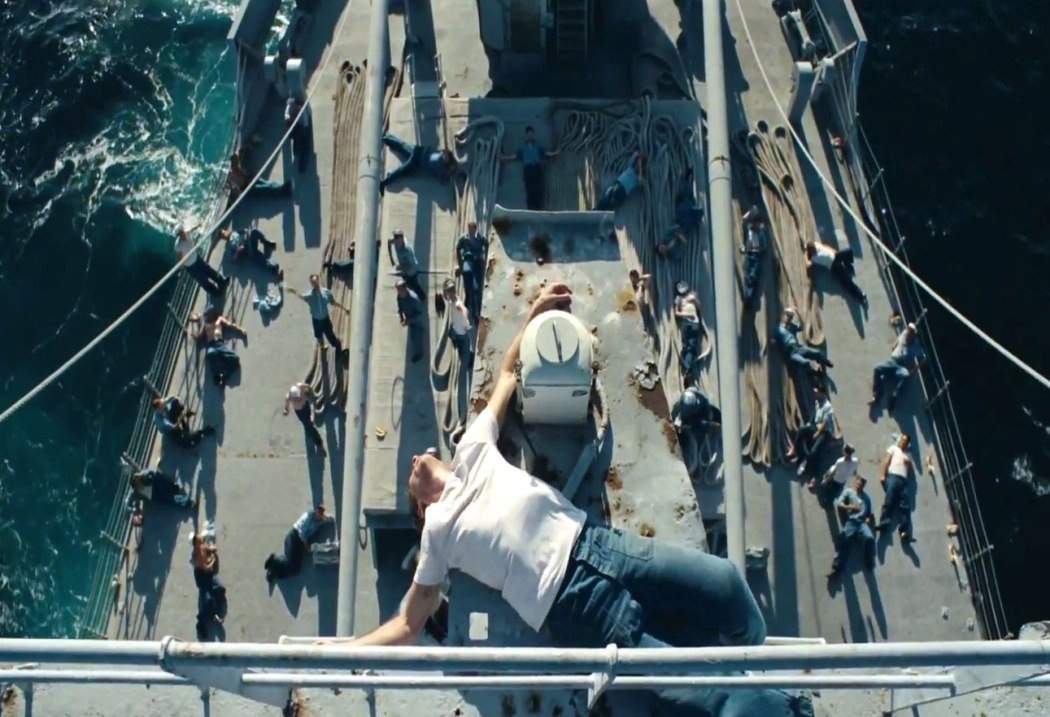
World War II has now ended and the troops are sent back home to adjust to civilised society. Freddie Quell (Joaquin Phoenix) is one of these men. He’s also one that finds it hard to readjust and relies heavily on alcohol, eventually drifting from place to place and unable to hold down gainful employment. He is given another chance at life, though, when he happens to stumble upon Lancaster Dodd (Philip Seymour Hoffman) the charismatic leader of a cult.

Anderson’s film’s certainly seem to have matured over the years. To go from his colourful and riotously entertaining second film “Boogie Nights” to the epic and Oscar winning “There Will Be Blood” is quite a leap in style and substance. His films always seem to have the recurring theme of a tortured protagonist and this is no different. It shares more in common with the aforementioned latter film, though, in terms of it’s depth and cerebral approach and it’s depiction of a struggling, disreputable man, challenging the religious beliefs of another. What else this has in common is Anderson’s ability to bring out the best in his actors. There are three searing, Oscar nominated, central performances from Hoffman as the confident and charismatic Lancaster Dodd and an emaciated, animal-like, Phoenix who looks unbearably uncomfortable as his frustrated protégé Freddie Quell. Phoenix undergoes a complete transformation here and his performance is nothing short of miraculous – if he wasn’t up against Daniel Day-Lewis for the Oscar, he might just have snapped one up for this. On the side lines and lurking in the background, we also have Amy Adams who gives a muted but very powerful performance as Dodd’s committed, Machiavellian, wife Peggy. In many ways, she is the driving force behind her husband and far more influential and conniving than is recognised. It’s not just the actors that grab your attention, though, I found every single scene of this film a work of art. The production design is flawless and the recreation of 1950’s america is captured in it’s entirety. Shot in 65mm by cinematographer Mihai Malaimare Jr, this film captures the minutest details of the time. Anderson is also in no rush, emulating masterful directors before him like Scorsese, Kubrick and David Lean. The patience and respect he shows his actors and the confidence he has in his scenes to work themselves out is a skill beyond his relatively young years. Like the domineering character Lancaster Dodd himself, Anderson also has you completely within his grasp. The film is as hypnotic and confident as it is domineering, never giving you a moment to relax and instilling a genuine feeling of unease throughout. There’s a raw, realistic, fly-on-the-wall vibe that permeates every second. It felt like I was involved in every scene and that’s, simply, down to the flawless direction and performances. They are stuff that movie gold is made from.
In terms of the story; obvious comparisons with the belief in Scientology will be made. However, it’s never called by name, referred only as “The Cause” but there’s no doubt that this is the very sect or cultish behaviour that Anderson is driving at and Lancaster Dodd is certainly an embodiment of it’s founder L. Ron Hubbard.
This understanding of such a confidence-trickster persona was witnessed before in Anderson’s “Magnolia” where Tom Cruise’s Frank T.J. Mackey is a misogynist, egotistical, self-help guru who does seminars and talks on how men can “tame” women and turn them into their “sperm receptacle”. He’s a detestable person that operates on the weaknesses of others. Ironically, Cruise is a well known believer in Scientology, in his personal life, and the mirroring of that character and his domineering behaviour is reflected in both the main characters from this film: Dodd has the ability to convince and Quell has a deviant sexual side. This would be a debate for another time but I couldn’t help but notice and wonder about it’s significance.
Despite the abundance of quality throughout, though, the film does have it’s faults; as it progresses it’s ambiguity increases and it never answers the overriding question as to why Dodd is so fascinated in Quell. It leaves us only with the suspicion that they are very similar people in search of something in their lives and it would seem that this should suffice. As a result, when The Master should really be ending with aplomb, it stumbles in it’s climax and also delivers a bizarre and obscure musical passage of “A Slow Boat to China”. Let’s just say that I think that Anderson was going for another grandstanding, memorable ending like the ‘revelation’ of Dirk Diggler in “Boogie Nights“; the raining frogs from “Magnolia” or, most of all, the “I drink your milkshake” ferocity of “There Will Be Blood“. Simply, it doesn’t quite match those but it doesn’t matter as it recovers from this particular mishap. Then it dawned on me just how effective this was; it stuck in my mind enough for my concentration to be broken. It was the first time it had been throughout the entire film and it was at this point that I realised that I had been completely captivated. I didn’t fully understand the character of Freddie Quell but I did understand his struggle and the sheer magnetism he was up against.

Original and unrestrained filmmaking of this sort has to be applauded. I’m absolutely astounded that this film and the director were omitted from the Academy Award nominations. Another major omission was from Anderson himself; he seems to have forgotten the continuation of his movie’s title. It should have read: “The (Near) Master(piece)“.

Mark Walker

20130227-094331.jpg

Argo * * * *

Posted in Drama, History, thriller with tags on February 24, 2013 by Mark Walker

20130224-134100.jpg

Director: Ben Affleck.
Screenplay: Chris Terrio.
Starring: Ben Affleck, Bryan Cranston, Alan Arkin, John Goodman, Scoot McNairy, Rory Cochrane, Christopher Denham, Tate Donovan, Clea DuVall, Victor Garber, Kyle Chandler, Zeljko Ivanek, Richard Kind, Kerry Bishé, Chris Messina Michael Parks, Taylor Schilling, Titus Welliver, Bob Gunton, Keith Szarabajka, Philip Baker Hall.

After a great directorial debut with “Gone Baby Gone” in 2007 and a brilliant sophomore effort with “The Town” in 2010, all eyes were on Ben Affleck in his third outing as director. Questions were asked as to whether he could do it again. And the answer? The answer is a resounding, ‘Yes’. Argo completes Affleck’s hat-trick behind the camera and confirms that he’s definitely a director that has an abundance of talent and awareness.

Based on true events in a post-revolution Iran in 1979. A mob of Ayatollah supporters storm the US Embassy and take 56 American hostages. 6 officers managed to escape, however, and take refuge in the home of a Canadian Ambassador. After two months in hiding and their sanctuary becoming increasingly risky, the CIA hatch a plan to get them home and extraction officer Tony Mendez (Ben Affleck) is given that responsibility. His plan is to create a fake movie called “Argo” and pretend that the six officers in hiding are his crew, scouting for shooting locations within the country.

Before going into Argo, I admittedly expected a heavy-handed political thriller but that’s not exactly what it delivers. Apart from the first five minutes of a brief overview of the, questionable, political relations between the U.S. and Iran, it sidesteps any political agenda and gets down to capturing the thrilling, human drama at it’s core. I’m not adverse to political film’s at all. In fact, I thoroughly enjoy them but Affleck is wise not to get too bogged down in boardroom banter and bureaucracy when there’s an brilliantly exciting story to tell. It does share similarities with the great political tinged thrillers of the 1970’s like Alan J. Pakula’s “All The Presidents Men” or “The Parallax View“. The late 70’s and early 80’s style is captured to perfection by cinematographer Rodrigo Prieto and Affleck’s orchestration can sit comfortably beside any from that great decade of cinema.
Chris Terrio’s solid screenplay delivers many dialogue driven scenes but Affleck keeps things moving at a frantic pace and not for a second, does the film ever get dull or drawn out. The tension is almost unbearable at times. Why Affleck didn’t, at the very least, nab an Oscar nomination for his substantial and well-constructed direction here is beyond me. There’s no doubt that he’s in complete command of his material as he leaps from Tehran to Washington to Tinseltown and delivers completely satisfying environments and effortless shifts in tone for the whole film to gel and come to life. He has the ability to capture a politically ravaged country; the backroom jargon of the CIA and the dark humour of Hollywood (that shares more than a passing resemblance to Barry Levinson’s “Wag The Dog“). In order to capture this ludicrous, stranger-than-fiction story in it’s entirety, it demands a maestro at work and Affleck can certainly consider himself one.

This is the edge-of-your-seat tension that “Zero Dark Thirty” wishes it had. With only three film’s under his hat, you’d be forgiven for thinking that Affleck has been at this directing malarky for a very long time. The comparisons with actor, turned quality director, Clint Eastwood will rage on and if anyone thinks otherwise, then Affleck can tell them to “Argo fuck yourself“.

Mark Walker

20130224-134155.jpg

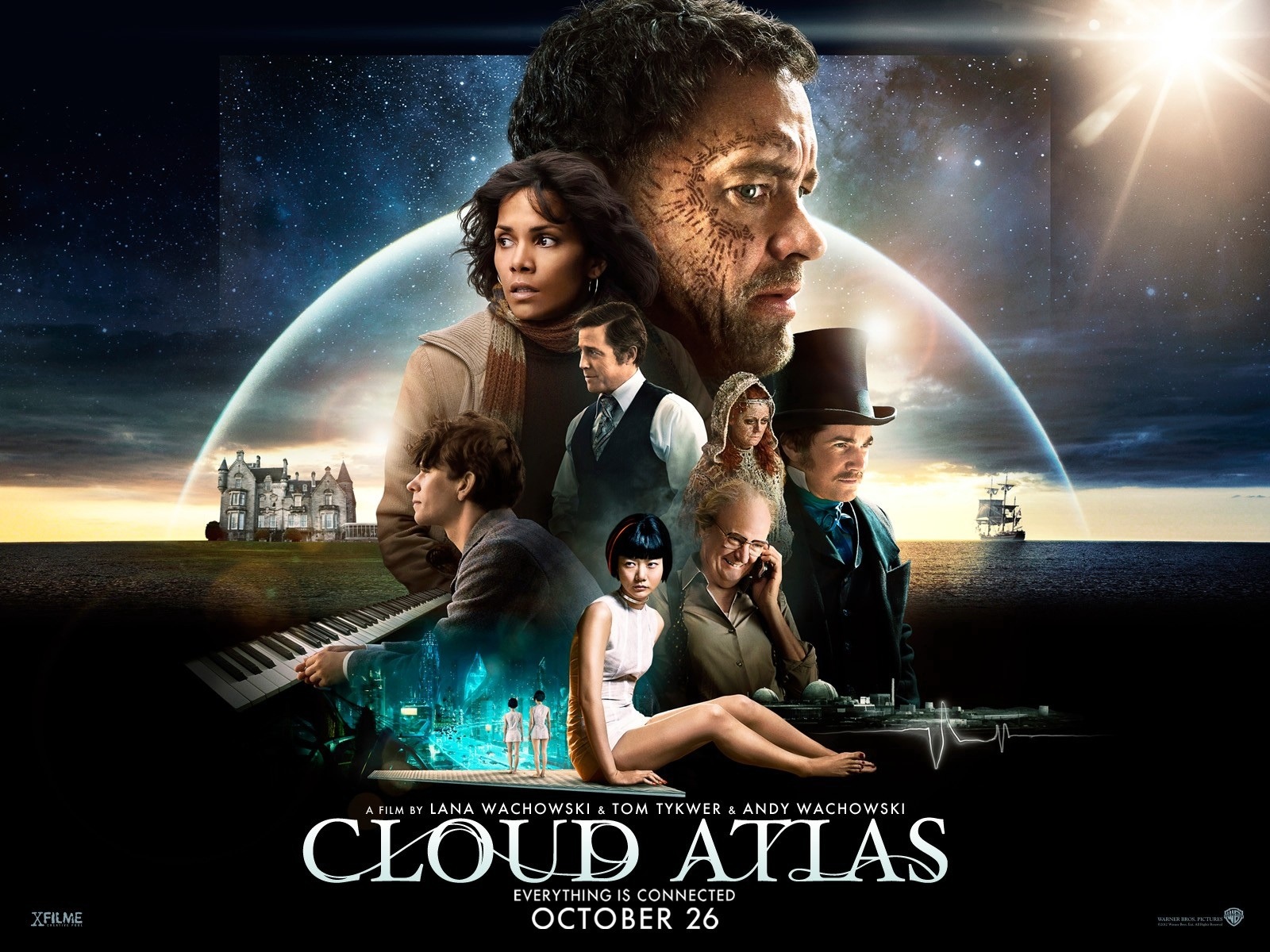
Cloud Atlas * * * * 1/2

Posted in Action, Adventure, Drama, Fantasy, Science Fiction with tags on February 21, 2013 by Mark Walker

20130221-114234.jpg

Directors: Andy Wachowski, Lana Wachowski, Tom Tykwer.
Screenplay: Andy Wachowski, Lana Wachowski, Tom Tykwer.
Starring: Tom Hanks, Halle Berry, Ben Wishaw, Jim Broadbent, Jim Sturgees, Hugh Grant, Susan Sarandon, James D’Arcy, Hugo Weaving, Doona Bae, Keith David, David Gyasi, Xun Zhou, Gary McCormack, David Mitchell.

Recently, Yann Martel’s novel “Life Of Pi” made it to the silver screen after an exemplary adaptation by director Ang Lee. However, the novel itself had been deemed ‘unfilmable’ beforehand. There are many literary works that have come under this assumption and David Mitchell’s Booker Prize-nominated novel Cloud Atlas is another. The reception of this film has been very mixed but, give or take, the odd discrepancy and noodle scratching moment, this is an impressively successful endeavour that proves, once again, that the ability to transfer page to screen is entirely possible and vibrantly alive.

1849: a Pacific ocean voyage that unearths a stowaway slave.
1936: an inspirational composition of classical music in Edinburgh.
1973: a manuscript that invites a dangerous conspiracy in San Francisco.
2012: a publisher goes into hiding in a nursing home, fearing for his life.
2144: a totalitarian regime in futuristic Korea gives birth to a rebellious clone.
2321: a post-apocalyptic Hawaii that leads to the cosmos…
These are the six stories that connect life, the universe and everything as past, present and future interlace with one another and humankind struggle to make sense of their existence.

What better way to tell a story than to begin it in the ancient way? An old man sitting around a campfire with scars on his face and wisdom on his tongue. That’s exactly what the trio of directors Andy and Lana Wachowski and Tom Tykwer have done and it sets the perfect opening to an expansive, spectacular, hugely ambitious and visual, storytelling adventure. It’s so vast and labyrinthine that it’s hard to even begin to break it down. It works on so many levels; from the metaphorical to allegorical, as well as, the tangential and does so while setting it in six different centuries (from the 19th to the 24th) and having the same actors play several different roles throughout. It’s difficult to find your feet and it could take at least an hour before you even get a hint or actually begin to grasp anything that’s going on. Once the narrative strands do come together, though, the film becomes a completely immersive experience.
It poses questions as to the meaning of our existence and the direct relation we have to one another and whether our experiences in life are just luck or predestined by means of Karma, reincarnation or simply through a greater, unknown, connection within the universe. In other words, it explores the complex questions and search for answers that have been pondered from time immemorial. It also incorporates the influence of art, television and how easily deities can be constructed and how, essentially, humankind is their own worst enemy. There will certainly be more questions than answers throughout this journey but what this film does, is run with life’s conundrums, meanwhile freeing itself from narrative conventions and hits you from six different angles all at once. It really is astoundingly complex stuff.
Now, I don’t profess to understand Cloud Atlas in it’s entirety. I did manage to get a reasonably good handle on it’s elaborate tapestry but it’s a film that requires, at least, a couple of viewings to fully grasp. The utmost patience and concentration is essential and if you happen to switch off for a second – throughout it’s almost three hour long running time – then it will, ruthlessly, leave you behind. You have been warned: this film will pickle your brain for weeks. It has confounded many; so much so, that it’s been written off as disappointing or a pretentious mess. I, on the other hand, strongly believe that it should not be ignored. The only drawbacks I found were the tenuous linking between a couple of the stories and the tone of the film shifted a little uneasily in places. Nevertheless, this is one of the most ambitious, intelligent and beautifully constructed film’s for quite some time and, if invested in, will bring many rewards.

I don’t know why I’d choose to paraphrase at this point other than to sum up this film (and my review) by leaving you with the words of a wiser fellar than myself: “I guess that’s the way the whole durned human comedy keeps perpetuatin’ it-self, down through the generations, westward the wagons, across the sands a time until – aw, look at me, I’m ramblin’ again… Catch ya further on down the trail“.

Mark Walker

20130221-114305.jpg

Flight * * * * 1/2

Posted in Drama with tags on February 15, 2013 by Mark Walker

20130215-122603.jpg

Director: Robert Zemeckis.
Screenplay: John Gatins.
Starring: Denzel Washington, Kelly Reilly, John Goodman, Don Cheadle, Bruce Greenwood, Brian Geraghty, Melissa Leo, Nadine Velazquez, Tamara Tunie, Peter Gerety, James Badge Dale, Adam Tomei.

It’s been a long wait (12 years to be exact) for director Robert Zemeckis to get back to making a live action film. His last was “Cast Away” in 2000 before he delved into computer generated animation with “The Polar Express“, “Beowolf” and “A Christmas Carol“. Despite his attempts to perfect the medium of animation those three film’s weren’t entirely successful. However, having him back on more ‘adult’ duties is a reminder of how good he can actually be.

During what may, or may not, be a technical fault with an airline passenger plane, pilot Whip Whitaker (Denzel Washington) is forced into emergency procedures in order to land safely. The media hail him as a hero but there are troubling circumstances that lie underneath: Whip is an alcoholic and was intoxicated beforehand.

Within seconds of this film starting we are given a complete introduction to our protagonist Captain Whip Whitaker; there’s a naked woman in his bedroom and he proceeds to do a massive line of cocaine to straighten himself out before he flies a plane at 9am that same morning. Straight away, you know that this is a man that takes too many chances but it’s his cocksure arrogance and determination that has you captivated and convinced in him. We then move onto the flight itself where he helps himself to a few vodka miniatures before taking to the skies. With this strong introduction to Whitaker’s persona, what follows is an even stronger aircraft scene. It’s an intense and nail-biting set piece that will no doubt have you buckling up the next time you board an aeroplane.
After such a robust and persuasive opening you’d think that the rest of the film would suffer in comparison but Zemeckis deserves the utmost credit for slowing things down yet still managing to maintain interest. It progresses into a thoroughly engrossing character study that isn’t afraid to shed some light on the nature of addiction and the unravelling of a person in denial. Zemeckis is in no rush to tell his story which helps in establishing the feeling that this is a really solid piece of work. He also delicately handles the ethical conundrum of whether the sacrifice of a few lives is worth the saving of many. The film skilfully flitters back and forth between one ‘heroic’ action and the iniquity and irresponsibility of another; toying with the audience’s own moral judgement. Whitaker is a character that you’ll continually question but also one that can be identified with, and the ability of Zemeckis’ direction, John Gatins’ writing and a towering central performance from Denzel Washington make it all entirely believable. Washington has received a lot of critical praise from many corners here, and rightfully so. He absolutely commands the screen and without his presence or ability, this character could have crumbled in a lesser actors hands. There is strong competition amongst the Oscar nominated actors of 2012/13 but Washington is thoroughly deserving of his inclusion. The rest of the cast have little to do in comparison but still manage to add to the proceedings; Kelly Reilly’s addicted junkie adds further realism and although her relationship with Whitaker is rushed, it’s also somewhat believable. The corporate and legal side of things are dealt with admirably, by Bruce Greenwood and Don Cheadle and John Goodman’s character brings a welcome addition of comic relief. All-be-it, he seems to have wandered in from another movie.
As the denouement approaches, the film, admittedly, falls into conventional territory with a pending legal case and the unravelling of Whitaker’s affliction and personal demons brought to the forefront. This is unavoidable with the nature of the story but it’s still handled with tact and remains, nothing less, than absorbing and thoroughly rewarding.

It may succumb to storytelling conventions and some subplots don’t entirely fit but, on the whole, this is filmmaking of the highest order. After this, I can only hope that Robert Zemeckis doesn’t fall back into relative (animated) obscurity.

Mark Walker

20130215-122632.jpg