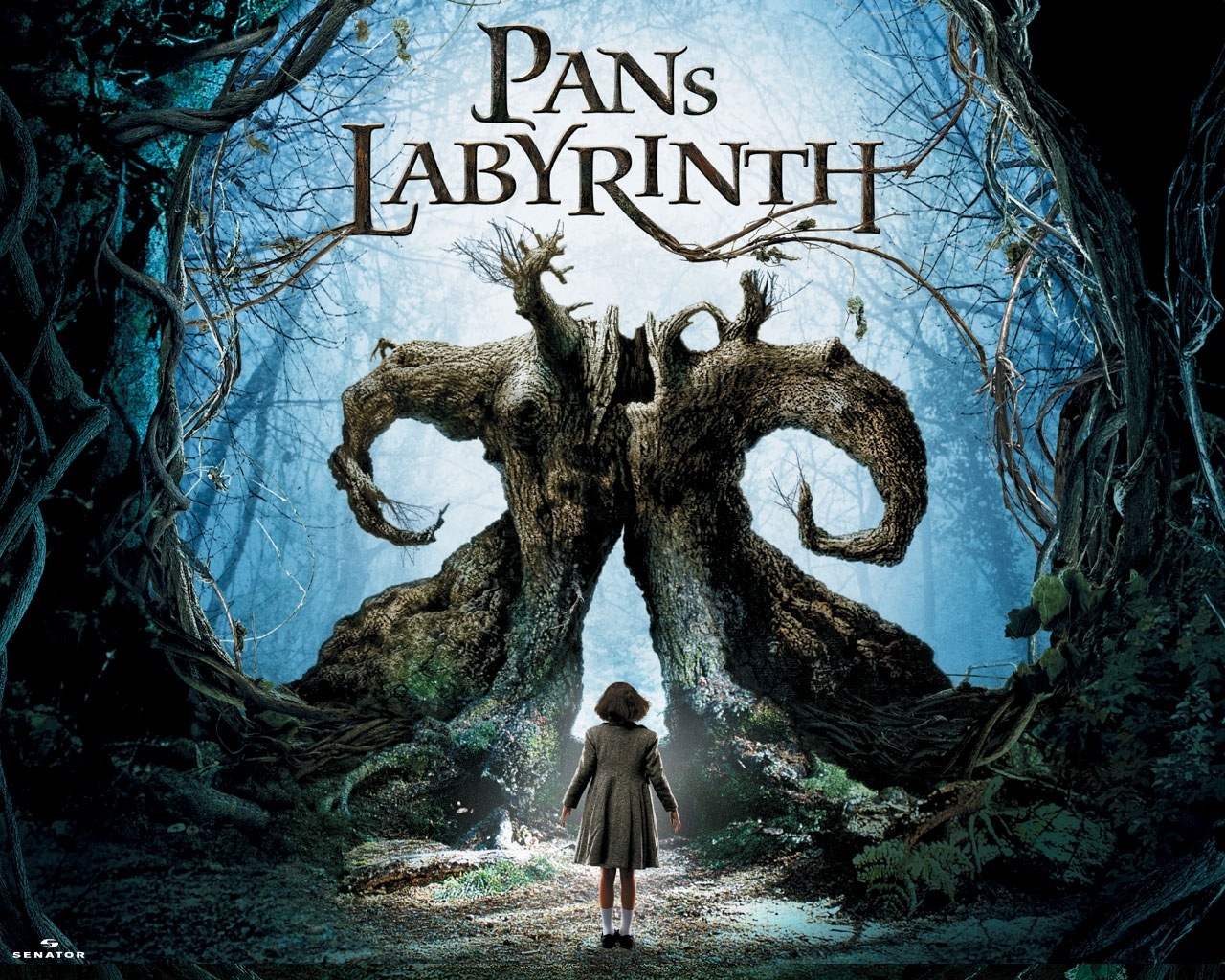
Pan’s Labyrinth

Posted in Drama, Fantasy, Horror, War on March 28, 2013 by Mark Walker

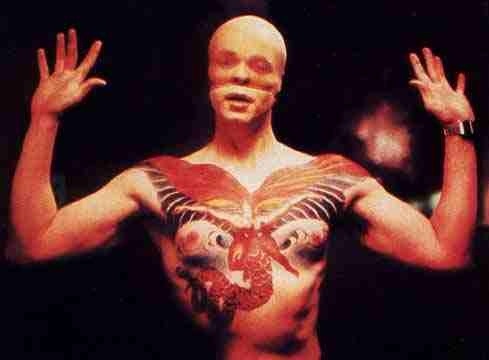
20130328-121736.jpgDirector: Guillermo del Toro.
Screenplay: Guillermo del Toro.
Starring: Sergi López, Ivana Baquero, Maribel Verdú, Álex Angulo, Doug Jones, Ariadne Gil, Manolo Solo, Roger Casamajor.

“You’re getting older, and you’ll see that life isn’t like your fairy tales. The world is a cruel place. And you’ll learn that, even if it hurts”

Despite being quite a prominent name in cinema just now, director Guillermo del Toro hasn’t actually made that many movies. He came to attention in 1993 with his excellent feature debut “Cronos” before Hollywood quickly took note and employed him on such films as “Mimic” and “Blade II“. However, his strengths lie in his own original work where he retains creative control. Of which, there are three that really stand out; the aforementioned “Cronos” is one, “The Devil’s Backbone” another and “Pan’s Labyrinth” – which to this day, remains his masterpiece. Continue reading

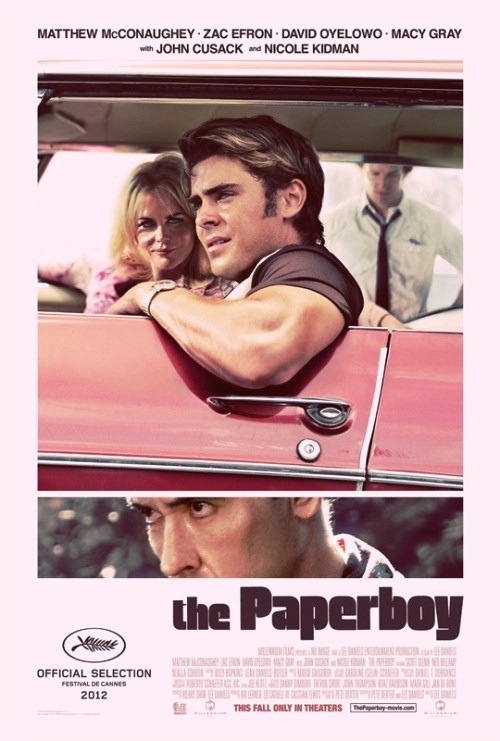
The Paperboy * * * 1/2

Posted in Crime, Drama with tags on March 27, 2013 by Mark Walker

20130327-140752.jpg

Director: Lee Daniels.
Screenplay: Pete Dexter, Lee Daniels.
Starring: Matthew McConaughey, Zac Efron, Nicole Kidman, John Cusack, Macy Gray, David Oyelowo, Scott Glenn, Ned Bellamy, Nealla Gordon, Gary Clarke, Faison Love, Grace Hightower.

After his Oscar winning film “Precious“, which was an adaptation of Sapphire’s novel “Push“, director Lee Daniels decides to follow that up with another adaptation. This time it’s the 1995 novel “The Paperboy” by Pete Dexter and another exploration of highly dysfunctional personalities.

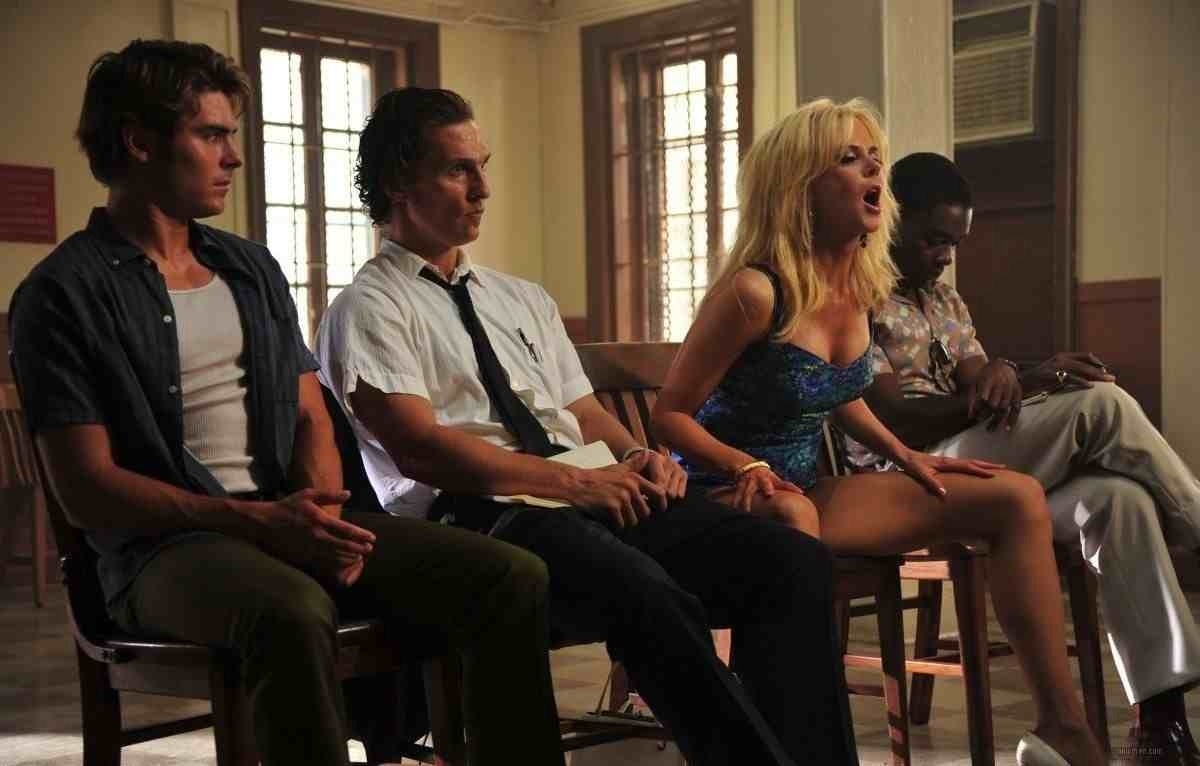
Naive reporter Ward Jansen (Matthew McConaughey) heads back to his home town of Lately, where he’s determined to exonerate convict Hillary Van Wetter (John Cusack), who awaits execution on death row for the supposed murder of a local Sheriff. Ward is accompanied by his brother Jack (Zac Efron), ambitious colleague Yardley Acheman (David Oyelowo) and flashy seductress Charlotte Bless (Nicole Kidman) – who has a fetish for incarcerated men and Van Wetter is her latest obsession. The murky details of the investigation soon uncover truths about everyone involved and truths that were better left alone.

This is a film that’s very much a mixed bag and it’s easy to see why some people just didn’t take to it. First off, the narrative is disjointed. At times, it doesn’t seem know to which direction it’s going in and the tacked-on, voiceover narration, doesn’t really help matters. In the earlier part there’s humour and it gives the impression that it’s got it’s tongue stuck firmly in it’s cheek. As the film and characters grow, though, it becomes progressively darker. So much so, that it will having you wincing in both disgust and horror. These shifts in tone are less than effortless and also threaten to undo the film as a whole. However, even though the tone is uneven it’s throws up many memorable moments; Kidman urinating on Efron’s face, Cusack and Kidman engaging in masturbation while 10 feet apart and other brutal and shocking revelations, which I’ll allow you to find out for yourself. It’s in these memorable moments that you realise where the film’s strengths lie; the characters are all three dimensional and the brave cast are uniformly brilliant. Efron has come a long way since his “High School Musical” days and looks like proper leading actor material; McConaughey continues his recent run of seedy and risqué roles; Cusack captures the intensity of a loutish psychopath and Kidman is a revelation as an oversexed floozie. Fine support is also delivered by a surprisingly talented Macy Gray and the enigmatic David Olywewo. It’s the very commitment from these actors that has you believing in the material even when their characters’ motivations are not always clear or convincing. Another big player in the proceedings is cinematographer Roberto Schaefer. He captures the searing heat and uncomfortableness of backwoods Florida to perfection while balancing the class divide and racial tension that drips from every pore.
Daniels’ direction may be a little hyperstylised at times and his grasp on the film’s structure is less than convincing. Incoherence does creep in and the film sags around the midriff, becoming in danger of losing itself entirely. At one point, when it should be wrapping up, it throws in further complications and character developments but to give the director his due, he knows how to drop subtle hints without revealing too much, leaving the story’s denouement more satisfying than first thought. There’s no doubt that this is a flawed endeavour but the scathing opinions of it are a little unwarranted – all-be-it, understandable. There is much to admire here. Yes, it’s trashy, tawdry and most certainly deranged but it’s also edgy and unpredictable, which is more than you can say for a lot of studio releases these days.

Sexploitation, exploitation and telekinetic masturbation. What more can you can ask from a film that doesn’t pretend to be anything more than a deranged venture into the American south with a committed cast that are game for anything?
This might have been booed at the Cannes film festival but for it’s trashy audacity alone, it deserves applause.

Mark Walker

20130327-140822.jpg

TUESDAY’S TRIVIA TIDBITS

Posted in Uncategorized with tags on March 25, 2013 by Mark Walker

Welcome back to Tuesday’s Trivia Tidbits. For those of you out of the loop, this is a little compilation of 10 movie related facts that I will be posting weekly and info that I always find interesting. So without further ado, this weeks are…
20130324-141915.jpg
1:Drive” and “Taxi Driver” actor Albert Brooks’ real name is, in fact, Albert Einstein. He changed his surname “Einstein” because there was already an extremely well-known theoretical physicist by that name.

20130324-142011.jpg
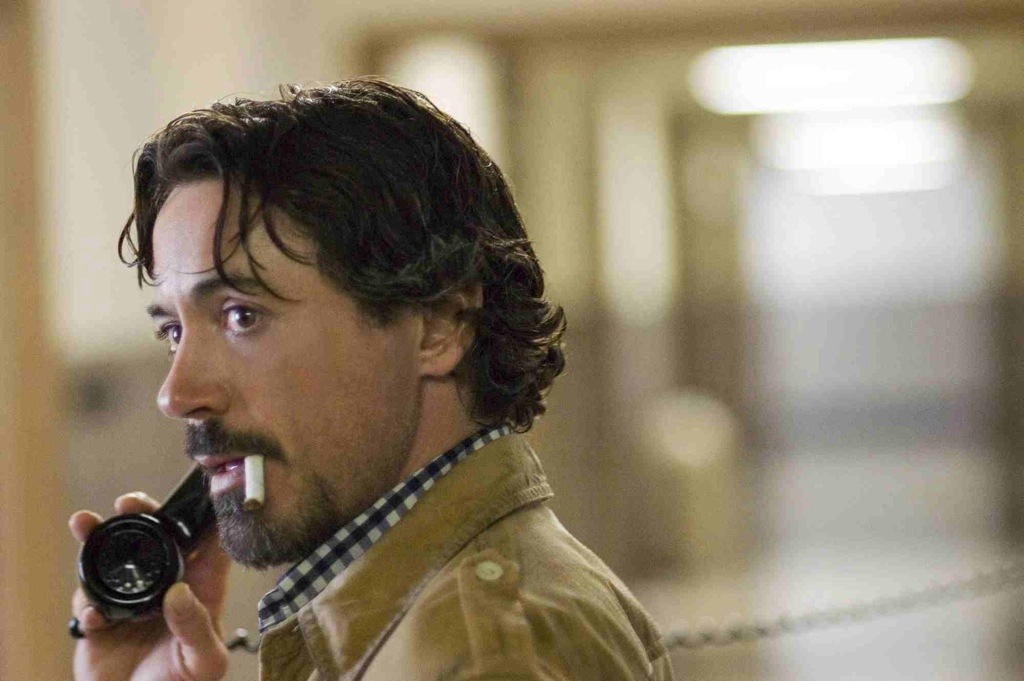
2: According to David Fincher, Robert Downey Jr. was so exhausted while making “Zodiac” because the film was shot digitally (leaving them with fewer resets and fewer breaks) that he decided to leave jars of his urine around the set as a form of protest.

20130324-142058.jpg
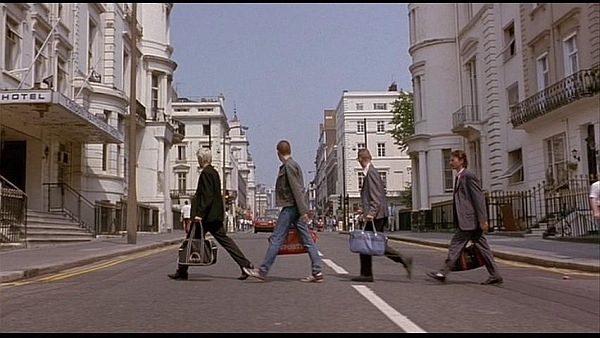
3: In “Trainspotting” there are several references to The Beatles: – The scene where the store detectives chase Renton down the street is reminiscent of the scene in “A Hard Day’s Night” where The Beatles are pursued by fans. – While watching the train, the four friends arrange themselves in the same manner as The Beatles did on the back of the album “Sgt. Pepper’s Lonely Hearts Club Band“. – The scene where the four friends cross the road and enter the hotel is reminiscent of the cover of the album “Abbey Road“. – The scene where Renton wakes up on the couch in the morning at Diane’s home and says hello to someone passing through the hallway while covered with a blanket to his chin, is reminiscent of a scene in “Help!” where Ringo is found in a trunk of a car covered up with a blanket, and upon being found, says hello. – The “Mother Superior’s” written in the dealer house is a reference to the Beatles song Happiness is a Warm Gun, a song about heroin, which has the line “mother superior jump the gun“.

20130324-142151.jpg
4: Dino De Laurentiis, who had produced “Manhunter“, passed on “The Silence of the Lambs” because Manhunter had flopped. He gave the rights away to Orion Pictures for free.

20130324-142801.jpg
5: The part of J.D. (played by Brad Pitt) in “Thelma & Louise” was originally intended for William Baldwin but he jumped ship when he landed the lead in “Backdraft“. Christian Slater was also considered and, then struggling actor, George Clooney auditioned five times for Ridley Scott before Pitt took over.

20130324-142845.jpg
6: Following the success of the movie “Forrest Gump“, the writer of the novel, Winston Groom wrote a sequel called “Gump & Co.“, which referenced the movie as if it had been released in Forrest’s world. Forrest also meets Tom Hanks in the novel.

20130324-143137.jpg
7: After “The Wild One” in 1953, Marlon Brando and Lee Marvin almost starred together again 19 years later in John Boorman’s “Deliverance“. They were cast together in the film until Lee Marvin told director Boorman that he thought he and Brando were too old for their roles. Boorman agreed and cast Jon Voight and Burt Reynolds instead.

20130324-143220.jpg
8: When Paul Thomas Anderson approached George C. Scott about playing the role of Earl Partridge (Jason Robards’ character) in “Magnolia“, Scott threw the script across the room, saying “This is the worst fucking thing I’ve ever read. The language is terrible.

20130324-143303.jpg
9: The inspiration for the character of Freddy in “A Nightmare On Elm St” came from several sources in Wes Craven’s childhood. Fred Krueger was a schoolmate of Craven with whom he had shared a paper route, and who had bullied him for several years. In “The Last House on the Left“, Craven also used this experience as inspiration, calling the villain Krug. Freddy’s appearance (especially the dirty clothes and hat) was inspired by a hobo who Craven saw staring at him through his window one day when he was ten.

20130324-143337.jpg
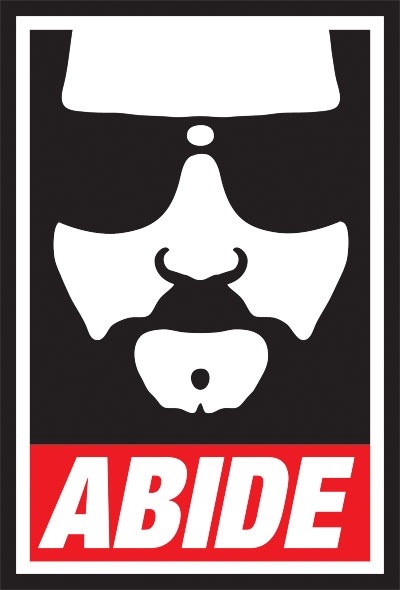
10: In “The Big Lebowski“, the Dude’s line, “The Dude abides” is a reference to Ecclesiastes 1:4, “One generation passes away, and another generation comes: but the earth abides forever.” It is a reference to how the Dude, much like the Earth, can weather change and chaos around him, but still remain the same.

So there you have it. 10 esoteric Tidbits to masticate on. Some you may know. Some you may not. If you have any thoughts, stick your donations in the comment box.
See you next Tuesday…

(For earlier editions of Trivia Tidbits click here.)

Frankenweenie * * * *

Posted in Animation, Family, Horror with tags on March 25, 2013 by Mark Walker

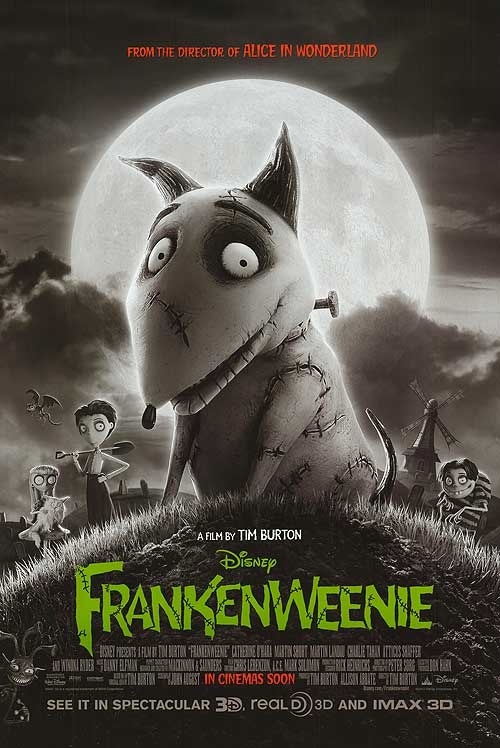
20130325-133144.jpg

Director: Tim Burton.
Screenplay: John August.
Voices: Charlie Tahan, Winona Ryder, Martin Short, Catherine O’Hara, Martin Landau, Atticus Shaffer, Robert Capron, Conchata Ferrell, James Hiroyuki Liao, Dee Bradley Baker, Frank Welker.

Tim Burton has occasionally been involved in animated movies throughout his career, having served as producer on “The Nightmare Before Christmas“, “James & The Giant Peach” and “9“. However, the only time he’s actually been behind the camera on any of them was “Corpse Bride” in 2005 and his animated short in 1984 “Frankenweenie” – of which this is a feature length expansion of. Some may feel that he’s treading old ground here but there’s no doubt that this is still a highly successful endeavour.

Victor Frankenstein is a lonely young boy who’s best friend is his energetic dog, Sparky. When Sparky is run over and killed by a car, Victor is devastated but he refuses to give up hope of spending time with his beloved friend again. Inspired by his science teacher, he decides to rig up a laboratory and harness the lightning to bring Sparky’s corpse back to life. His attempts are successful but it soon causes havoc within his neighbourhood.

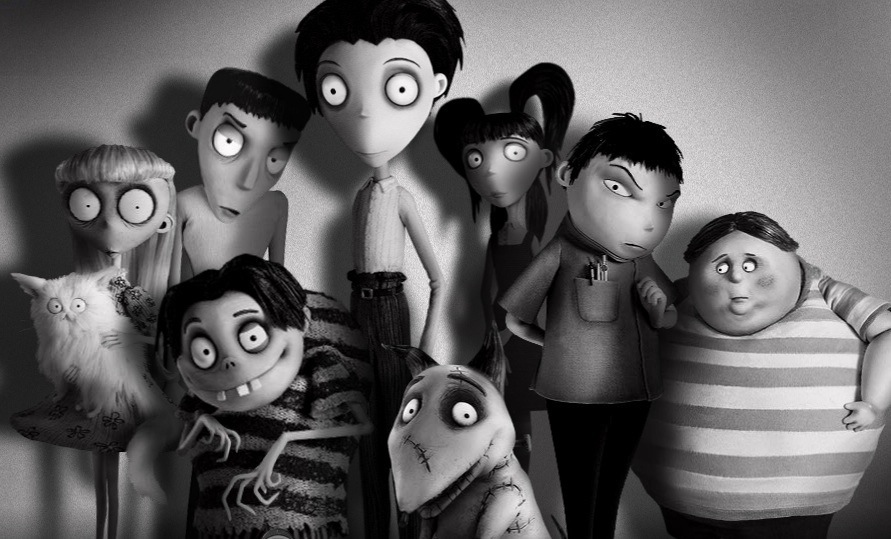
Burton has came in for a critical panning from many people of late (myself included). The major issue being his seeming inability to change his idiosyncratic style. With this latest venture into stop-motion animation, he has answered his critics with aplomb and it makes you wonder whether he even should change his approach when the results can be as good as this. Here, his gothic idiosyncrasies are entirely suited to this homage to director James Whale and his classic horror movies “Frankenstein” and it’s follow-up “Bride Of Frankenstein“. He also throws in some references to horror stars Boris Karloff, Peter Lorre and Vincent Price and includes a whole host of quirky characters – the one that stood out for me the most was ‘Mr. Whiskers’; a cat who can predict the future of others by the shape of the shit left in his litter tray.
Burton’s decision to film in gorgeous monochrome also adds to the proceedings, meanwhile, giving Mary Shelley’s classic literary tale his own spin and he (and us) has a lot fun in doing so. It also has a similar off-key suburban setting like Burton’s earlier film “Edward Scissorhands” and shares the same balance of that film’s darkness and humour. Younger children may balk at the unravelling of the darker tale but older kids and adults can revel in it’s decent into a reanimated, monster B-Movie which is entirely fitting and in doing so, never loses it’s sense of fun or feeling for the macabre.

A lot of animated films these days have an appeal for children and adults alike and the balance that Burton achieves here is proof that that’s not about to change anytime soon. One of 2012’s very best animated films and one of Burton’s best for quite a while.

Mark Walker

20130325-133205.jpg

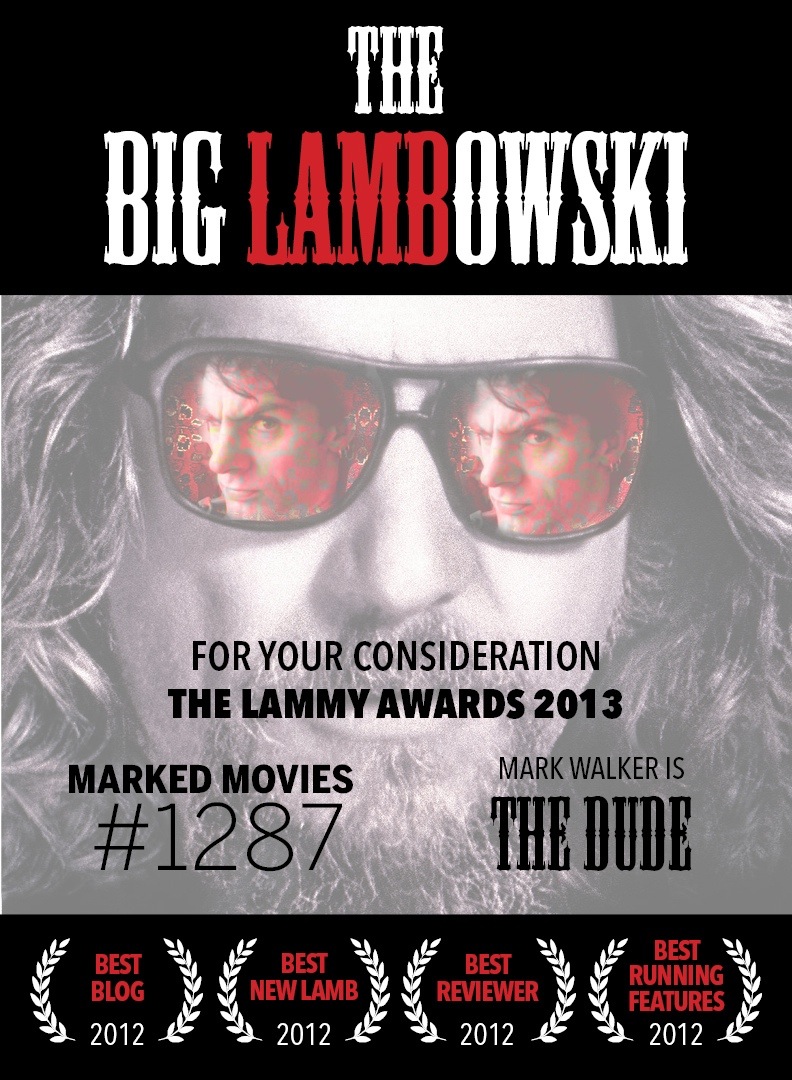
For Your Consideration

Posted in Uncategorized with tags on March 21, 2013 by Mark Walker

20130321-193117.jpg

As some, or most, of you will be aware, the 2013 Lammy Awards are now underway. Amongst all of us bloggers this is a coveted prize that brings warmth the heart of the victor. If only, to be reminded that other bloggers appreciate the effort that you’ve put in. Don’t worry too much, though. I’m not about to go on the campaign trail and bombard you with my gleaming smile, firm handshake or even a photographic opportunity when kissing your baby. That being said, I’d still like to win one of these awards but I’m going to be straight up about it.
What I would like to do, at this time, is thank all of you who have submitted my blog and got me to the nomination stage. I’m over the moon and can’t thank you all enough. It is at this time that I will now submit my “For Your Consideration” poster (which I’ve been dying to do) for the four main category’s that I would be greatful in getting a nomination for.

20130321-193145.jpg

The poster speaks for itself, I think, and that’s as far as my campaigning will go. However, you will still be able to see the poster in my sidebar throughout the nomination stage as a gentle reminder. Anyway, I’ve said enough already. A big thank you to Chris from Filmhipster for the excellent poster that he designed for me and thanks to all that have submitted me so far and for any further consideration you might have.

Always grateful,

Mark

TUESDAY’S TRIVIA TIDBITS

Posted in Uncategorized with tags on March 18, 2013 by Mark Walker

Welcome back to Tuesday’s Trivia Tidbits. For those of you out of the loop, this is a little compilation of 10 movie related facts that I will be posting weekly and info that I always find interesting. So without further ado, this weeks are…

20130319-080819.jpg
1: Roman Polanski’s “Chinatown” originally had a voiceover narration, which was written in the script but he eliminated it, and filmed the movie so that the audience discovered the clues at the same time Jake Gittes did.

20130319-080926.jpg
2: During filming one of the night scenes in “The Blues Brothers“, John Belushi disappeared and could not be located. Dan Aykroyd looked around and saw a single house with its lights on. He went to the house and was prepared to identify himself, the movie and that they were looking for John Belushi. But before he could, the homeowner looked at him, smiled and said, “You’re here for John Belushi, aren’t you?” The homeowner then told them Belushi had entered their house, asked if he could have a glass of milk and a sandwich and then crashed on their couch. Situations like this prompted Aykroyd to affectionately dub Belushi “America’s Guest“.

20130319-081054.jpg
3: Jennifer Lawrence is the youngest actress to be nominated for two Best Actress Academy Awards and the 2nd youngest recipient of the award upon winning for “Silver Linings Playbook” aged 22; the youngest recipient is Marlee Matlin, who won for “Children of a Lesser God” aged 21.

20130319-084951.jpg
4: There’s a scene in David Lynch’s “Mulholland Drive” where Adam Kesher (played by Justin Theroux) smashes a producers’ car windshield with a golf club. This is a reference to the famous 1994 incident where Jack Nicholson did the same. Nicholson’s nickname is “Mulholland Man“.

20130319-085047.jpg
5: Matthew Modine turned down the Tom Cruise role, Maverick, in “Top Gun” because he objected to the film’s Cold War politics. Patrick Swayze, Emilio Estevez, Nicolas Cage, John Cusack, Matthew Broderick, Sean Penn, Michael J. Fox, Scott Baio and Tom Hanks also turned it down. Rob Lowe, Eric Stoltz, Robert Downey Jr and Charlie Sheen were considered for it. Sheen would later go on to spoof the role in the 1991 comedy “Hot Shots“.

20130319-085154.jpg
6: Screenwriter Christopher McQuarrie’s inspiration for the character of Keyser Soze in “The Usual Suspects” was a real-life murderer by the name of John List, who murdered his family and then disappeared for 17 years.

20130319-085300.jpg
7: Before Dustin Hoffman auditioned for his role as Ratzo Rizzo in “Midnight Cowboy“, he knew that his all-American image could easily cost him the job. To prove he could do it, he asked the auditioning film executive to meet him on a street corner in Manhattan, and in the meantime, dressed himself in filthy rags. The executive arrived at the appointed corner and waited, barely noticing the “beggar” less than ten feet away who was accosting people for spare change. At last, the beggar walked up to him and revealed his true identity.

20130319-085345.jpg
8: Spanish director Pedro Almodóvar was approached several times to direct “The Paperboy” before Lee Daniels. He seriously considered making it his first English-speaking feature but finally declined. Allegedly, he participated in early versions of the script.

20130319-085440.jpg
9: John Turturro role of Bernie Bernbaum in the Coen’s “Miller’s Crossing” is a performance that’s actually based on the film’s cinematographer Barry Sonnenfeld.

20130319-085525.jpg
10: According to an interview with “Predator” director John McTiernan, the “hole in the jungle” appearance of the Predator was played by Jean-Claude Van Damme in a “blue screen” (actually red) suit. Van Damme quit after two days, unhappy with being cast as an uncredited special effect, but can be seen as the Predator in “If It Bleeds We Can Kill It: The Making of ‘Predator’“. The alien was scrapped, redesigned and was eventually played by Kevin Peter Hall who was over 7 feet tall.

So there you have it. 10 esoteric Tidbits to masticate on. Some you may know. Some you may not. If you have any thoughts, stick your donations in the comment box.
See you next Tuesday…

(For earlier editions of Trivia Tidbits click here.)

The Hobbit: An Unexpected Journey * * * *

Posted in Adventure, Fantasy with tags on March 15, 2013 by Mark Walker

20130315-104730.jpg

Director: Peter Jackson.
Screenplay: Peter Jackson, Guillermo del Toro, Fran Walsh, Philippa Boyens.
Starring: Martin Freeman, Ian McKellen, Richard Armitage, Cate Blanchett, Hugo Weaving, Andy Serkis, Ian Holm, Christopher Lee, Ken Stott, James Nesbitt, Lee Pace, Graham McTavish, Aidan Turner, Dean O’Gorman, Sylvester McCoy, Barry Humphries, Stephen Hunter, John Callen, Peter Hambleton, Jed Brophy, Mark Hadlow, Adam Brown, Benedict Cumberbatch, Elijah Wood.

When news of an adaptation of J.R.R Tolkien’s The Hobbit arrived, I have to admit that I was very eager to see it move along briskly. Unfortunately, that didn’t happen. Production was so slow that original director Guillermo del Toro had to leave due to other commitments. Although this was disappointing news, all was not lost as “The Lord of the Rings” director Peter Jackson returned to the helm to assume control of this prequel. Expectations were high and it left the overhanging question as to whether he could emulate his past successes. Well, it’s certainly not without it’s flaws but again Jackson has delivered another indulgent cinematic experience from the treasured quill of Tolkien’s world.

The Dwarf Kingdom of Erebor has been taken over by the fearsome dragon, Smaug and a plan is set to reclaim it and the treasures lost. Bilbo Baggins (Martin Freeman) is a Hobbit who finds himself thrust into this quest on the recommendation of the wizard Gandalf (Ian McKellen). Smaug is not the only thing that stands in their way, though; a malevolent presence is at work in middle-earth which could affect all of them.

After a brief introduction to the plight of the dwarves and a devastating introduction to the dragon Smaug, we are taken straight back to the Shire where the whole story of the Hobbit adventures originated. It’s here that we’re reminded of the twee environment in which these little halfling’s reside and with Jackson calling the shots, you know straight away that you are in comfortable hands. Gandalf and Bilbo’s first meeting is addressed and the rest of the main characters are rounded up before the film begins it’s “unexpected journey”. When I say this, though, it sounds like the film gets straight down to business and gets the formalities out the way. It doesn’t. Jackson takes his time in establishing the set-up and he chooses to flesh out every detail. As a result, it becomes apparent that the film isn’t flowing as easily as it could do. Things do pick up, though, and it’s very difficult not to get swept up in the sheer visual masterclass that’s delivered before your eyes. It’s absolutely breathtaking to observe and none more so, than when Jackson begins to deliver his highly impressive, action set-pieces. From a confrontation with campfire Trolls to battling Rock monsters and giant sweeping eagles, they’re all absolutely astounding and thrillingly executed. However, despite the excitement, what these moments lack is the ability to feel like the characters are in any real danger. Maybe this is because I had read the book beforehand or maybe it’s because the set-pieces only served to instil some excitement before taking a break and doing it all over again. There is a feeling of repetition to the film and, dare I say it, a feeling of tediousness. Jackson’s decision to flesh out this short children’s novel into a trilogy of films – that will no doubt run between two and three hours each – seems wholly unnecessary but I suppose time will tell on that. As it is, though, this film is certainly overlong and it, simply, didn’t need to be. Some scenes are laborious and you can’t help but get the feeling that Jackson should just move it along. On the other hand, I found it hard to deny how much fun I was having. Much like “The Lord of the Rings“, it’s aided by very strong performances; McKellen is his usual reliable self as Gandalf and although I wasn’t convinced with the choice of Martin Freeman as Bilbo, I have to admit that he slotted in very well indeed. As for the dwarves, well, out of the whole thirteen of them, only a handful actually stand out. The one that really rises to the surface is that of Thorin Oakenshield and Richard Armitage plays him to perfection – channeling an Aragorn/Viggo Mortensen charismatic presence. He’s so commanding that it’s hard to accept that he’s only a dwarf. Another highlight from the performances is seeing Andy Serkis reprise his role of Gollum. Once again, the go-to guy for motion capture brings this complex little character to life.
The ingredients are all here and it certainly looks like there’s more mileage in these characters yet. I just hope that Jackson knows when to trim the edges next time round.

A little less plodding and bit more urgency will be required for the second instalment if this trilogy is to truly find it’s feet. That being said, it finishes strongly and if Jackson can keep that momentum going then this could yet turn out to be a very successful return to middle-earth.

Mark Walker

20130315-104809.jpg

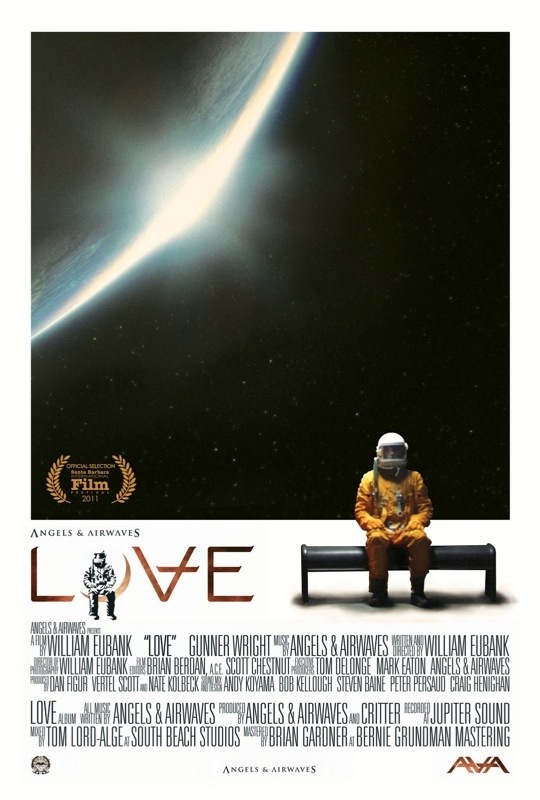
Love * *

Posted in Drama, Science Fiction with tags on March 14, 2013 by Mark Walker

20130314-131159.jpg

Director: William Eubank.
Screenplay: William Eubank.
Starring: Gunner Wright, Corey Richardson, Bradley Horne, Nancy Stelle, Roger E. Fanter, Ambyr Childers.

I often find it difficult giving my opinion on independent films as I’m aware of the struggles that have been faced in order to bring it to the screen. They are hard to criticise, as the filmmaker certainly doesn’t get the same luxuries or benefits that the financial backing from a big studio would bring. However, when all is said and done, it’s ultimately the material that it should be judged upon. Such is the case with this film; it’s undeniably impressive in it’s assembly but found wanting in it’s substance.

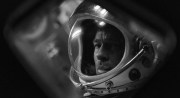
As I can’t really be bothered to write the plot summary, I’ll leave you with the director’s own description of the story… “After losing contact with Earth, Astronaut Lee Miller becomes stranded in orbit alone aboard the International Space Station. As time passes and life support systems dwindle, Lee battles to maintain his sanity – and simply stay alive. His world is a claustrophobic and lonely existence, until he makes a strange discovery aboard the ship”.

As the film opens, we find ourselves in the midst of the American Civil War and a commentary that’s reminiscent of the work of Terrence Malick. Visually, it looks spectacular and you wouldn’t think for a second that this was shot on a shoestring budget. Debutant director, William Eubank certainly knows how to capture a scene and his work here is exceptionally well handled. There’s a good sense of atmosphere and overall, ethereal, feel to the film.
From the battlefields we are then taken to a space station that is orbiting earth and we are introduced to our protagonist who wanders his enclosed environment and ruminates on his lonely existence much like Duncan Jones’ “Moon” or Stanley Kubrick’s “2001: A Space Odyssey“. It’s not just the setting but also the existential nature of those films that this tries to emulate. Sadly, it’s nowhere near as good as either of them. The isolation of our protagonist brings about a monotony in his daily routine and that monotony is soon shared by the viewer. To put it simply, very little happens. I got the point of his dilemma and the effect that it had on his psyche but it’s laboured too strongly and the connection between the astronaut and the civil war is tenuous at best. There are many verbal musings throughout, whereby some lovely passages of words are weaved together but it sounds more poetic than it does philosophical and I think that’s where the problem lies. The film has airs and graces of having challenging, philosophical, ideas but doesn’t really have anything concrete to cling on to. I kept waiting for some revelation that would tie everything, meaningfully, together but when it arrived, it didn’t deliver the punch I was hoping for and only confirmed my suspicions of how pretentious the film really is. The only thing that really makes sense is that it was funded entirely by the band “Angels and Airwaves” (who also provide the soundtrack) and it comes across as an exercise in marketing their own stuff and no more than a glorified music video.
In fairness, it does manage to hold your interest on the visual front with some stunningly captured images and moments. However, impressive visuals do not a good film make. If it continued how it began, then it might have had something going for it but it didn’t and it doesn’t.

The major issue with Love, is that it believes itself to be deeper and more profound than it actually is.
There is such a thing in the cosmos known as a ‘Black hole‘. This certainly has a hole, and it’s head is too far up it.

Mark Walker

20130314-131227.jpg

Robot & Frank * * * *

Posted in Drama, Science Fiction with tags on March 12, 2013 by Mark Walker

20130306-123904.jpg

Director: Jake Schreier.
Screenplay: Christopher D. Ford.
Starring: Frank Langella, Peter Sarsgaard (voice), Susan Sarandon, James Marsden, Liv Tyler, Jeremy Sisto, Jeremy Strong, Bonnie Bentley, Dario Barosso.

Robot & Frank” is the type of film that could, unfortunately, suffer a lot of preconceptions beforehand. Judging it by it’s cover or title, could lead to it being written off as some low-budget, ridiculous science-fiction film. If this does happen, then more fool those that do judge, as they’d be missing out on a marvellous human drama that has a great balance between humour and pathos.

In the near future, Frank is a retired cat burglar who lives alone, while his daughter Madison (Liv Tyler) is travelling the world and his son Hunter (James Marsden) is more focused on his career. Frank also happens to be going through the early stages of dementia, so in order to help him, Hunter buys him a robot caretaker, who will tend to his every need. Frank realises the potential in this, though, and plans to restart his old profession by using the robot as his aide to burgle more properties.

First off, this is a film about memories; the fading ones of it’s lead character and the expendable ones of an automaton. What makes it work, though, is the sensitive and convincing relationship at it’s core. There’s a genuine friendship that’s built between the characters and Christopher D. Ford’s screenplay takes time to touch upon the similarities between them. Robot is entirely reflective of Frank and they could be viewed as one and the same, while lightly skimming over the philosophical theories of Descartes’ cartesian doubt. Does the fact that Frank struggles to remember the past make him any less alive than the robot, who has no past? It’s this type of attention and delicate handling of the material that brings a genuine heart (and head) to the film. It’s an earnest portrait of Alzeihmer’s while also managing to incorporate some fun by it’s schematic caper sub-plot. It’s success is largely down to the strong and convincing actors; Langella delivers a fabulously nuanced performance of a man that once led a colourful life but now finds himself with a failing memory and refuses to accept it. He’s onscreen for almost the entirety of the movie, and throughout, he’s mostly talking to piece of tin. That piece of tin is also miraculously brought to life, though, with the gentle and perfectly fitting voice of Peter Sarsgaard. For this little character (who is never given a name) to win you over is a testament to everyone involved here. Director Jake Schreier handles the material beautifully – in his directorial debut – delivering a depth and profundity with touching family moments, memories reawakened and the importance of them in relation to what it means to be alive.

Although the film deals with a superficial automaton there’s a heart that lies within and that heart beats very strongly.
It’s early doors in 2013 but this is a film that I will fondly remember for the rest of the year and beyond.

Mark Walker

20130306-124017.jpg

TUESDAY’S TRIVIA TIDBITS.

Posted in Uncategorized with tags on March 11, 2013 by Mark Walker

Welcome back to Tuesday’s Trivia Tidbits. For those of you out of the loop, this is a little compilation of 10 movie related facts that I will be posting weekly and info that I always find interesting. So without further ado, this weeks are…

20130311-171946.jpg
1: As with most of Stephen King’s stories, “Stand By Me” contains connections to other books he has written. Ace Merrill (Kiefer Sutherland’s character) later re-appeared in the book “Needful Things“, although he does not appear in the film. The dog Chopper is compared to “Cujo“.
Characters are familiar with Shawshank Prison, from “The Shawshank Redemption“. Teddy Duchamp (Corey Feldman’s character) was actually first mentioned in King’s first book, “Carrie“, in which Carrie destroys a gas station he once worked at.

20130311-172343.jpg
2: Al Pacino turned down the role of Ron Kovic’s (Tom Cruise) father in Oliver Stone’s “Born on the Fourth of July“. Some years earlier another version of the film was proposed with Pacino as Kovic with William Friedkin directing.

20130311-172431.jpg
3: Production on the film “Barry Lyndon” was moved from Ireland to England after Stanley Kubrick received word that his name was on an IRA hit list for directing a film featuring English soldiers in Ireland.

20130311-193039.jpg
4: Before Anthony Hopkins was cast as Dr. Hannibal Lecter in “The Silence of the Lambs“, the considerations were: John Hurt, Christopher Lloyd, Patrick Stewart, Louis Gossett Jr., Robert Duvall, Jack Nicholson, and Robert DeNiro. Jeremy Irons actually turned down the offer.

20130311-193121.jpg
5: John Singleton’s Best Director Oscar nomination for “Boyz N The Hood” at the age of 24 makes him the youngest director to ever receive such an accolade, beating Orson Welles by a good 2 years.

20130311-194422.jpg
6: Ellen Burstyn received a permanent spinal injury while filming “The Exorcist“. In the sequence where she is thrown away from her possessed daughter, a harness jerked her hard away from the bed. She fell on her coccyx and screamed in pain.

20130311-194502.jpg
7: Robert Mitchum turned down the role that eventually went to Tony Curtis in “The Defiant Ones“. Mitchum, a real-life veteran of a Southern chain gang, didn’t believe the premise that a black man and a white man would be chained together and said that such a thing would never happen in the South. Over the years this reason was corrupted to the point where many people now believe Mitchum turned down the role because he didn’t want to be chained to a black man, an absolute falsehood. Curtis repeated the inaccurate story in his autobiography, but later recanted after Mitchum’s real reason was explained to him.

20130311-194551.jpg
8: Clint Eastwood wore the same poncho through all three “Man with No Name” movies- “A Fistful of Dollars“, “For a Few Dollars More” and “The Good, the Bad & the Ugly” without a replacement or ever getting it cleaned.

20130311-194658.jpg
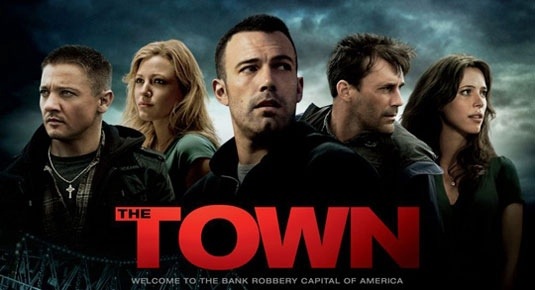
9: The original cut of “The Town” that Ben Affleck screened for producers was 4 hours long. After realizing that the film would never appeal to wide audiences, he cut the film down to 2 hours and 50 minutes in three days. After screening that version, the studio and producers loved it but knew that it was still too long. Affleck eventually had to cut beloved footage and personal favorite scenes to make the film work. The film then went through more change at a studio standpoint when they wanted the film at no more than 2hours and 10 minutes. Eventually, Affleck cut the film down to 2 hours and 8 minutes, ultimately trimming action sequences, character development and dialog. Affleck, while happy with the theatrical cut, stated that an Extended Cut will be featured on the DVD and BluRay with deleted scenes on top of that. He also stated that, while the theatrical cut of “The Town” is a close adaptation of ‘Prince of Thieves‘ (the novel which it is based on), the extended cut is a mirror of the novel, staying more true to the book.

20130311-194800.jpg
10:American Beauty” has many references to the Vladimir Nabokov novel “Lolita“. “Lester Burnham” (Kevin Spacey’s character) is an anagram for “Humbert learns”. Prof. Humbert was the main character from the novel and film adaptations.

So there you have it. 10 esoteric Tidbits to masticate on. Some you may know. Some you may not. If you have any thoughts, stick your donations in the comment box.
See you next Tuesday…

(For earlier editions of Trivia Tidbits click here.)

Berberian Sound Studio * * * 1/2

Posted in Horror, Mystery with tags on March 11, 2013 by Mark Walker

20130306-123619.jpg

Director: Peter Strickland.
Screenplay: Peter Strickland.
Starring: Toby Jones, Cosimo Fusco, Antonio Mancini, Tonia Sotiropoulou, Susanna Cappellaro, Suzy Kendall, Hilda Péter, Layla Amir, Eugenia Caruso, Chiara D’Anna, Lara Parmiani.

This second feature from director Peter Strickland (following “Katalin Varga” in 2009) is certainly an interesting bag of mixed opinions. Some have claimed it to be a five star experience, while others simply didn’t get it. I suppose it depends a lot on your approach beforehand but there’s no mistaking that it’s one of those film’s where you’re left to make up your own mind.

An experienced British sound-engineer is hired to work on a low-budget Italian horror movie called “Equestrian Vortex”. Throughout his work, he struggles with the language-barrier and constant exposure to horror movie images and finds himself drawn into a vortex all his own, as he begins to lose his grasp on reality.

The thing that strikes you most from this film when it opens is it’s good sense of atmosphere. It possess an almost strange sepia tint, as if the proceedings have been desaturated. There’s a permeating feeling dread and unease that courses through it as, time itself, seems to stroll by. Strickland is certainly in no rush to tell his story and he also abandons any conventional method in doing so; a good chunk of the dialogue is in Italian and there’s a deliberate omission of subtitles. This may put some people off but it serves to create an understanding and affiliation with the loneliness and isolation of the protagonist, Gilderoy (played brilliantly by Toby Jones). Although deliberate, and an interesting method, I also found it somewhat frustrating. What’s also very interesting is that the story takes shape in the sound that’s provided for film’s rather than the images. How many times have you ever seen a horror movie that relies solely on audio rather than visual? Cabbages are stabbed and plunged into water to provide the perfect accompanying sound of someone being stabbed or drowned. It’s an interesting insight and the suggestion of horror is actually captured very well using this approach. When we do, eventually, see the images that have been getting dubbed, it throws the film into a completely new surrealistic direction that shares similarities with the mind-bending talents of David Lynch and his art imitating life theme of “Inland Empire” or “Mulholland Drive“. Of course, thats where the similarity ends as Strickland doesn’t have the ability to construct his story with any real meaning in the way that Lynch excels at. I’m no stranger to surreal cinema, in fact I love it, but this leaned a little too far to self-indulgence for me.
Anyone familiar with the ‘Giallo’ horrors of Italian cinema during the 60’s and 70’s will, no doubt, take a lot more from this film than I did. That being said, there’s no denying it’s grasp on atmosphere and it’s impressive ability to build tension. However, as our protagonist becomes increasingly withdrawn and descends in madness, we descend into obscurity without any real satisfying conclusion. For me, the film just ended. I was aware of it’s nature and prepared for any subtext or symbolism that it might throw my way, but in the end, it didn’t quite come together. I was hoping for a more satisfying conclusion.

It’s certainly won’t be to everyone’s tastes. For some, it will bore. For others, it will confuse. However, if your open minded enough, it will draw you in. Basically, it’s an art-house horror that can either be seen as pretentious clap trap or an astute homage. I, strangely, find myself somewhere in between.

Mark Walker

20130306-123648.jpg

TUESDAY’S TRIVIA TIDBITS.

Posted in Uncategorized with tags on March 4, 2013 by Mark Walker

Welcome back to Tuesday’s Trivia Tidbits. For those of you out of the loop, this is a little compilation of 10 movie related facts that I will be posting weekly and info that I always find interesting. So without further ado, this weeks are…

20130304-203353.jpg
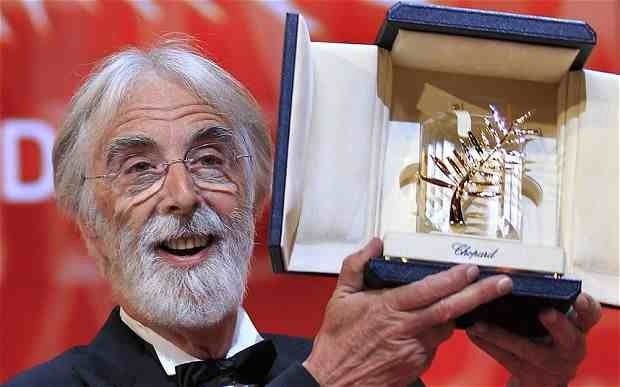
1: The coveted Palme d’Or at the Cannes Film Festival has been won twice by only 8 directors since it’s origins in 1939. They are: Bille August, Jean-Pierre Dardenne & Luc Dardenne, Alf Sjöberg, Shôhei Imamura, Emir Kusturica, Francis Ford Coppola and Michael Haneke.

20130304-203442.jpg
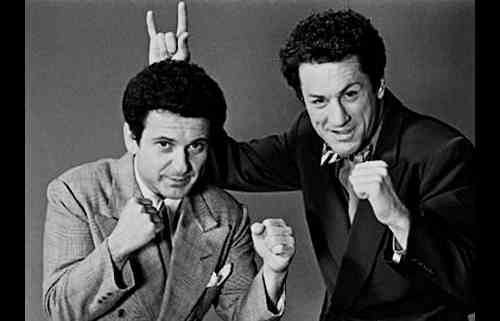
2: To achieve the feeling of brotherhood between the two lead actors in “Raging Bull“, Robert De Niro and Joe Pesci actually lived and trained with each other for some time before filming began. Ever since then, the two have been very close friends.

20130304-203533.jpg
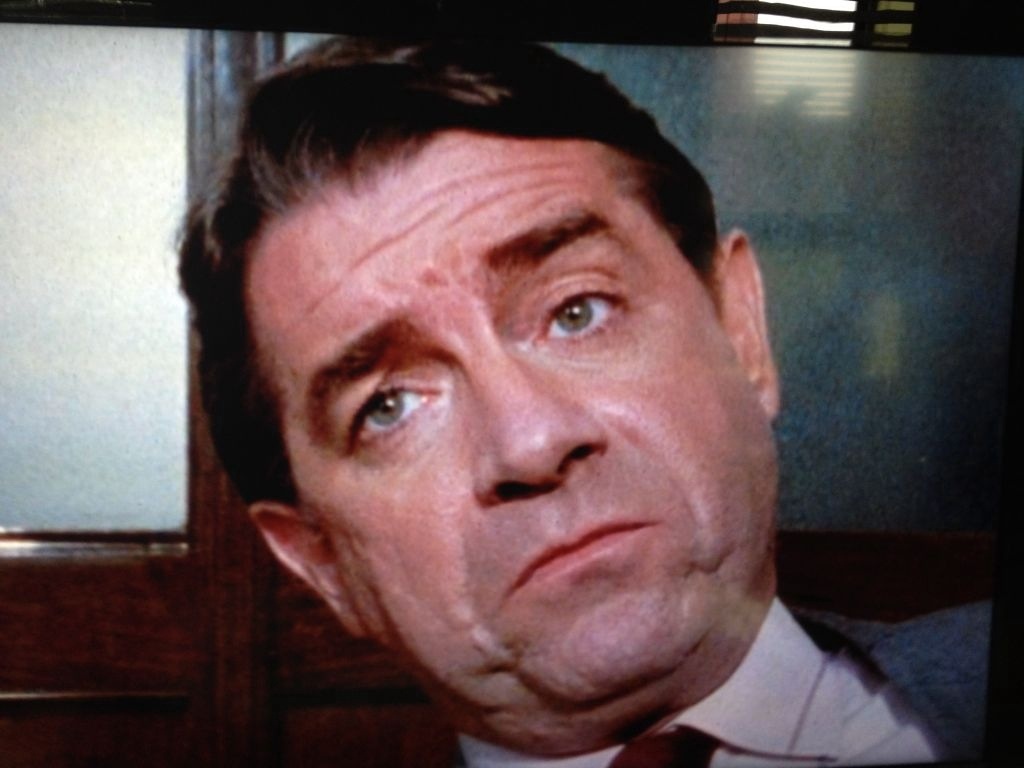
3: The character of Leo (played by Albert Finney) in “Miller’s Crossing” was written for Trey Wilson, who played Nathan Arizona, Sr, in the Coens’ previous film, “Raising Arizona“. Wilson died shortly before production began, so Finney took over the role.

20130304-203646.jpg
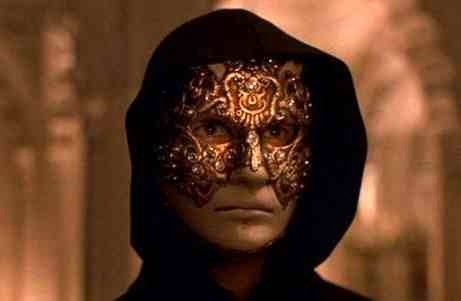
4: The mask that Bill Harford (Tom Cruise) wears with his costume in “Eyes Wide Shut” is modelled from the face of Ryan O’Neal, a reference to Stanley Kubrick’s earlier film “Barry Lyndon“.

20130304-203725.jpg
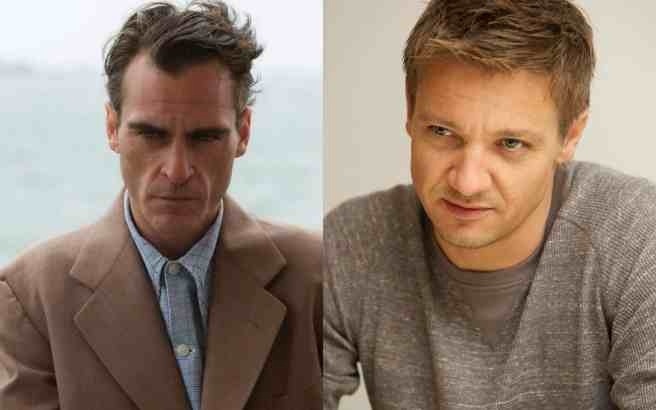
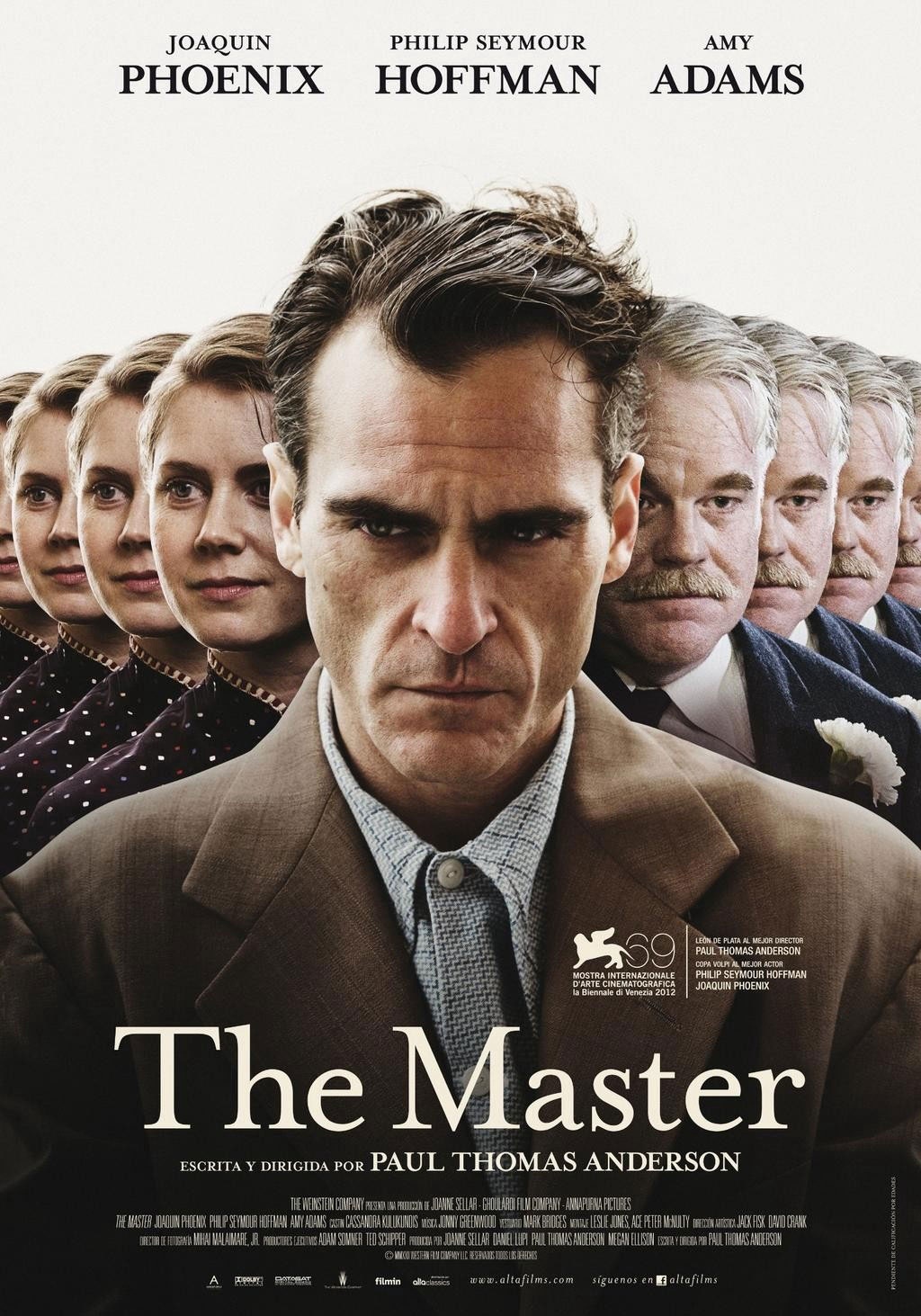
5: Jeremy Renner was originally going to play Freddie Quell in “The Master” when the film was prepped to shoot years ago, but when financing fell through, and Joaquin Phoenix was available following his “I’m Still Here” project, the filmmakers were able to cast him.

20130304-203952.jpg
6: The project of “L.A. Confidential” was twice pitched to television: first, producer David L. Wolper wanted to produce the project as a mini-series, and later, it was being developed as a weekly series by HBO. A pilot that starred Kiefer Sutherland was produced, but the series was not picked up afterwards.

20130304-204044.jpg
7: Unlike most animated films, the principal actors in “Wreck-it Ralph” regularly recorded audio sessions together in the same room, a situation which led to a lot of improvising.

20130304-204128.jpg
8: Kirk Douglas, who owned the rights to “One Flew Over The Cuckoo’s Nest“, planned to star himself, but by the time they got around to making the film he was too old. Douglas passed on production duties to his son Michael and Jack Nicholson was then cast in the lead.

20130304-204218.jpg
9: The film “Four Rooms” that included segments from four directors – Quentin Tarantino, Robert Rodriguez, Alexandre Rockwell & Allison Anders was originally to be titled “Five Rooms” with Richard Linklater contributing a segment; however, he withdrew before production began.

20130304-204255.jpg
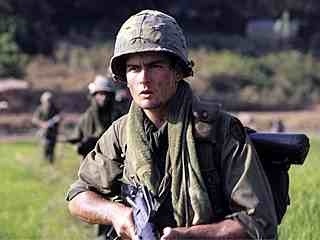
10: Oliver Stone wrote the first draft of “Platoon” in 1971 and sent it to Jim Morrison in hopes that he would play the part of Pvt. Chris Taylor (whom Charlie Sheen would ultimately play). Morrison had the script on him when he was found dead in Paris. It is unknown whether he would have been cast had he lived. However, Stone eventually made “The Doors” based on Morrison’s life.

So there you have it. 10 esoteric Tidbits to masticate on. Some you may know. Some you may not. If you have any thoughts, stick your donations in the comment box.
See you next Tuesday…

(For earlier editions of Trivia Tidbits click here.)

Amour * * * * *

Posted in Drama, Foreign Language with tags on February 28, 2013 by Mark Walker

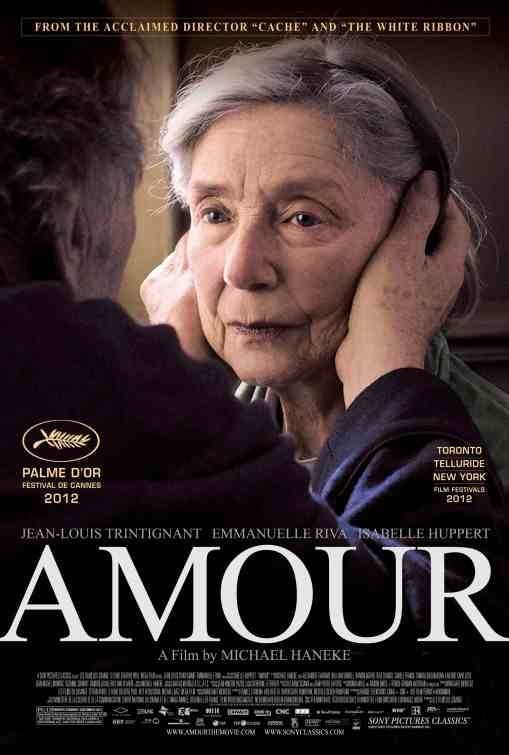
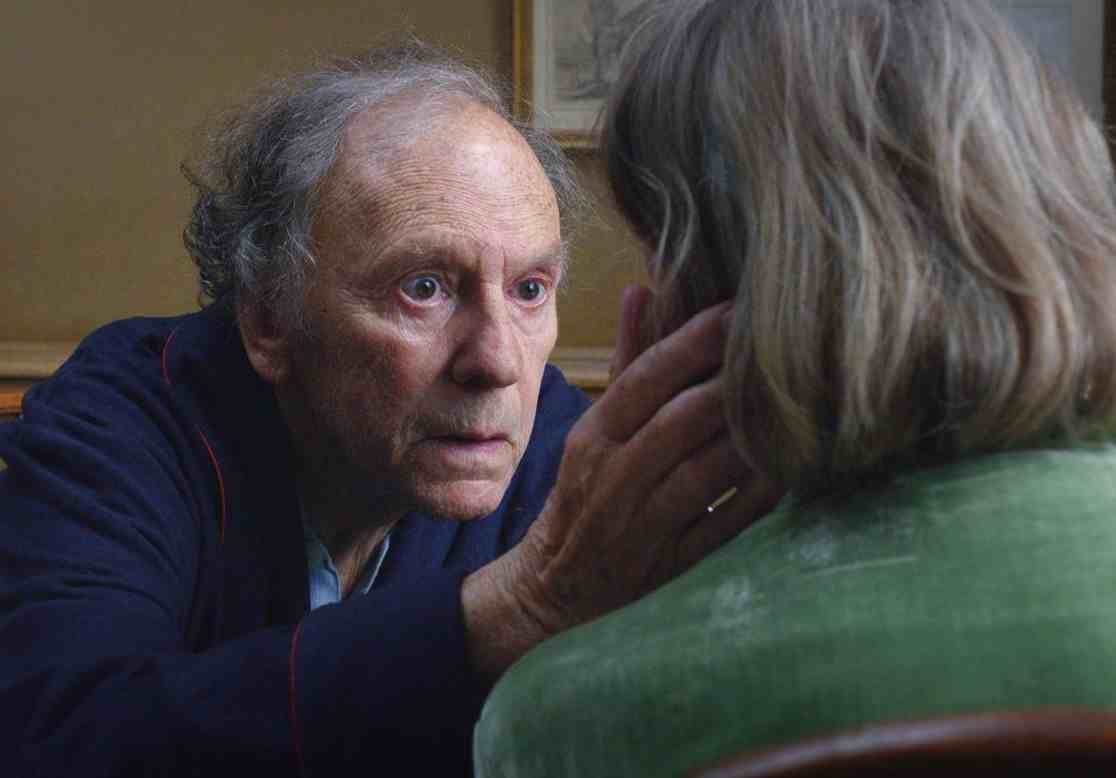
20130228-125944.jpg

Director: Michael Haneke.
Screenplay: Michael Haneke.
Starring: Jean-Louis Trintignant, Emmanuelle Riva, Isabelle Huppert, Alexandre Tharaud, William Shimell, Ramón Agirre, Rita Blanco.

Danish director Bille August was the only director to win back-to-back Palme d’Or awards at the Cannes Film Festival (in 1988 & 1992) with his film’s “Pelle The Conqueror” and “The Best Intentions“. That was, until Austrian director Michael Haneke recently equalled that achievement. His first came in 2009 with “The White Ribbon” and he done it again in 2012 with this deeply emotional and profound film that’s been heralded by many as a masterpiece.

Georges (Jean-Louis Trintignant) and Anne (Emmanuelle Riva) are couple of retired music teachers who have been married a long time and are now enjoying life in their eighties. One morning at breakfast, Anne displays some unusual behaviour and becomes momentarily distant without any memory of doing so. It’s transpires that she has suffered a stroke which leads to symptoms of dementia. Georges takes on her care but the very close relationship this couple once shared, is put to it’s greatest test.

I’m not one for giving away spoilers but that decision is taken out of my hands straight away by Michael Haneke. He gives us an opening scene of firemen breaking down an apartment door to find the deceased body of an elderly woman lying on her bed with flower arrangements around her. Following this – in bold letters – the seemingly contradictory title of the film is displayed; “Amour” – or the English translation; “Love“. It’s a powerful opening and from the off-set Haneke shows his confidence by delivering the ending at the very beginning. However, it’s the journey up to this point that’s the real story behind this film.
When we are introduced to our protagonists, Georges and Anne, we are given a glimpse into their daily lives and how familiar and comfortable they are in each others company. It’s obvious that they’ve shared a lot of time together but it’s also this sense of realism that packs the real punch, when the health of Anne rapidly deteriorates.
Set, almost entirely, within the couples’ household, Haneke uses the space and setting masterfully. It’s subtly done but on slightly closer inspection you can see that the house is in slight disrepair much like the failing health of this elderly couple. Despite time being against these people in their twilight years, time also seems to slow right down in their home. Haneke builds slowly and refuses to be rushed. He lingers long on shots and reactions and refuses to use any form of a music score to manipulate or force you to feel. What you witness is raw and uncompromising and rarely is such reality and authenticity captured on screen.
This a profound and honest exploration of mortality and the nature of ageing; the loneliness involved and the humiliation and inability to maintain dignity. It’s heartbreaking to witness the deterioration of an individual and the performance of the Oscar nominated, veteran French actress, Emmanuelle Riva is an astounding piece of acting. Trintignant also puts in some very fine work as the loving husband who finds himself out of his depth and his frustration begins to show in his level of care and compassion.
As is normally the case in Haneke’s film’s, all is not plain sailing. There’s a depth and ambiguity involved. The couples’ relationship with their daughter seems distant and strained and there’s a recurring, symbolic, appearance of a pigeon that keeps entering the household. On the surface, it would seem that this film is simply an honest commentary of flailing health and fading memories but it also operates at a depth beyond this.

A deserved Oscar winner for Best Foreign Language Film. This is sensitive, emotional and deeply involving filmmaking which tackles a part of life that’s rarely touched upon. It’s a beautiful piece of work but also the most devastating love story you’re likely to see.

Mark Walker

20130228-130039.jpg

The Master * * * * *

Posted in Drama with tags on February 27, 2013 by Mark Walker

20130227-094308.jpg

Director: Paul Thomas Anderson.
Screenplay: Paul Thomas Anderson.
Starring: Joaquin Phoenix, Philip Seymour Hoffman, Amy Adams, Laura Dern, Jesse Plemons, David Warshofsky, Lena Endre, Madisen Beaty, Kevin J. O’Connor, Ambyr Childers.

Paul Thomas Anderson has only done a handful of films since his 1997 directorial debut “Hard Eight” but has he really got anything more to prove after such strong and consistent deliveries? Maybe only one thing… that he can keep up the very high standard he has set himself. If “The Master” is anything to go by, then it looks like his reputation is more than secure.

World War II has now ended and the troops are sent back home to adjust to civilised society. Freddie Quell (Joaquin Phoenix) is one of these men. He’s also one that finds it hard to readjust and relies heavily on alcohol, eventually drifting from place to place and unable to hold down gainful employment. He is given another chance at life, though, when he happens to stumble upon Lancaster Dodd (Philip Seymour Hoffman) the charismatic leader of a cult.

Anderson’s film’s certainly seem to have matured over the years. To go from his colourful and riotously entertaining second film “Boogie Nights” to the epic and Oscar winning “There Will Be Blood” is quite a leap in style and substance. His films always seem to have the recurring theme of a tortured protagonist and this is no different. It shares more in common with the aforementioned latter film, though, in terms of it’s depth and cerebral approach and it’s depiction of a struggling, disreputable man, challenging the religious beliefs of another. What else this has in common is Anderson’s ability to bring out the best in his actors. There are three searing, Oscar nominated, central performances from Hoffman as the confident and charismatic Lancaster Dodd and an emaciated, animal-like, Phoenix who looks unbearably uncomfortable as his frustrated protégé Freddie Quell. Phoenix undergoes a complete transformation here and his performance is nothing short of miraculous – if he wasn’t up against Daniel Day-Lewis for the Oscar, he might just have snapped one up for this. On the side lines and lurking in the background, we also have Amy Adams who gives a muted but very powerful performance as Dodd’s committed, Machiavellian, wife Peggy. In many ways, she is the driving force behind her husband and far more influential and conniving than is recognised. It’s not just the actors that grab your attention, though, I found every single scene of this film a work of art. The production design is flawless and the recreation of 1950’s america is captured in it’s entirety. Shot in 65mm by cinematographer Mihai Malaimare Jr, this film captures the minutest details of the time. Anderson is also in no rush, emulating masterful directors before him like Scorsese, Kubrick and David Lean. The patience and respect he shows his actors and the confidence he has in his scenes to work themselves out is a skill beyond his relatively young years. Like the domineering character Lancaster Dodd himself, Anderson also has you completely within his grasp. The film is as hypnotic and confident as it is domineering, never giving you a moment to relax and instilling a genuine feeling of unease throughout. There’s a raw, realistic, fly-on-the-wall vibe that permeates every second. It felt like I was involved in every scene and that’s, simply, down to the flawless direction and performances. They are stuff that movie gold is made from.
In terms of the story; obvious comparisons with the belief in Scientology will be made. However, it’s never called by name, referred only as “The Cause” but there’s no doubt that this is the very sect or cultish behaviour that Anderson is driving at and Lancaster Dodd is certainly an embodiment of it’s founder L. Ron Hubbard.
This understanding of such a confidence-trickster persona was witnessed before in Anderson’s “Magnolia” where Tom Cruise’s Frank T.J. Mackey is a misogynist, egotistical, self-help guru who does seminars and talks on how men can “tame” women and turn them into their “sperm receptacle”. He’s a detestable person that operates on the weaknesses of others. Ironically, Cruise is a well known believer in Scientology, in his personal life, and the mirroring of that character and his domineering behaviour is reflected in both the main characters from this film: Dodd has the ability to convince and Quell has a deviant sexual side. This would be a debate for another time but I couldn’t help but notice and wonder about it’s significance.
Despite the abundance of quality throughout, though, the film does have it’s faults; as it progresses it’s ambiguity increases and it never answers the overriding question as to why Dodd is so fascinated in Quell. It leaves us only with the suspicion that they are very similar people in search of something in their lives and it would seem that this should suffice. As a result, when The Master should really be ending with aplomb, it stumbles in it’s climax and also delivers a bizarre and obscure musical passage of “A Slow Boat to China”. Let’s just say that I think that Anderson was going for another grandstanding, memorable ending like the ‘revelation’ of Dirk Diggler in “Boogie Nights“; the raining frogs from “Magnolia” or, most of all, the “I drink your milkshake” ferocity of “There Will Be Blood“. Simply, it doesn’t quite match those but it doesn’t matter as it recovers from this particular mishap. Then it dawned on me just how effective this was; it stuck in my mind enough for my concentration to be broken. It was the first time it had been throughout the entire film and it was at this point that I realised that I had been completely captivated. I didn’t fully understand the character of Freddie Quell but I did understand his struggle and the sheer magnetism he was up against.

Original and unrestrained filmmaking of this sort has to be applauded. I’m absolutely astounded that this film and the director were omitted from the Academy Award nominations. Another major omission was from Anderson himself; he seems to have forgotten the continuation of his movie’s title. It should have read: “The (Near) Master(piece)“.

Mark Walker

20130227-094331.jpg

TUESDAY’S TRIVIA TIDBITS.

Posted in Uncategorized with tags on February 25, 2013 by Mark Walker

Welcome back to Tuesday’s Trivia Tidbits. For those of you out of the loop, this is a little compilation of 10 movie related facts that I will be posting weekly and info that I always find interesting. So without further ado, this weeks are…

20130226-085924.jpg
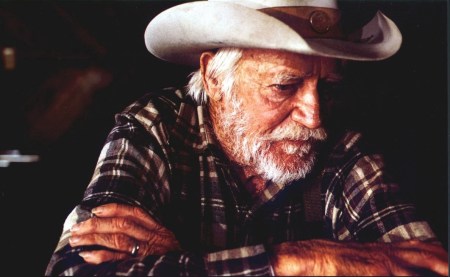
1: Richard Farnsworth was a stunt man for 40 years before becoming an actor. During this time he doubled for Kirk Douglas, Henry Fonda, Montgomery Clift, Steve McQueen and Roy Rogers before eventually taking his own life with a self inflicted gunshot wound when he was diagnosed with terminal cancer. The year before this, he was the eldest actor ever (aged 79) to receive an Oscar nomination for David Lynch’s “The Straight Story“.
20130226-090016.jpg
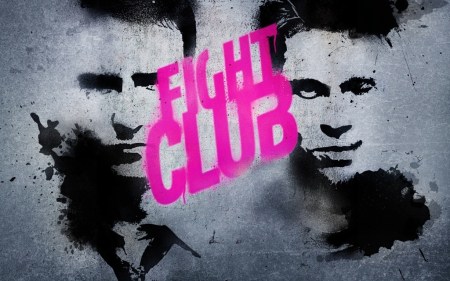
2: Three directors were offered to direct “Fight Club” prior to David Fincher. Peter Jackson was the initial choice of the producers, who had been impressed with Jackson’s work on “Heavenly Creatures” and “The Frighteners“. Jackson however, although he loved the Chuck Palahniuk novel, was too busy prepping “The Lord of the Rings: The Fellowship of the Ring” in New Zealand. The second choice for director was Bryan Singer, who was sent the book, but who never got back to the producers (he later admitted he didn’t read the novel when he received it). Next to be offered the job was director Danny Boyle, who met with the producers, read the book, and loved the material, but who ultimately decided to concentrate on “The Beach” instead. The producers then turned to David Fincher, after having been impressed with his work on “Se7en“.

20130226-090112.jpg
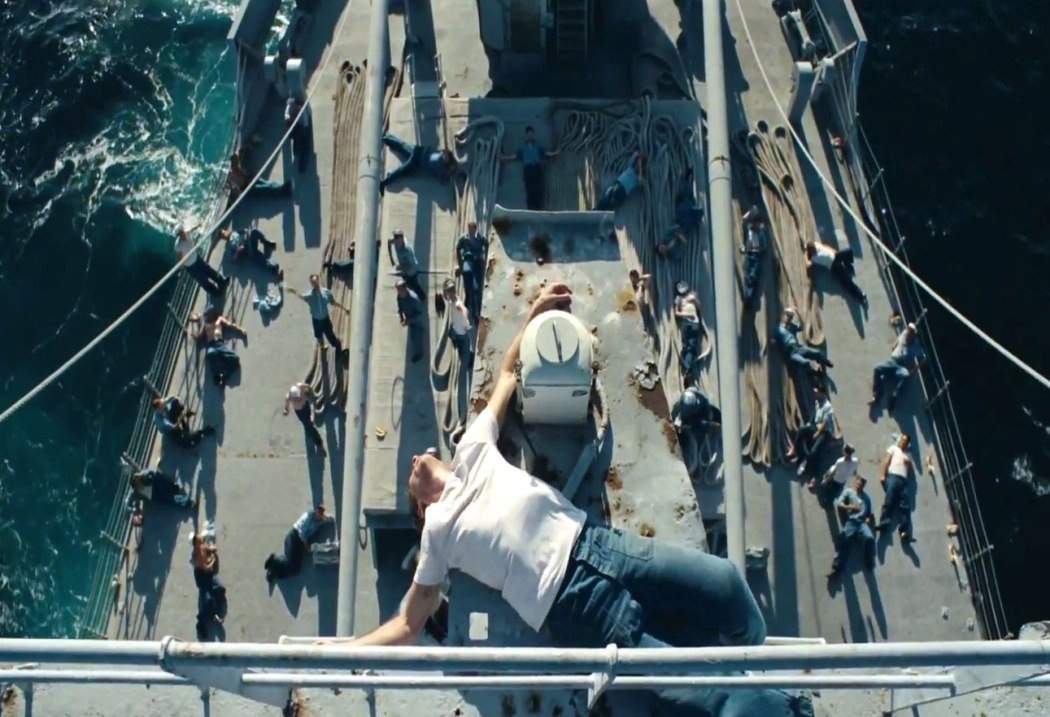
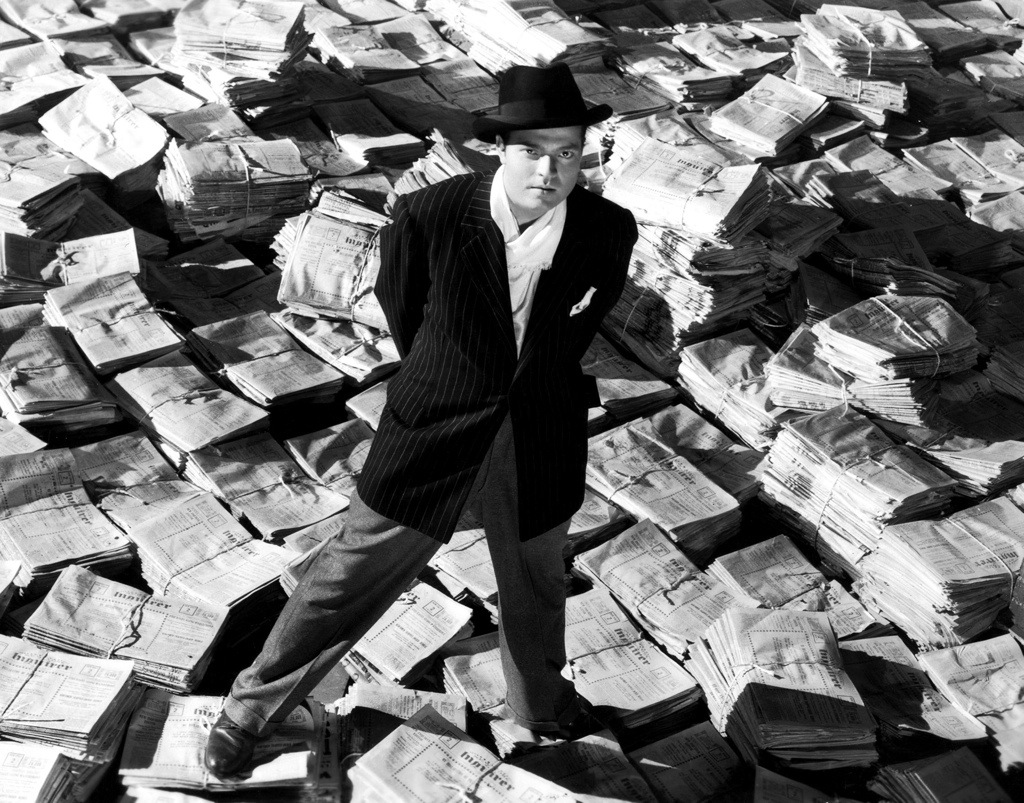
3: Orson Welles chipped his anklebone halfway through production of “Citizen Kane” and had to direct for 2 weeks from a wheelchair. When he was called upon to stand up onscreen, he wore metal braces. The injury occurred in the scene where Kane chases Gettys down the stairs and Welles tripped.
20130226-090259.jpg
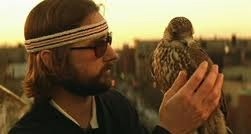
4: The original falcon used to play Mordecai in “The Royal Tenenbaums” was kidnapped during shooting and held for ransom – production could not wait for him to be returned which is the reason that the bird that appears later in the movie has “more white feathers” – it’s a different bird.
20130226-090343.jpg
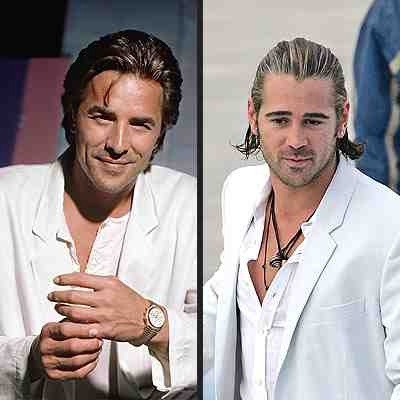
5: When the film version of “Miami Vice” was still being developed by Michael Mann, Don Johnson (who originally played the character on TV) was asked who he would pick to play Sonny Crockett. Johnson suggested Colin Farrell – who eventually got the role.

20130226-090502.jpg
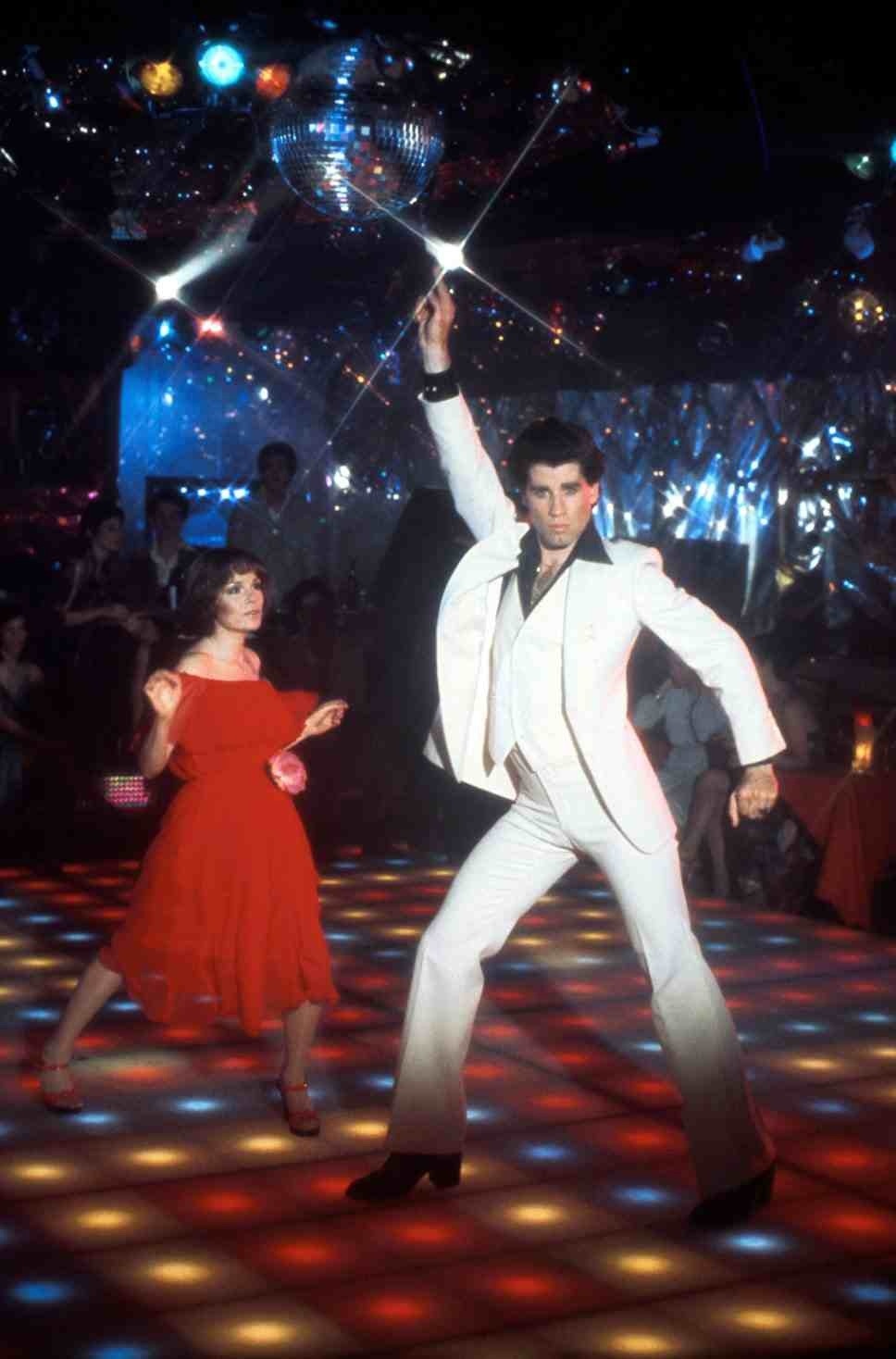
6: In “Saturday Night Fever“, John Travolta originally wanted his disco suit to be black, until it was pointed out that in the darkened disco, his co-star’s red dress would make her easier to see than him. It was then agreed upon to be White.
20130226-090602.jpg
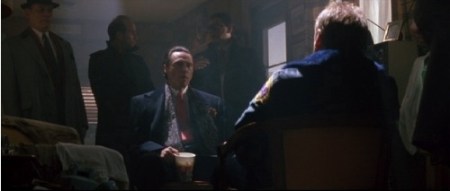
7: Following the “eggplant scene” in “True Romance“, Dennis Hopper was concerned about being “shot” by Christopher Walken with the prop gun so close against his head for fear of being burned by the barrel. Director Tony Scott assured him the gun was 100% safe, and even tested it by having the prop man fire it against his (Scott’s) own forehead. But upon firing the prop gun the barrel extended about a third of an inch and Scott ended up on the floor with blood pouring from the wound.

20130226-090717.jpg
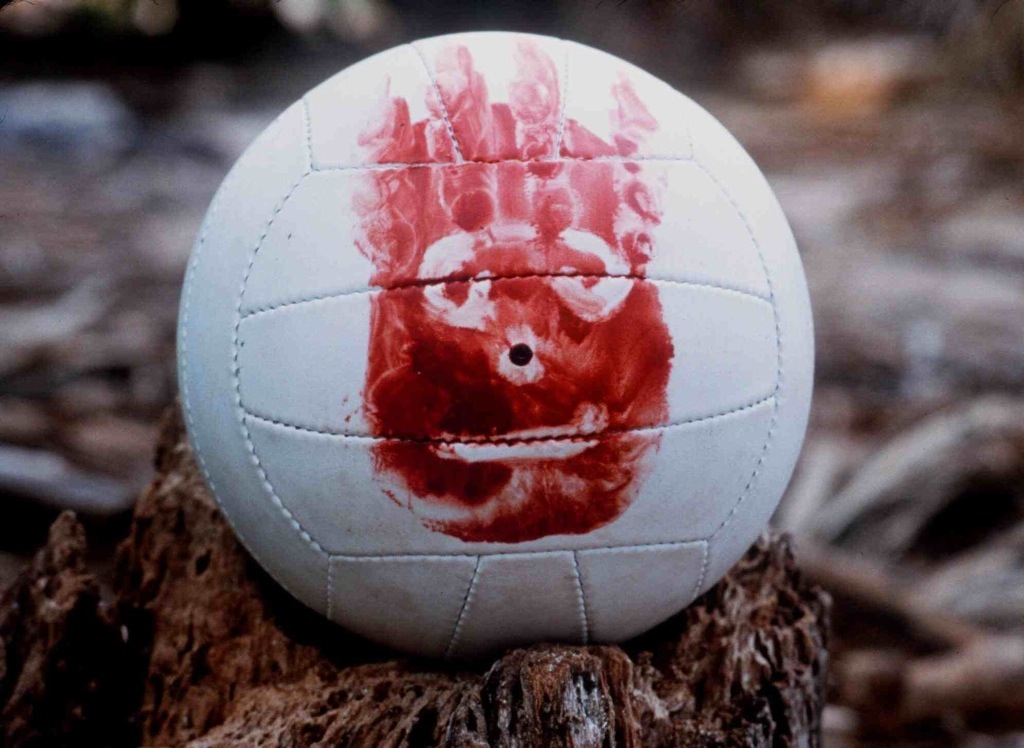
8: In Robert Zemeckis’ “Cast Away“, actual lines of dialogue were written for Wilson the Volleyball, to help Tom Hanks have a more natural interaction with the inanimate object.
20130226-090823.jpg
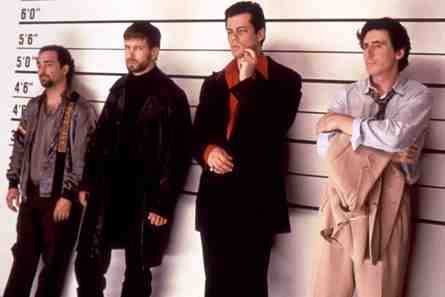
9: The line-up scene in “The Usual Suspects” was scripted as a serious scene, but after a full day of filming takes where the actors couldn’t keep a straight face, director Bryan Singer decided to use the funniest takes. A making-of documentary shows Singer becoming furious at the actors for the constant cracking-up. In an interview (on the Special Edition DVD), Kevin Pollak states that the hilarity came about when Benicio Del Toro “farted, like 12 takes in a row.” Del Toro himself said “somebody” farted, but no one knew who.

20130226-091206.jpg
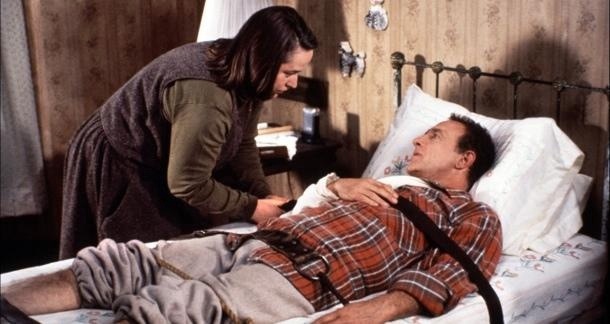
10: According to William Goldman’s book “Four Screenplays“, the main character of Paul Sheldon in “Misery” (eventually played by James Caan) was offered to William Hurt, Kevin Kline, Michael Douglas, Harrison Ford, Dustin Hoffman, Robert DeNiro, Al Pacino, Richard Dreyfuss, Gene Hackman, Robert Redford, and Warren Beatty, all of whom declined. Jack Nicholson was also offered the role but passed because he wasn’t sure he wanted to do another movie based on one of Stephen King’s novels after what he had experienced with Stanley Kubrick on “The Shining“.

So there you have it. 10 esoteric Tidbits to masticate on. Some you may know. Some you may not. If you have any thoughts, stick your donations in the comment box.
See you next Tuesday…

(For earlier editions of Trivia Tidbits click here.)
Argo * * * *

Posted in Drama, History, thriller with tags on February 24, 2013 by Mark Walker

20130224-134100.jpg

Director: Ben Affleck.
Screenplay: Chris Terrio.
Starring: Ben Affleck, Bryan Cranston, Alan Arkin, John Goodman, Scoot McNairy, Rory Cochrane, Christopher Denham, Tate Donovan, Clea DuVall, Victor Garber, Kyle Chandler, Zeljko Ivanek, Richard Kind, Kerry Bishé, Chris Messina Michael Parks, Taylor Schilling, Titus Welliver, Bob Gunton, Keith Szarabajka, Philip Baker Hall.

After a great directorial debut with “Gone Baby Gone” in 2007 and a brilliant sophomore effort with “The Town” in 2010, all eyes were on Ben Affleck in his third outing as director. Questions were asked as to whether he could do it again. And the answer? The answer is a resounding, ‘Yes’. Argo completes Affleck’s hat-trick behind the camera and confirms that he’s definitely a director that has an abundance of talent and awareness.

Based on true events in a post-revolution Iran in 1979. A mob of Ayatollah supporters storm the US Embassy and take 56 American hostages. 6 officers managed to escape, however, and take refuge in the home of a Canadian Ambassador. After two months in hiding and their sanctuary becoming increasingly risky, the CIA hatch a plan to get them home and extraction officer Tony Mendez (Ben Affleck) is given that responsibility. His plan is to create a fake movie called “Argo” and pretend that the six officers in hiding are his crew, scouting for shooting locations within the country.

Before going into Argo, I admittedly expected a heavy-handed political thriller but that’s not exactly what it delivers. Apart from the first five minutes of a brief overview of the, questionable, political relations between the U.S. and Iran, it sidesteps any political agenda and gets down to capturing the thrilling, human drama at it’s core. I’m not adverse to political film’s at all. In fact, I thoroughly enjoy them but Affleck is wise not to get too bogged down in boardroom banter and bureaucracy when there’s an brilliantly exciting story to tell. It does share similarities with the great political tinged thrillers of the 1970’s like Alan J. Pakula’s “All The Presidents Men” or “The Parallax View“. The late 70’s and early 80’s style is captured to perfection by cinematographer Rodrigo Prieto and Affleck’s orchestration can sit comfortably beside any from that great decade of cinema.
Chris Terrio’s solid screenplay delivers many dialogue driven scenes but Affleck keeps things moving at a frantic pace and not for a second, does the film ever get dull or drawn out. The tension is almost unbearable at times. Why Affleck didn’t, at the very least, nab an Oscar nomination for his substantial and well-constructed direction here is beyond me. There’s no doubt that he’s in complete command of his material as he leaps from Tehran to Washington to Tinseltown and delivers completely satisfying environments and effortless shifts in tone for the whole film to gel and come to life. He has the ability to capture a politically ravaged country; the backroom jargon of the CIA and the dark humour of Hollywood (that shares more than a passing resemblance to Barry Levinson’s “Wag The Dog“). In order to capture this ludicrous, stranger-than-fiction story in it’s entirety, it demands a maestro at work and Affleck can certainly consider himself one.

This is the edge-of-your-seat tension that “Zero Dark Thirty” wishes it had. With only three film’s under his hat, you’d be forgiven for thinking that Affleck has been at this directing malarky for a very long time. The comparisons with actor, turned quality director, Clint Eastwood will rage on and if anyone thinks otherwise, then Affleck can tell them to “Argo fuck yourself“.

Mark Walker

20130224-134155.jpg

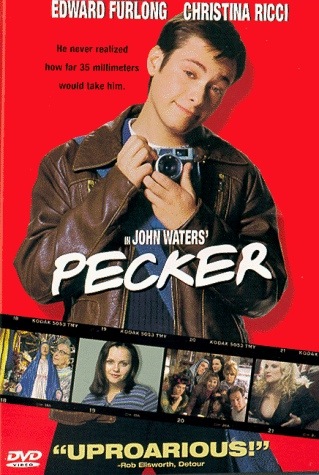
Pecker * * * *

Posted in Comedy with tags on February 23, 2013 by Mark Walker

20130223-134318.jpg

Director: John Waters.
Screenplay: John Waters.
Starring: Edward Furlong, Christina Ricci, Lili Taylor, Mary Kay Place, Mark Joy, Martha Plimpton, Brendan Sexton III, Jean Schertler, Lauren Hulsey, Patricia Hearst, Bess Armstrong, Mink Stole, Mo Fischer.

It’s hard to describe director John Waters and his idiosyncratic style but if I had to try, I’d compare him to David Lynch on amphetamine’s. He’s done some seriously wacky comedies over the years. Some of which been referred to as “deliberate exercises in ultra-bad taste“. He had been around since the 1960’s before making a name for himself with “Hairspray” in 1988. An early Johnny Depp film – “Cry Baby” followed and then he directed Kathleen Turner in the hilarious “Serial Mom“. Those who have heard of him will know what to expect. Those who haven’t should be warned; Waters certainly doesn’t water down his humour.

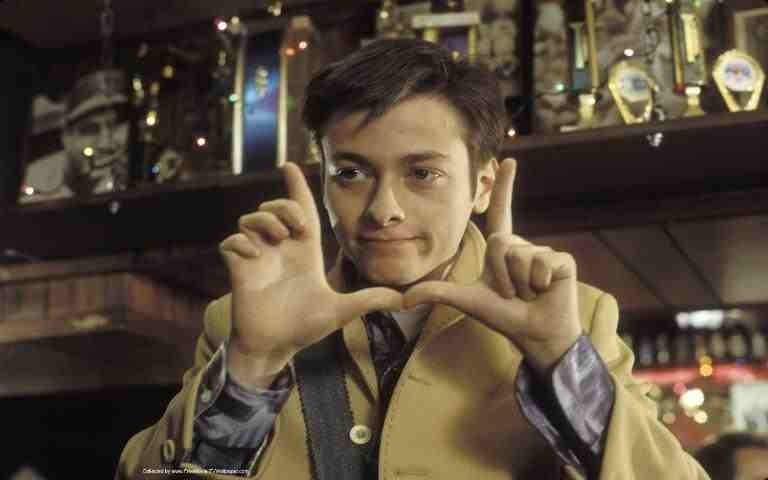
A young man named “Pecker” (Edward Furlong) who works at a Baltimore sandwich shop also has a real talent for taking photographs. He’s forever snapping things that most people wouldn’t even think of. When a New York art dealer (Lili Taylor) sees his work, he becomes an overnight sensation in the art world.

As mentioned, Waters’ films are somewhat like the lighter side to the nightmares of Lynch. He has the same off-beat and occasional surreal approach but rather than delve into the darker recesses of the subconscious, he plays it all for laughs. His more recent efforts have not been entirely successful and his brand of uncouth and crass humour will certainly not appeal to everyone but Pecker is one of his most accomplished and audience friendly pieces. Where he excels is in his array of very colourful characters – and this film has plenty of them.
Pecker’s family are a real bunch dysfunctional delights; his mother Joyce (Mary Kay Place) likes to accessorise the fashion of homeless people; his father Jimmy (Mark Joy) is an advocate for the public showing of pubic hair being made illegal; his grandmother ‘Memama’ (Jean Schertler) is a ventriloquist with a statue of the virgin Mary; his younger sister Little Chrissy (Lauren Hulsey) has an addictive personality, that begins with sugar before moving onto Ritalin and snorting vegetables and his older sister Tina (Martha Plimpton) runs a gay bar where “teabagging” (the slapping of testicles on a person’s forehead) is a custom that’s expected within the establishment. Pecker himself is just a naive, but likeable, photographer who captures all this mayhem on his 35mm camera – and this is only his family. There are many others, that include his kleptomaniac friend Matt (Brendan Sexton III) and characters that dry hump washing machines on spin cycles. By now, you’ll gather that Waters’ bad taste is still alive and well but what makes it all the more hysterical is that the actors all play it straight, making the zany situations that befall them all the more entertaining. Waters, most certainly, depicts this Baltimore slice-of-life with real zest and zaniness and, at times, his sheer audacity and outrageousness is gut-wrenchingly funny but while all this is going on, he still manages to take a pop at the pretentious, snooty-nosed, yuppies of the New York art scene.

As a self confessed Waters fan, I greatly enjoyed this lighthearted, quirky gem. It will not be a comedy that will appeal to everyone but if you enjoy your humour a little more on the risqué and surreal side, then this should do nicely.

Mark Walker

20130223-134350.jpg

Cloud Atlas * * * * 1/2

Posted in Action, Adventure, Drama, Fantasy, Science Fiction with tags on February 21, 2013 by Mark Walker

20130221-114234.jpg

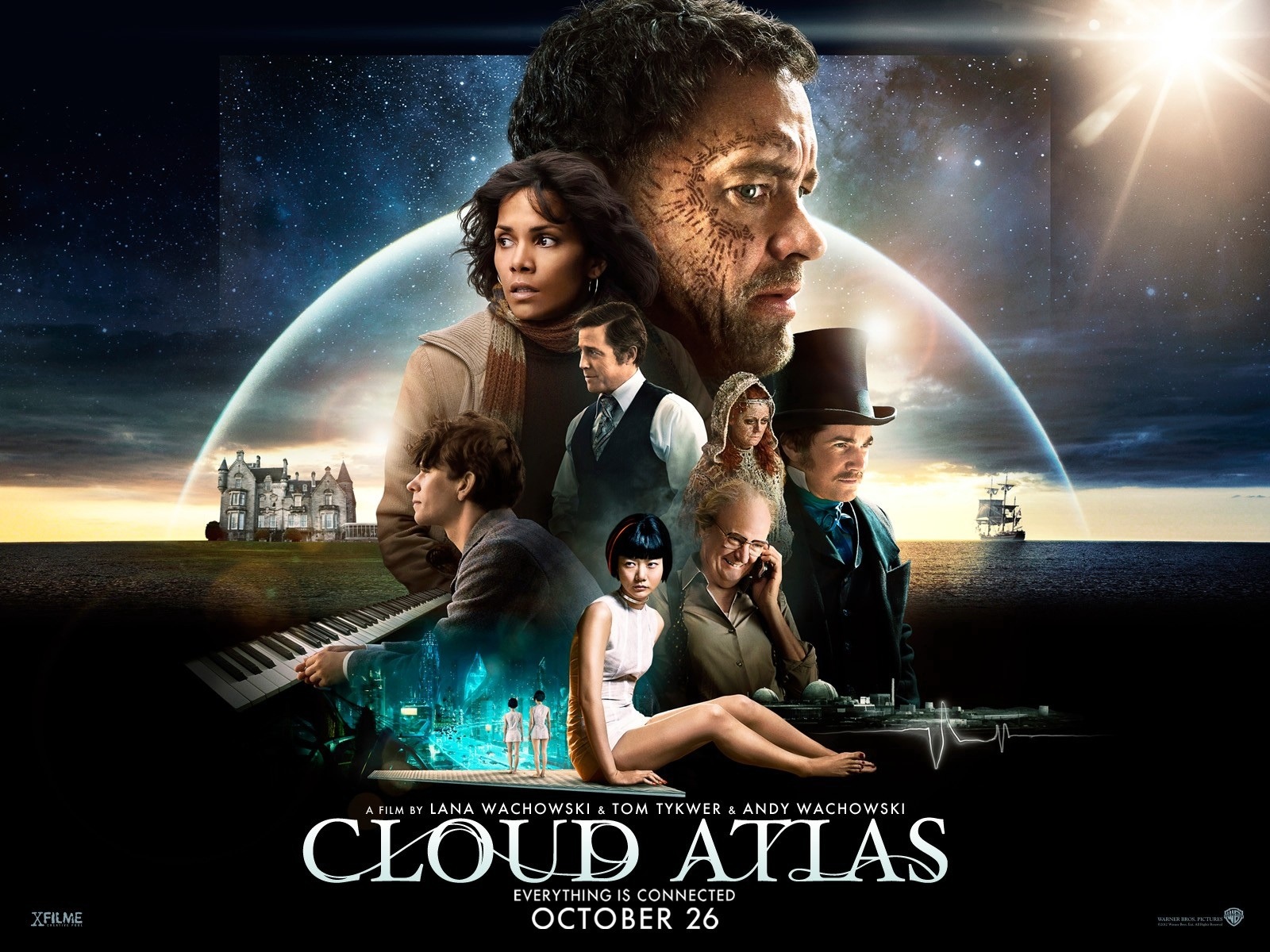
Directors: Andy Wachowski, Lana Wachowski, Tom Tykwer.
Screenplay: Andy Wachowski, Lana Wachowski, Tom Tykwer.
Starring: Tom Hanks, Halle Berry, Ben Wishaw, Jim Broadbent, Jim Sturgees, Hugh Grant, Susan Sarandon, James D’Arcy, Hugo Weaving, Doona Bae, Keith David, David Gyasi, Xun Zhou, Gary McCormack, David Mitchell.

Recently, Yann Martel’s novel “Life Of Pi” made it to the silver screen after an exemplary adaptation by director Ang Lee. However, the novel itself had been deemed ‘unfilmable’ beforehand. There are many literary works that have come under this assumption and David Mitchell’s Booker Prize-nominated novel Cloud Atlas is another. The reception of this film has been very mixed but, give or take, the odd discrepancy and noodle scratching moment, this is an impressively successful endeavour that proves, once again, that the ability to transfer page to screen is entirely possible and vibrantly alive.

1849: a Pacific ocean voyage that unearths a stowaway slave.
1936: an inspirational composition of classical music in Edinburgh.
1973: a manuscript that invites a dangerous conspiracy in San Francisco.

2012: a publisher goes into hiding in a nursing home, fearing for his life.
2144: a totalitarian regime in futuristic Korea gives birth to a rebellious clone.
2321: a post-apocalyptic Hawaii that leads to the cosmos…
These are the six stories that connect life, the universe and everything as past, present and future interlace with one another and humankind struggle to make sense of their existence.

What better way to tell a story than to begin it in the ancient way? An old man sitting around a campfire with scars on his face and wisdom on his tongue. That’s exactly what the trio of directors Andy and Lana Wachowski and Tom Tykwer have done and it sets the perfect opening to an expansive, spectacular, hugely ambitious and visual, storytelling adventure. It’s so vast and labyrinthine that it’s hard to even begin to break it down. It works on so many levels; from the metaphorical to allegorical, as well as, the tangential and does so while setting it in six different centuries (from the 19th to the 24th) and having the same actors play several different roles throughout. It’s difficult to find your feet and it could take at least an hour before you even get a hint or actually begin to grasp anything that’s going on. Once the narrative strands do come together, though, the film becomes a completely immersive experience.
It poses questions as to the meaning of our existence and the direct relation we have to one another and whether our experiences in life are just luck or predestined by means of Karma, reincarnation or simply through a greater, unknown, connection within the universe. In other words, it explores the complex questions and search for answers that have been pondered from time immemorial. It also incorporates the influence of art, television and how easily deities can be constructed and how, essentially, humankind is their own worst enemy. There will certainly be more questions than answers throughout this journey but what this film does, is run with life’s conundrums, meanwhile freeing itself from narrative conventions and hits you from six different angles all at once. It really is astoundingly complex stuff.
Now, I don’t profess to understand Cloud Atlas in it’s entirety. I did manage to get a reasonably good handle on it’s elaborate tapestry but it’s a film that requires, at least, a couple of viewings to fully grasp. The utmost patience and concentration is essential and if you happen to switch off for a second – throughout it’s almost three hour long running time – then it will, ruthlessly, leave you behind. You have been warned: this film will pickle your brain for weeks. It has confounded many; so much so, that it’s been written off as disappointing or a pretentious mess. I, on the other hand, strongly believe that it should not be ignored. The only drawbacks I found were the tenuous linking between a couple of the stories and the tone of the film shifted a little uneasily in places. Nevertheless, this is one of the most ambitious, intelligent and beautifully constructed film’s for quite some time and, if invested in, will bring many rewards.

I don’t know why I’d choose to paraphrase at this point other than to sum up this film (and my review) by leaving you with the words of a wiser fellar than myself: “I guess that’s the way the whole durned human comedy keeps perpetuatin’ it-self, down through the generations, westward the wagons, across the sands a time until – aw, look at me, I’m ramblin’ again… Catch ya further on down the trail“.

Mark Walker

20130221-114305.jpg

TUESDAY’S TRIVIA TIDBITS.

Posted in Uncategorized with tags on February 18, 2013 by Mark Walker

Welcome back to Tuesday’s Trivia Tidbits. For those of you out of the loop, this is a little compilation of 10 movie related facts that I will be posting weekly and info that I always find interesting. So without further ado, this weeks are…

20130219-083603.jpg
1: As a producer of “Schindler’s List“, Steven Spielberg shopped directing duties on the film to numerous colleagues, because he was afraid he couldn’t do the story justice. He was turned down by Martin Scorsese (who was interested but ultimately felt it was a subject that should be done by a Jewish director), Roman Polanski (who didn’t feel he was yet ready to tackle the Holocaust after surviving it in childhood), and Billy Wilder (who wanted to make this as his last film). Apparently, it was Wilder who convinced Spielberg to direct it himself.

20130219-083650.jpg
2: Up until his death in 1978, actor John Cazale appeared in only five feature films in his career: “The Godfather“, “The Conversation“, “The Godfather: Part II“, “Dog Day Afternoon” and “The Deer Hunter“. All of them were nominated for Best Picture (with three of them actually winning the award).

20130219-083728.jpg
3: Leonardo DiCaprio dropped out of the role of Stephen Meyers in George Clooney’s “The Ides Of March” but stayed on as executive producer through his company Appian Way. Chris Pine was then considered before Ryan Gosling was cast.

20130219-083808.jpg
4: Among its 8 Academy Award nominations, “Silver Linings Playbook” became the first to earn nods in all four acting categories since “Reds” in 1981 and the first “Big Five” (Best Picture, Best Actor, Best Actress, Best Director, Best Writing) nominee since “Million Dollar Baby” in 2004z

20130219-083841.jpg
5: Originally the movie “Three Amigo’s” was supposed to star Steve Martin, Dan Aykroyd and John Belushi. Martin mentioned it in a Playboy interview published January 1980, referring to the movie as ‘The Three Caballeros‘.

20130219-083913.jpg
6: Writers Joel Coen and Ethan Coen suffered writer’s block while writing “Miller’s Crossing“. They took a three week break and wrote “Barton Fink” a film about a writer with writer’s block. The name of Tom Regan’s (Gabriel Byrne) residence is “The Barton Arms“. In one of the newspapers an article reads ‘Seven Dead in Hotel Fire,’ another reference to Barton Fink.

20130219-084016.jpg
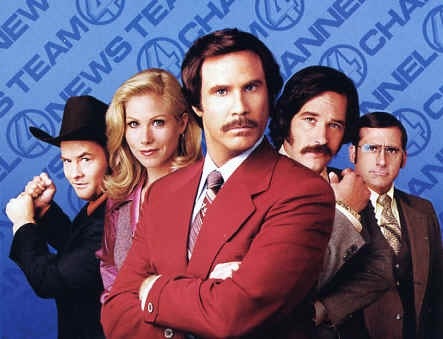
7: The director of “Anchorman: The Legend of Ron Burgundy“, Adam McKay has said that in the first draft of the script, the story was about a planeload of news anchors who crash in the mountains and discover that the plane which they collided was carrying monkeys and martial arts equipment, leading to a battle between cannibalistic newsmen and star-throwing monkeys.

20130219-084048.jpg
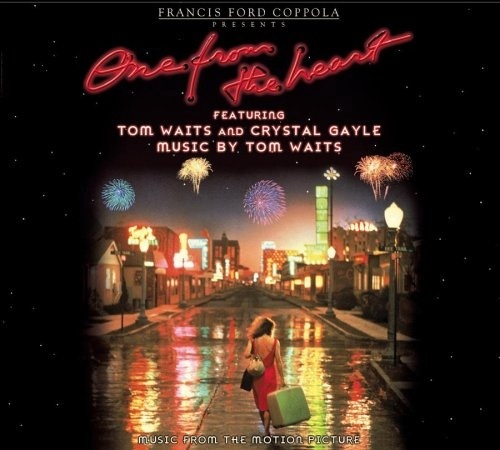
8: The extraordinary cost of the production of “One From The Heart” would lead to director Francis Ford Coppola’s declaring bankruptcy. Originally intended as a small film after the enormous cost, pressures and production problems of “Apocalypse Now“, One From The Heart rapidly ballooned from a projected budget of $2 million to over $25 million. Coppola has stated that the films he made during the rest of the 1980s and most of the 1990s, such as “The Outsiders“, “The Cotton Club“, “The Godfather: Part III“, “Jack” and “The Rainmaker“, were done to pay off the debts incurred by the production of this film.

20130219-084119.jpg
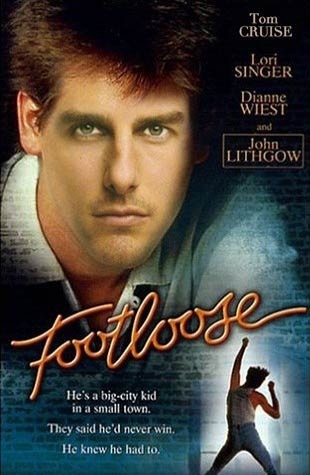
9: Tom Cruise and Rob Lowe were both slated to play the lead in “Footloose“. The casting directors were impressed with Cruise because of the famous underwear dance sequence in “Risky Business“, but he was unavailable for the part because he was filming “All the Right Moves“. Lowe auditioned three times and had dancing ability and the “neutral teen” look that the director wanted, but he pulled his knee, and the injury prevented him from taking the part. After watching “Diner“, the director had to convince the producers to go with Kevin Bacon.

20130219-084148.jpg
10: In “The Imaginarium Of Doctor Parnassus“, according to Terry Gilliam, the last line Heath Ledger spoke for filming on the set was “Don’t shoot the messenger.” When Johnny Depp filmed his role after Ledger’s death, Depp asked Gilliam if he could try a new ad-lib: “Don’t shoot the messenger“, unaware that Ledger had improvised an identical line. Gilliam was astounded, remarking, “Heath is still out there. Johnny’s channeling Heath somehow…

So there you have it. 10 esoteric Tidbits to masticate on. Some you may know. Some you may not. If you have any thoughts, stick your donations in the comment box.
See you next Tuesday…

(For earlier editions of Trivia Tidbits click here.)

Flight * * * * 1/2

Posted in Drama with tags on February 15, 2013 by Mark Walker

20130215-122603.jpg

Director: Robert Zemeckis.
Screenplay: John Gatins.
Starring: Denzel Washington, Kelly Reilly, John Goodman, Don Cheadle, Bruce Greenwood, Brian Geraghty, Melissa Leo, Nadine Velazquez, Tamara Tunie, Peter Gerety, James Badge Dale, Adam Tomei.

It’s been a long wait (12 years to be exact) for director Robert Zemeckis to get back to making a live action film. His last was “Cast Away” in 2000 before he delved into computer generated animation with “The Polar Express“, “Beowolf” and “A Christmas Carol“. Despite his attempts to perfect the medium of animation those three film’s weren’t entirely successful. However, having him back on more ‘adult’ duties is a reminder of how good he can actually be.

During what may, or may not, be a technical fault with an airline passenger plane, pilot Whip Whitaker (Denzel Washington) is forced into emergency procedures in order to land safely. The media hail him as a hero but there are troubling circumstances that lie underneath: Whip is an alcoholic and was intoxicated beforehand.

Within seconds of this film starting we are given a complete introduction to our protagonist Captain Whip Whitaker; there’s a naked woman in his bedroom and he proceeds to do a massive line of cocaine to straighten himself out before he flies a plane at 9am that same morning. Straight away, you know that this is a man that takes too many chances but it’s his cocksure arrogance and determination that has you captivated and convinced in him. We then move onto the flight itself where he helps himself to a few vodka miniatures before taking to the skies. With this strong introduction to Whitaker’s persona, what follows is an even stronger aircraft scene. It’s an intense and nail-biting set piece that will no doubt have you buckling up the next time you board an aeroplane.
After such a robust and persuasive opening you’d think that the rest of the film would suffer in comparison but Zemeckis deserves the utmost credit for slowing things down yet still managing to maintain interest. It progresses into a thoroughly engrossing character study that isn’t afraid to shed some light on the nature of addiction and the unravelling of a person in denial. Zemeckis is in no rush to tell his story which helps in establishing the feeling that this is a really solid piece of work. He also delicately handles the ethical conundrum of whether the sacrifice of a few lives is worth the saving of many. The film skilfully flitters back and forth between one ‘heroic’ action and the iniquity and irresponsibility of another; toying with the audience’s own moral judgement. Whitaker is a character that you’ll continually question but also one that can be identified with, and the ability of Zemeckis’ direction, John Gatins’ writing and a towering central performance from Denzel Washington make it all entirely believable. Washington has received a lot of critical praise from many corners here, and rightfully so. He absolutely commands the screen and without his presence or ability, this character could have crumbled in a lesser actors hands. There is strong competition amongst the Oscar nominated actors of 2012/13 but Washington is thoroughly deserving of his inclusion. The rest of the cast have little to do in comparison but still manage to add to the proceedings; Kelly Reilly’s addicted junkie adds further realism and although her relationship with Whitaker is rushed, it’s also somewhat believable. The corporate and legal side of things are dealt with admirably, by Bruce Greenwood and Don Cheadle and John Goodman’s character brings a welcome addition of comic relief. All-be-it, he seems to have wandered in from another movie.
As the denouement approaches, the film, admittedly, falls into conventional territory with a pending legal case and the unravelling of Whitaker’s affliction and personal demons brought to the forefront. This is unavoidable with the nature of the story but it’s still handled with tact and remains, nothing less, than absorbing and thoroughly rewarding.

It may succumb to storytelling conventions and some subplots don’t entirely fit but, on the whole, this is filmmaking of the highest order. After this, I can only hope that Robert Zemeckis doesn’t fall back into relative (animated) obscurity.

Mark Walker

20130215-122632.jpg