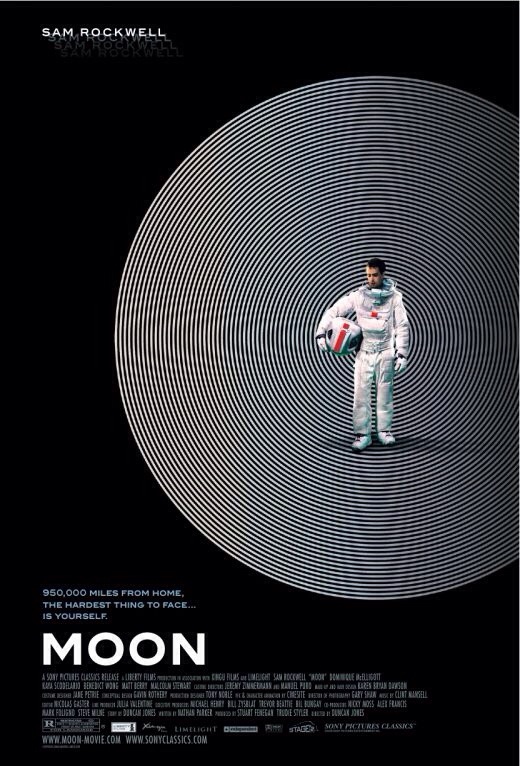
Director: Duncan Jones. Screenplay: Duncan Jones, Nathan Parker. Starring: Sam Rockwell, Dominique McElliogot, Benedict Wong. Voice of: Kevin Spacey.
“I hope life on Earth is everything you remember it to be“.
Being the son of legendary musician David Bowie must put a lot of pressure on you, especially if your chosen profession is also to entertain. However, this is a pressure that director Duncan Jones seems to relish. His talents are used in a different medium from his father but equally as impressive with this relatively low-budget debut and he produces one of the finest science fiction film’s for quite some time.
Director: Martin Scorsese. Screenplay: William Monahan. Starring: Leonardo DiCaprio, Jack Nicholson, Matt Damon, Mark Wahlberg, Alec Baldwin, Martin Sheen, Ray Winstone, Vera Farmiga, Anthony Anderson, Mark Rolston, David Patrick O’Hara, Kevin Corrigan, James Badge Dale, J.C. MacKenzie, Robert Wahlberg.
“When I was your age they would say we can become cops, or criminals. Today, what I’m saying to you is this: when you’re facing a loaded gun, what’s the difference?”
Despite Martin Scorsese directing consistently good films since the 1970’s, the well deserved Academy Award always eluded him. He was snubbed for such classics as “Raging Bull” and “Goodfellas” but he finally got his hands on that long-awaited gong for this remake of the 2002 Hong Kong film “Infernal Affairs“.
Posted in Crime, Drama with tags 1997 on November 13, 2013 by Mark Walker
Director: Quentin Tarantino. Screenplay: Quentin Tarantino. Starring: Pam Grier, Samuel L. Jackson, Robert Forster, Robert DeNiro, Bridget Fonda, Michael Keaton, Chris Tucker, Michael Bowen, Tommy “Tiny” Lister, Lisa Gay Hamilton, Hattie Winston, Sid Haig.
“AK-47. The very best there is. When you absolutely, positively got to kill every motherfucker in the room, accept no substitutes“.
After Reservoir Dogs in 1991 and Pulp Fiction in 1994, Quentin Tarantino was hailed as the new wunderkind of contemporary American cinema with his triumphant originality and seemingly effortless ability to excite audiences. However, there were still claims of him borrowing heavily from other movies and despite the second feature from a new filmmaker predominantly being the “tricky one”, it seemed that it was Tarantino’s third that posed this problem for him. Added to which, he still had a few doubters wondering if he could emulate his previous successes.
Posted in Comedy, Crime, Drama with tags 1994 on November 8, 2013 by Mark Walker
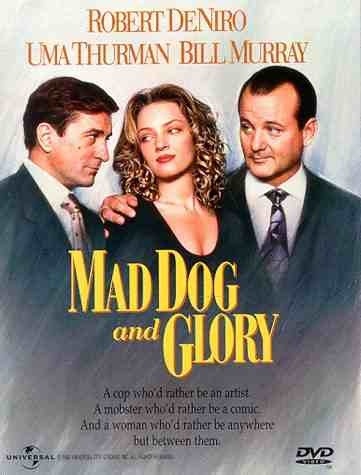
Director: John McNaughton. Screenplay: Richard Price. Starring: Robert DeNiro, Bill Murray, Uma Thurman, David Caruso, Kathy Baker, Mike Starr, Richard Belzer, Tom Towles, Jack Wallace.
“Women, you can’t live with them and you can’t kill ’em.”
Whatever happened to director John McNaughton? Not since the Matt Dillon/Kevin Bacon neo-noir, “Wild Things” in 1998 have I heard his name mentioned. Apparently he’s still making stuff but he seems to have fallen into television obscurity despite showing some early potential with his brilliant, yet brutal and violent debut, “Henry: Portrait of a serial killer” in 1990.
Posted in Comedy, Drama with tags 2013 on November 7, 2013 by Mark Walker
Directors: Nat Faxon, Jim Rash. Screenplay: Nat Faxon, Jim Rash. Starring: Liam James, Sam Rockwell, Steve Carrel, Toni Collette, Allison Janney, Rob Corddry, Amanda Peet, AnnaSophia Robb, Maya Rudolph, River Alexander, Zoe Levin, Nat Faxon, Jim Rash.
“I’m afraid I’m gonna have to ask you to leave!… You’re having way to much fun. It’s making everyone uncomfortable“.
Nat Faxon and Jim Rash may be familiar to some but they haven’t really been household names over the course of their careers. They are both sometime, bit-part, performers having appeared in numerous TV shows but it wasn’t until 2011 that they earned some well-deserved attention by winning an Oscar for their screenwriting duties on Alexander Payne’s “The Descendants“. Now, they turn their hand to directing and it’s apparent that they’re just as comfortable when calling the shots themselves.
Posted in Drama, Musical with tags 2013 on October 23, 2013 by Mark Walker
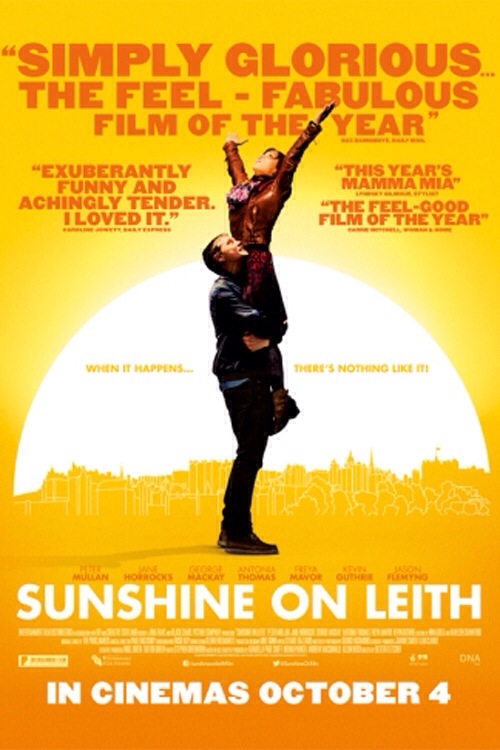
Director: Dexter Fletcher. Screenplay: Stephen Greenhorn. Starring: Peter Mullan, Jane Horrocks, George MacKay, Kevin Guthrie, Antonia Thomas, Freya Mavor, Jason Flemyng, Paul Brannigan, Emma Hartley-Miller, Daniela Nardini.
After recently enjoying the debauched underbelly of Edinburgh in Irvine Welsh’s “Filth“, I was curious to see Scotland’s capital feature again in a more lighthearted film. As a general rule, I avoid musicals at all costs as I’m just not that keen on people bursting into song every few minutes. However, I was impressed by actor Dexter Fletcher’s impressive directorial debut “Wild Bill” in 2011 and couldn’t resist the urge to see a musical featuring the fantastic songs of The Proclaimers.
Posted in Comedy, Crime, Drama with tags 2013 on October 10, 2013 by Mark Walker
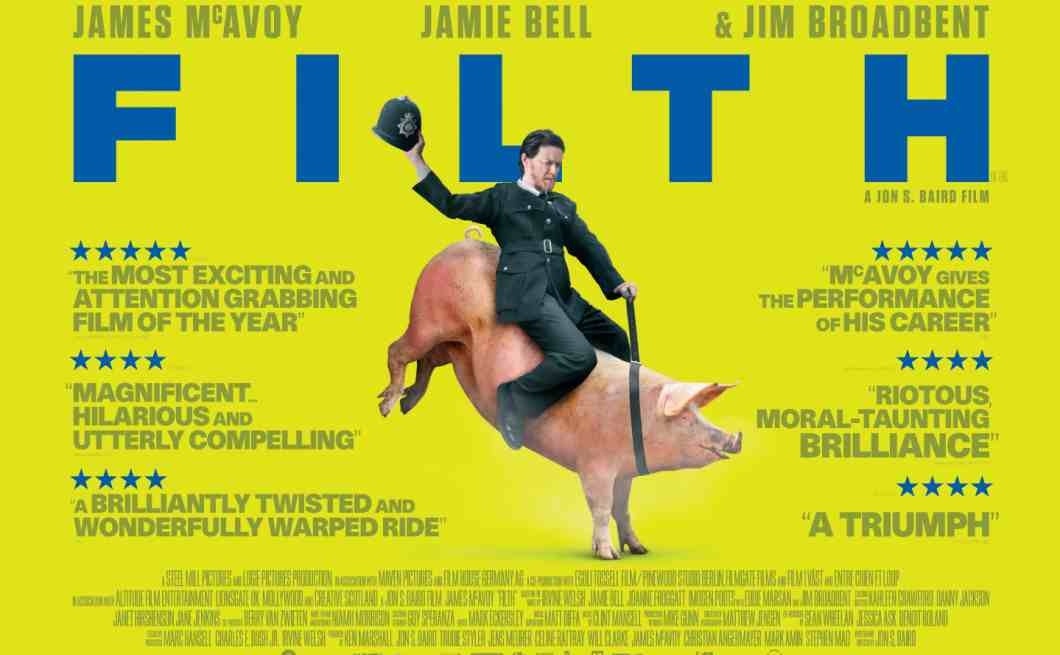
Director: Jon S. Baird. Screenplay: Jon S. Baird. Starring: James McAvoy, Jamie Bell, Eddie Marsan, Jim Broadbent, Imogen Poots, John Sessions, Gary Lewis, Brian McCardie, Emun Elliott, Martin Compston, Shirley Henderson, Kate Dickie, Shauna Macdonald, Iain De Caestecker, Ron Donachie, Natasha O’Keeffe, Jonathan Watson, David Soul.
As the year draws to a close, so does the (unrelated) British trilogy of James McAvoy leading roles. He began with the disappointingly generic “Welcome To The Punch” before moving on to the teasingly elaborate “Trance” before finally heading back to his native Scotland to tackle “Filth” – the ‘unfilmable’ novel by cult writer Irvine Welsh. Since “Trainspotting” in 1996, Welsh’s material hasn’t really been given an adaptation deserving of his talents, but here, director Jon S. Baird delves (groin first) into Welsh’s unrelenting prose and delivers a sharp, sordid and deeply debauched, delight of a film.
Posted in Adventure, Drama with tags 1986 on September 22, 2013 by Mark Walker
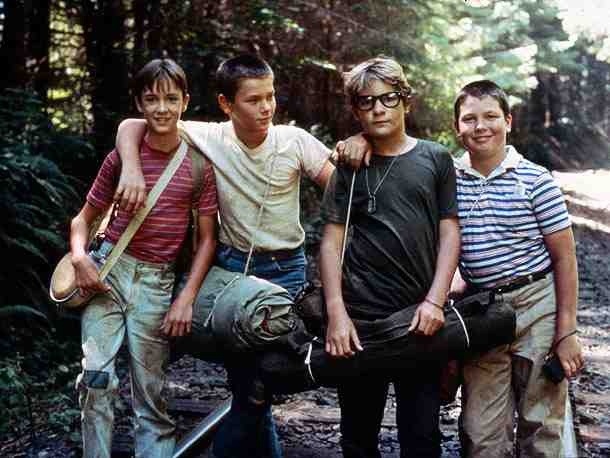
Director: Rob Reiner. Screenplay: Raynold Gideon, Bruce A. Evans. Starring: Wil Wheaton, River Phoenix, Corey Feldman, Jerry O’Connell, Kiefer Sutherland, Casey Siemaszko, Bradley Gregg, Gary Riley, Jason Oliver, John Cusack, Marshall Bell, Frances Lee McCain, Richard Dreyfuss, Bruce Kirby, Andy Lindberg.
Predominantly known for his horror stories, writer Stephen King released a book in 1982 called “Different Seasons“. It contained four novellas, three of which, went on to become successful Hollywood movies which were very far from most other adaptations of his work. One was Bryan Singer’s “Apt Pupil” another was Frank Darabont’s “The Shawshank Redemption” and the third – originally entitled “The Body” – became Rob Reiner’s “Stand By Me“.
Four young friends, Gordie (Wil Wheaton), Chris (River Phoenix), Vern (Jerry O’Connell) and Teddy (Corey Feldman) go on an adventure together to find the dead body of a local boy who was supposedly hit by a train. By following the tracks, the friends’ journey becomes more about them and their personal struggles and soon, the boyish adventure becomes about their experiences of entering adulthood.
Delivered with a wonderfully nostalgic narration by Richard Dreyfuss and a good feel for 1950’s Americana, this inviting and honest, coming-of-age, tale captures the spirit of youth like very few others. Reiner’s feel for the time and the material is pitched so perfectly that you are completely transported back to this era. It’s imbued with a sublimely evocative soundtrack of classic 1950’s songs, ranging from; Jerry Lee Lewis’ “Great Balls of Fire” through Buddy Holly’s “Everyday“, The Chordettes’ “Lollipop” and, of course, Ben E. King’s “Stand By Me“. It’s this very attention to detail that truly brings this affectionate and sentimental film to life, while completely involving you in the trials and tribulations of the four, endearing, youths at it’s centre. The four youths in question are embodied with charm and nuance by Wheaton, Feldman, O’Connell and, especially, Phoenix. They are so natural in their deliveries that the failed careers they would go on to have didn’t merit the performances delivered here. Phoenix was the only one of the four who would receive critical praise, but sadly his life was cut short at the tender age of 23, making his performance all the more poignant.
Rarely has a film captured the innocence and growing pains of young boys on the road to manhood and rarely do you ever get such a rich and heartfelt delivery. It doesn’t matter if you didn’t experience the 1950’s; stepped foot on an Americana front porch or played mailbox baseball. What matters, is that you identify with the characters’ rite of passage and that it still perpetuates it’s relevance.
A wonderfully rustic and nostalgic gem, that’s still as inviting and honest as it was on it’s release. This is one of those timeless cult-classic’s that will always find an audience to resonate with.
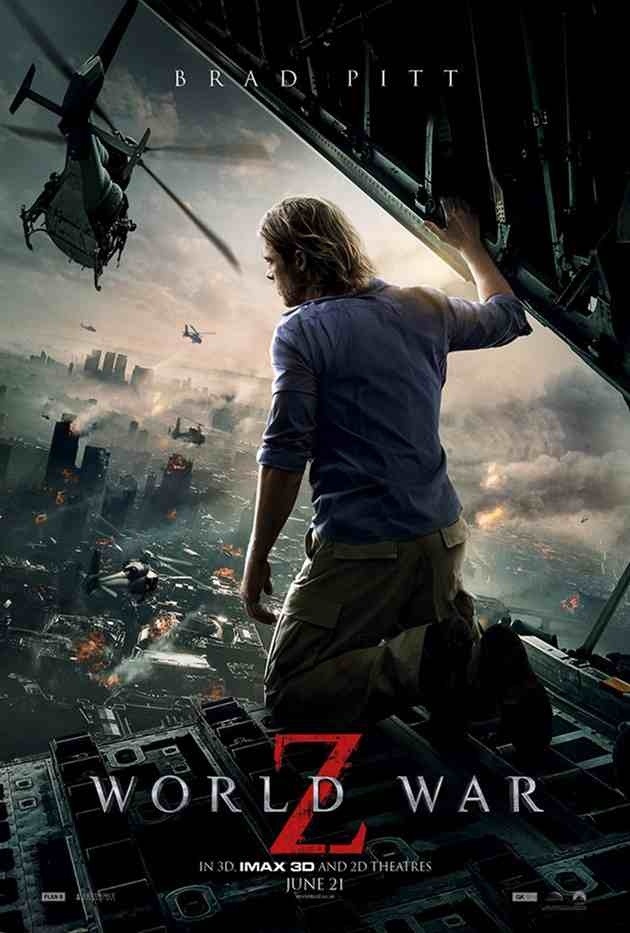
Director: Marc Forster. Screenplay: Matthew Michael Carnahan, Drew Goddard, Damon Lindelof. Starring: Brad Pitt, Mireille Enos, Daniella Kertesz, James Badge Dale, Peter Capaldi, Matthew Fox, David Morse, Ludi Boeken, Fana Mokoena, Elyes Gabel, Pierfrancesco Favino, Ruth Negga, Moritz Bleibtreu, Abigail Hargrove, John Gordon Sinclair.
In making it to the screen, World War Z wasn’t without it’s problems; firstly, there were complaints of it’s very loose take on Max Brooks’ novel, then it’s violence was toned down to achieve a PG-13 certificate; a script rewrite happened half way through production; cinematographer Robert Richardson left to work on “Django Unchained” and the likes of Ed Harris and Bryan Cranston dropped out due to scheduling conflicts. As all these problems piled up, the expectation was that the film would be an absolute disaster. Well, quite simply, it’s not. Despite it’s problems, it’s actually quite a tense and impressively handled thriller.
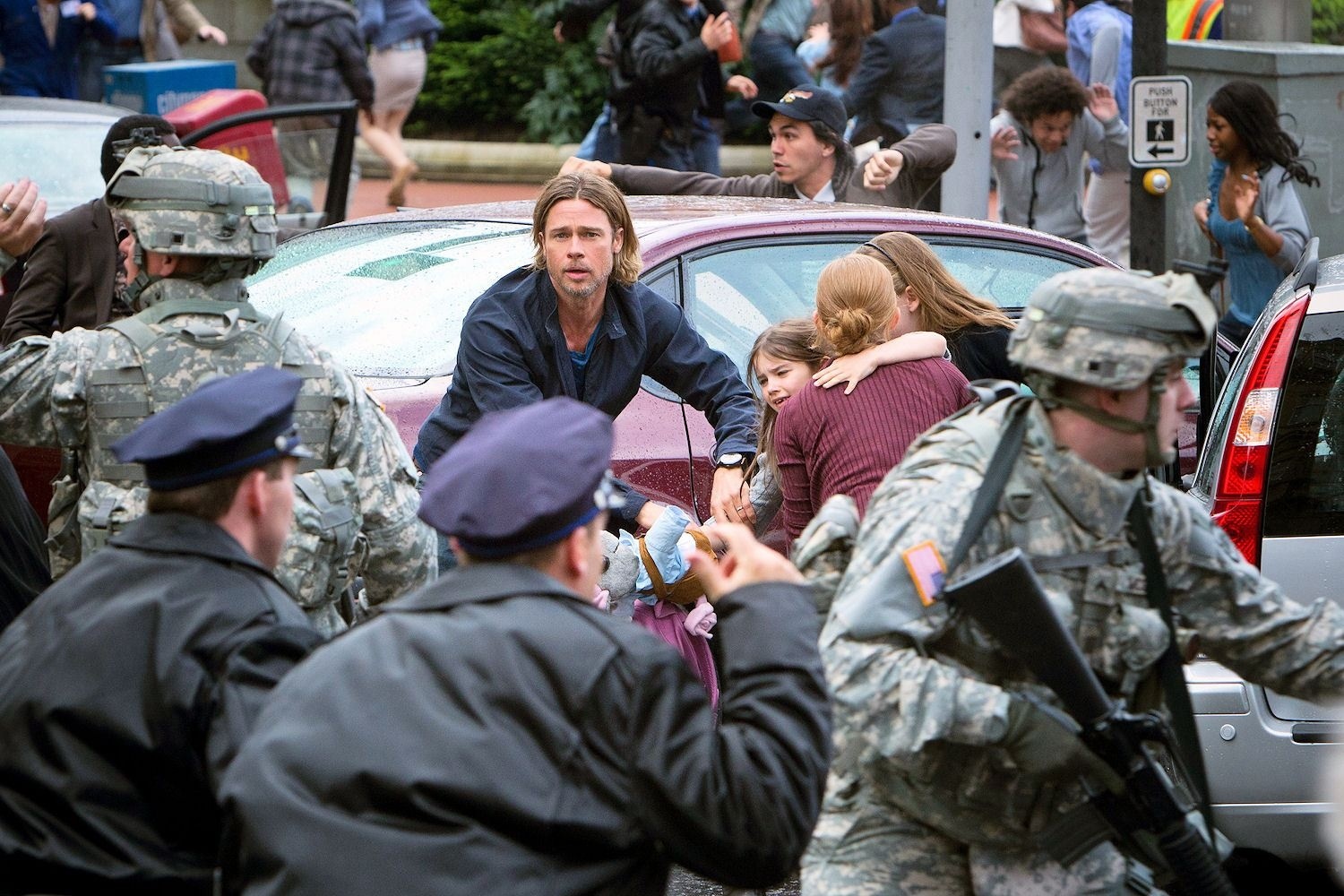
Gerry Lane (Brad Pitt) is a former UN worker, happily spending some time at home with his family, until the sudden outbreak of a zombie plague takes over his home city. They are forced to flee and Gerry manages to get his family to safety but news breaks that the whole world is suffering the same outbreak, leaving Gerry to get back in the field and use his experience to search for a cure.
After a brief introduction to our protagonist, Forster doesn’t waste time in getting down to business. Within minutes we are thrust into an absolutely exhilarating opening sequence of the rampaging undead overtaking Philadelphia (actually shot in Glasgow, where I witnessed them filming) and it’s from here that you realise that there’s plenty of potential in this summer blockbuster. It doesn’t matter that there’s a lack of blood or gore because the suspense is handled so competently and effectively that you’re still on the edge of your seat. In fact, it’s the perfect example that less can be more sometimes. What’s most impressive, though, is the epic scale in which it’s delivered. There are several intense action set-pieces where hordes of zombies leap from rooftops, clamber over walls and rampage through an aircraft mid-flight. As an action movie, it certainly delivers the goods and also finds the time to incorporate geopolitics as the epidemic goes world wide. Anchoring all this mayhem is a solidly understated, central performance from Pitt. Having produced this movie – throughout it’s spiralling budget – his commitment to make it work comes across in his performance. He’s entirely believable and identifiable as a family man desperate to survive his chaotic surroundings. Nobody else really gets a look in, including a severely downsized role for Matthew Fox and a brief cameo from, the always reliable, David Morse. Ultimately, the film rests on Pitt’s shoulders, though, and he handles it with aplomb. So much so, that the lack of blood splattering and zombie flesh eating takes a back seat to the character driven drama.
Due to it’s production difficulties, plans for a sequel were shelved. However, having now become a box-office summer smash, the sequel has been given the go-ahead. I, for one, wholeheartedly welcome it.
Against the odds, this manages to be a satisfyingly tense addition to the zombie sub-genre. It doesn’t go for the jugular in a gratuitous manner, instead it works on your nerves and focuses on telling a relatable story. Die hard horror fans may want more from it, but it delivered just the right amount of thrills for me.
Posted in Drama with tags 2013 on August 30, 2013 by Mark Walker
Director: Jeff Nichols. Screenplay: Jeff Nichols. Starring: Matthew McConaughey, Tye Sheridan, Jacob Lofland, Sam Shepard, Ray McKinnon, Reese Witherspoon, Sarah Paulson, Michael Shannon, Joe Don Baker, Paul Sparks, Bonnie Sturdivant.
After such brave and exemplary displays in “Killer Joe” and “The Paperboy“, Matthew McConaughey has completely turned his failing career around. He seems to have left his rom-com days behind him and cemented his reputation as a serious leading actor. “Mud“; the long awaited follow up of the award winning “Take Shelter” from promising director Jeff Nichols, is even further proof of McConaughey’s commitment and keen eye for an intriguing character.
Ellis (Tye Sheridan) and Neckbone (Jacob Lofland) are a couple of kids who roam the backwaters of their local area. They soon stumble upon Mud (McConaughey), a known fugitive hiding on an island. They are drawn to him and his story of reuniting with his girlfriend Juniper (Reese Witherspoon) and decide to help him escape from the authorities and a gang of bounty hunters, to meet with her again.
Following on from his debut “Shotgun Stories“, Nichols takes us back to his home state of Arkansas for another slice-of-life and coming-of-age yarn. It has been compared to the likes of “Stand By Me” and more accurately, the works of novelist Mark Twain and his “Adventures of Huckleberry Finn” in our young protagonist’s exploration of the colourful people and places along the Mississippi River. These comparisons are entirely understandable but Nichols doesn’t merely tread old water, he delivers a competent mood piece with three dimensional characters that are entirely fleshed out and convincing. The two young leads, in newcomer Jacob Lofland and especially Tye Sheridan (“The Tree of Life“) are absolutely outstanding in their natural deliveries of impressionable teenagers and there is solid support from the likes of Ray McKinnon, Sam Shepard and an understated Reese Witherspoon. Regular Nichols collaborator, Michael Shannon is really the only one who doesn’t get much to work with, but that was due to time constraints as he had already committed to “Man of Steel“. The real draw here, though, is a snarling and haunted McConaughey. It’s yet another performance of a very high caliber as he perfectly embodies a man with emotional strength yet an almost crippling vulnerability and naivety. This multilayered attention is afforded to the rest of the film’s script and almost all of it’s characters have their differing approaches and struggles with relationships and the environment they inhabit. Nichols operates at a leisurely pace and is in no rush to tell his story. This is entirely suited for his material with the only major issues being that it, ever so slightly, overstays it’s welcome and descends into formula in the final third. That being said, the characters and the environment (captured by cinematographer Adam Stone) are so rich and involving that it’s flaws are easy to forgive.
What first strikes you as an engaging adventure tale soon becomes an emotional and intelligent fable that ruminates on love and loss. It massages both the heart and the head and confirms that Jeff Nichols and Matthew McConaughey are playing at the top of their game right now. We’ll be seeing much more of young Sheridan in the near future too.
Director: Ariel Vromen. Screenplay: Ariel Vromen, Morgan Land. Starring: Michael Shannon, Winona Ryder, Ray Liotta, Chris Evans, David Schwimmer, Robert Davi, James Franco, Stephen Dorff, John Ventimiglia, Ryan O’Nan, Danny A. Abeckaser, McKaley Miller, Megan Sherill.
What more can be said about the acting chops of Michael Shannon? Despite being a household name now, he’s still happy to deliver supporting roles in the likes of “Mud” and “Man of Steel” while managing to work within the time constraints of television with “Boardwalk Empire“. Thankfully though, he’s not adverse to the odd leading role and “The Iceman” is the type of film that allows him to fully embrace centre stage.
In the 1960’s, Richard Kuklinski (Michael Shannon) was a quiet family man, who secretly worked as a porn lab technician until the New Jersey mob that ran his employment, shut him down and persuaded him to become a contract killer. For decades, Kuklinski would kill over 100 people and gain a reputation for his cold blooded professionalism, meanwhile keeping his wife (Winona Ryder) and kids completely in the dark about where their money came from.
Based on actual events, the story of Kuklinski is quite an intriguing one. This was a man who managed to separate his work and family life for so long that he was clearly a very manipulative and dangerous sociopath.
Much like Kuklinski’s victims, though, the film seems strangely lifeless. Most mob films have you on the edge of your seat at least once throughout their running times but “The Iceman” never really manages to do that. Ariel Vromen’s direction is flat and he poorly handles the script’s leaps in time; relying on consistently changing facial hair as a narrative device. It just doesn’t work and as a genre piece, it misses a real opportunity to follow in the footsteps of the similarly themed “Donnie Brasco“.
Where the films strengths lie, are in the performances; Mafia boss Roy Demeo, is captured ferociously by Ray Liotta, who seems to be the go-to-guy for mob figures these days, and the likes of Chris Evans impresses in an almost unrecognisable role as Robert “Mr. Freezy” Pronge – another hitman that Kuklinski gets involved with. Added to this, are smaller roles for James Franco, Stephen Dorff and an awkwardly ponytailed and moustachioed, David Schwimmer. Ultimately, though, it’s Shannon that keeps this film afloat. Despite a fascinating character, the role is surprisingly underwritten, yet Shannon still manages to deliver a detached and menacing portrayal. Quite simply, without his presence, this would would be just another generic, colour-by-numbers, wannabe.
Good in places but ultimately, it’s restrained to the point of monotony. This is a film that has so much potential but squanders it on cliché and relies too heavily on it’s leading actor. Shannon delivers but he doesn’t really get anything back for his efforts.
Posted in Biography, Drama with tags 1980 on August 16, 2013 by Mark Walker
Director: Martin Scorsese. Screenplay: Paul Schrader, Mardik Martin. Starring: Robert DeNiro, Joe Pesci, Cathy Moriarty, Frank Vincent, Nicholas Colasanto, Theresa Saldana, Mario Gallo, Frank Adonis, Joseph Bono, Frank Topham, Don Dunphy, Johnny Barnes, Michael Badalucco, John Turturro.
“You punch like you take it up the ass”
While shooting “The Godfather Part II“, Robert DeNiro found himself reading the book “Raging Bull: My Story“, based on the life of 1950’s middleweight boxer Jake LaMotta. It was a story he felt very passionate about bringing to the screen and took it to his good friend Martin Scorsese. Scorsese was, at first, reluctant to do a boxing movie as “Rocky” had recently been released to massive success and he himself, was going through a personal crisis at the time due to the failure of their previous collaboration “New York, New York” and his spiralling addiction to cocaine and lithium – leaving him hospitalised with internal bleeding. They brought in screenwriter’s Mardik Martin (“Mean Streets“) and Paul Schrader (“Taxi Driver“) and the film eventually went ahead. It became a form of therapy for Scorsese and has since been lauded as a cinematic tour-de-force and voted – in numerous polls – as the best film from the 1980’s.
Italian-American, middleweight boxer, Jake LaMotta (Robert DeNiro) has inner demons and is prone to obsessive rage and sexual jealousy which threatens to destroy his relationship with his wife Vickie (Cathy Moriarty) and brother/trainer Joey (Joe Pesci). In the ring, he a prizewinner but it’s outside it, that he seems to lose everything.
On the surface, “Raging Bull” could be seen as just another boxing biopic, much like Denzel Washington’s portrayal of Ruben “Hurricane” Carter, Russell Crowe’s Jim “The Cinderella Man” Braddock or Will Smith’s Muhammad “Ali”. Scorsese and DeNiro’s vision is an altogether different one, though. It’s not their intention to glamourise LaMotta or deliver a conventional film about pugilism. Their intentions lie in exposing the man beyond the ring – where his real fights took place. The biggest opponent for “The Bronx Bull” was actually himself and his struggle with a raging, psychosexual insecurity and his propensity for self-destruction. It’s here that DeNiro fully takes centre stage in what is, unequivocally, his finest moment (and that’s saying something) throughout an illustrious career of exceptionally strong performances. His transformation is near miraculous; while researching and preparing for the role, De Niro actually spent the entire shoot with LaMotta so he could portray him accurately and went through extensive physical training, entering into three genuine Brooklyn boxing matches and winning two of them. According to La Motta, De Niro had the ability to be a professional fighter and that he would have been happy to have been his manager and trainer. Following this, production was stopped for two months so DeNiro could pile on 60 pounds to portray LaMotta in his older years. His commitment to the role (and project) has now become legendary and highly respected amongst his peers. Quite simply, DeNiro’s smouldering (and deservedly Oscar winning) display is an absolute masterclass in the profession.
Scorsese’s skills manifest in his operatic approach; he’s less interested in cranking up the tension or theatrics of the bouts and more focused on the punishing brutality of the sport. He employs the use of flashbulbs, and several different sound effects – like smashing glass and squelching watermelons – to achieve an overall crunching effectiveness. He’s aided immeasurably by Thelma Schoonmaker’s sharp editing technique and Michael Chapman’s sublime, monochrome, cinematography which serves the film as a whole in it’s mood and noir-ish atmosphere. If the bouts in the ring are claustrophobic then the same could be said for the ‘quieter’ moments outside it; LaMotta’s personal life is uncomfortably scrutinised in his abuse towards his wife and brother. There are very personal scenes of fraught and jealous conversation that are unbearably tense, and fully depict how much of a brute this man really was. It’s testament to the commitment of the entire cast and crew that this highly unappealing and unsympathetic individual can make such compelling viewing.
A truly searing, cinematic classic, that addresses the unflinching, animalistic, behaviour of a man in need of absolution and redemption. It also happens to possess one of cinema’s most breathtaking and riveting performances. On this evidence, there’s no question that Robert DeNiro is a master of his craft and it’s arguably Martin Scorsese’s finest work as well.
Mark Walker
Trivia: To achieve the feeling of brotherhood between the two lead actors, Robert De Niro and Joe Pesci actually lived and trained with each other for some time before filming began. Ever since then, the two have been very close friends.
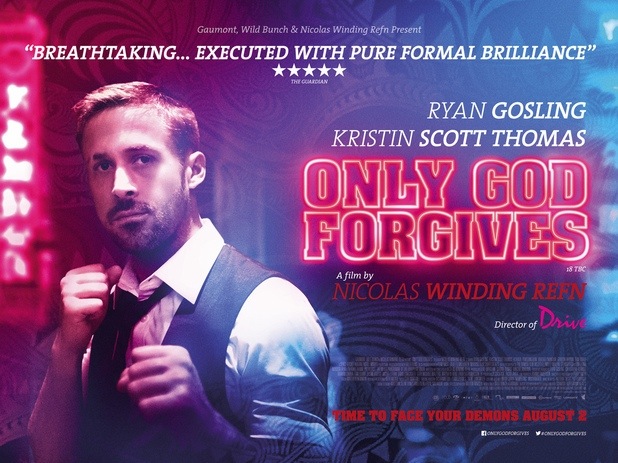
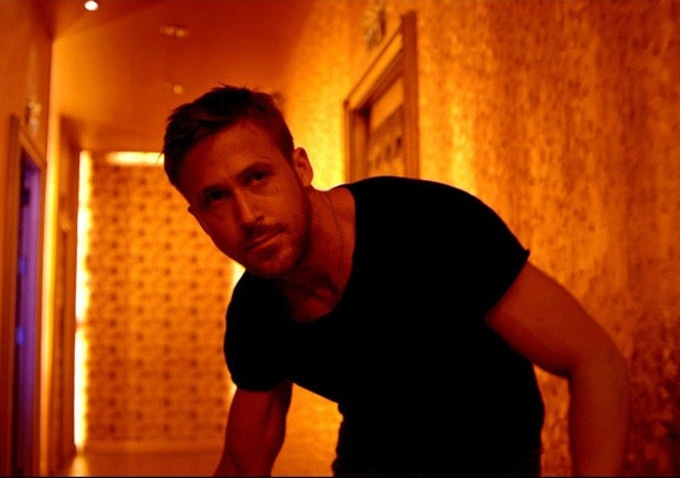
Director: Nicolas Winding Refn. Screenplay: Nicolas Winding Refn. Starring: Ryan Gosling, Kristin Scott Thomas, Vithaya Pansringarm, Tom Burke, Gordon Brown, Yayaying Rhatha Phongam, Sahajak Boonthanakit, Byron Gibson.
After the success of “Drive” in 2011, another collaboration with director Nicolas Winding Refn and star Ryan Gosling was highly anticipated. Now that we are delivered the results with “Only God Forgives“, many have been left disappointed and, from many corners, it has received very harsh criticism. It doesn’t possess the postmodern cool of their previous effort but what it does have, is art house and depth written all over it.
Julian (Ryan Gosling) is a US ex-pat living in Bangkok, where he runs a Mauy Thai boxing club and a family drug business behind the scenes. Things begin to go wrong, though, when his brother Billy (Tom Burke) is killed with the involvement of local police Lt. Chang (Vithaya Pansringarm). This, in turn, brings the arrival of Julian’s sadistic mother Crystal (Kristin Scott Thomas) to avenge her first born’s death. Julian soon realises that they are up against someone who will not be stopped.
For some, this will be a sumptuous five star experience while others will (understandably) criticise it for it’s perceived pretension and ambiguity. It’s a very difficult film to rate and I can’t give it any less than I have, simply because I do believe that there’s substance contained within. The plot summary above, makes it all sound very straight forward but it’s far from that. If truth be told, I didn’t entirely understand it but that doesn’t make it a bad movie. That’s a fault that rests with me rather than the filmmaker and I think this is the problem that many people are criticising it for – not to mention, Gosling fans’ annoyance at his distinct lack of dialogue.
Anyone familiar with Winding Refn movies, will quickly realise that this type of filmmaking is actually the norm for him and much closer to his idiosyncratic style than “Drive” ever was. It’s filled with symbolism, metaphors and spirituality and categorically, it simply isn’t the action movie that most viewers were expecting. Credit has to be given to Winding Refn and Gosling for their bravery here. They refuse to try and recreate their previous magic and deliver a whole new experience. There are others deserving of mention here too, Larry Smith’s spellbinding cinematography is absolutely gorgeous and entirely authentic in capturing both the beauty and the beast of the city of Bangkok, while Cliff Martinez evokes a foreboding score. The biggest revelation, though, is a bleach-blonde, foul mouthed, Kristin Scott Thomas as the dangerous matriarch Crystal, where every time she’s onscreen she absolutely chews it up. It’s an outstanding, against-type, performance from the once (“Four Weddings and a Funeral“) English rose. Thai actor Vithaya Pansringarm’s Chang is also worthy of note with his cold, supernatural, god-like, approach and wielding his own form of justice with the aid a samurai sword that he keeps on his person. He can be seen as the phallus to Scott Thomas’ yonis, leaving the lost and soulful Gosling with an Oedipal complex and dreamlike imaginings of castration – symbolically represented by the loss of his hands. Events don’t exactly make sense on a first time viewing but this is a film that demands repeated efforts to fully capture it’s themes. It has the similar surrealist approaches of directors David Lynch and more importantly Alejandro Jodorowsky (to whom the film is dedicated) and there’s no questioning Refn’s stylistic abilities.
Is it for everyone? Most certainly not, but it will appeal to those who enjoy uncompromising, art-house minimalism and don’t rely on a storyline where everything is linear and readily explained. It’s ambitious and experimental and you probably won’t see a more polarising film all year.
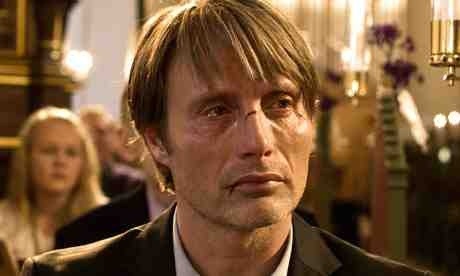
Director: Thomas Vinterberg. Screenplay: Thomas Vinterberg, Tobias Lindholm. Starring: Mads Mikkelsen, Thomas Bo Larsen, Annika Wedderkopp, Lasse Fogelsteøm, Susse Wold, Alexandra Rapaport, Anne Louise Hassing, Lars Ranthe, Sebastian Bull Sarning.
There have been a number of films that have addressed the harrowing nature of child abuse; “The Woodsman” is one where Kevin Bacon’s character – just released from prison – admits his guilt, leaving the audience in an almost impossible position in showing any sympathy, whereby John Patrick Shanley’s “Doubt” left the audience questioning the guilt of Philip Seymour Hoffman’s afflicted priest throughout it’s entirety. This time, Thomas Vinterberg tackles the issue from the point of view of the innocently accused.
Mild mannered, nursery school teacher, Lucas (Mads Mikkelsen), lives in a small village where he leads a simple life. However, one of his young pupils accuses him of inappropriate behaviour and his life is thrown into turmoil by all around him as he struggles to prove his innocence.
Vinterberg sets his protagonist’s motivations from the off-set. He’s a humble man who is active in the community and seems to have a solid network of friends and a close relationship with his teenage son. To embody this kindhearted soul, Vinterberg chooses wisely in Mads Mikkelsen – who won best actor for the role at Cannes in 2012. Mikkelsen is the type of actor who, having such a unique physical appearance, can perform many different characters. He made a great Bond villain in “Casino Royale” and now confirms that he can completely win you over in a gentler role. He exudes an appealing demeanour that has you fully affectionate towards him and it’s this very affection that has you infuriated at the witch-hunt and complete injustice and turmoil he has to endure. The problem is, there are no bad people in this film. It’s layered and nuanced so well, that even those that choose to abandon and ostracise him are only doing what they believe to be right. As an insider, the audience are privy to all the information and it makes it easy to not just understand Lucas’ plight but to also identify with the shock and grievances that his friends and family have towards him. Quite simply, it’s a film that tears you in many different directions and refuses to let go.
The nature or subject matter of it, may originally put some people off but I can confirm that nothing here is uncomfortably or exploitatively dealt with. It’s entirely honest and innocent and that’s the very thing that it demands the utmost respect for. Vinterberg doesn’t balk from depicting human nature in a cruel or victimised fashion but he cleverly shows restraint in his approach, allowing the actors to deliver the realism and the dangers involved in condemnation through ambiguous gossip.
A gripping and emotionally draining, social drama that manages to be both provocative and empathetic. Proof, once again, that the Scandinavian output of cinema is at the top of it’s game right now.
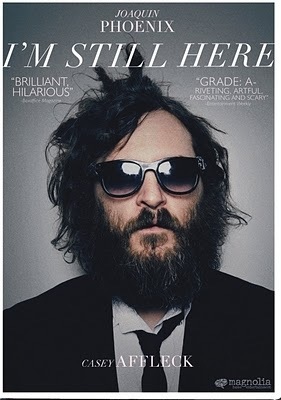
Director: Casey Affleck. Screenplay: Casey Affleck, Joaquin Phoenix. Starring: Joaquin Phoenix, Casey Affleck, Antony Langdon, Larry McHale, Sean Combs, Ben Stiller, Edward James Olmos, David Letterman, Tim Affleck.
In 2008, Joaquin Phoenix announces that he’s quitting acting to pursue a music career in hip hop. His bother-in-law, Casey Affleck, decides to film his every move over the course of a year and delivers a portrait of an artist at a crossroads in his life.
Beginning with home video footage from 1981 in Panama, of a young Phoenix jumping from a waterfall, this films sets it’s stall out in exploring a life that’s seemingly always been documented. Phoenix has been in the public-eye from a very tender age, having appeared as young as 8 yrs old in the television series “Seven Brides for Seven Brothers” before moving onto “The Fall Guy”, “Hill Street Blues” and “Murder She Wrote”. His first recognisable movie roles came in the shape of 1986’s “Space Camp” or 1989’s “Parenthood” before moving into more edgier roles in Gus Van Sant’s “To Die For” in 1995. Up until then, he was better known as the younger sibling of (the late) River Phoenix but eventually gained the full respect of movie goers with two Oscar nominations (now three, since the release of this movie). It’s was through this steady rise in the film industry that brought so much media attention to his, seemingly, self destructive decision to abandon acting and become a rap artist under the guidance of Sean “P. Diddy” Combs.
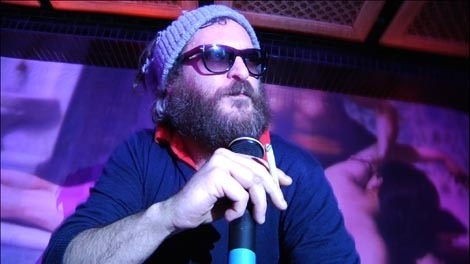
This fly-on-the wall documentary follows Phoenix’s obvious lack of talent for rapping and the abandonment of his personal hygiene, while his fragile mental state increased due to a voracious appetite for cannabis and cocaine. As he’s constantly high and stoned, a frenzied media where clambering for his story and a reason for the meltdown of an actor in the prime of his career. Ultimately, though, the joke was on them (and us), as the whole thing was an elaborate hoax and an exposé of the nature of celebrity and their pandered ego’s and lifestyle’s.
Phoenix is entirely believable in his bearded, paunched appearance and his spiralling egotistical, mental anguish and arrogance. He even dares to tackle chat-show host David Letterman (in a now infamous episode) and when you consider that this was a role that completely consumed him – not only throughout the length of the shoot but in the eyes of the world, before and after – you realise how outstanding he is. It’s a powerful display of commitment and it’s probably one of the bravest and boldest moves that an actor has done.
As entertainment, though, it’s questionable. It goes on too long and there are points where the voyeurism pushes boundaries and comes across as bad taste. What could have been the downfall of a man going through a serious mental breakdown, struggles to decide whether it’s comedic or dramatic. That being said, it’s interesting viewing and it at least exposes the bitter behaviour of western media and how easily they can turn.
Being a fan of Phoenix, will certainly add to the appeal of this film, but if you can normally take or leave him, then this won’t hold much of an interest. It’s flawed, but it’s a bold and noteworthy experiment all the same.
Posted in Drama with tags 2009 on July 12, 2013 by Mark Walker
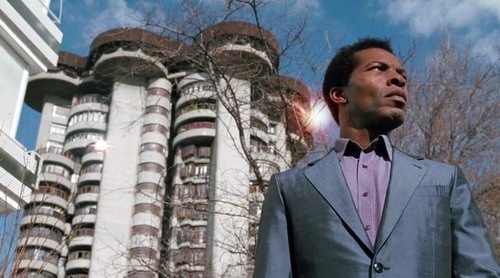
Director: Jim Jarmusch. Screenplay: Jim Jarmusch. Starring: Issach De Bankole, Tilda Swinton, John Hurt, Gael Garcia Bernal, Luis Tosar, Alex Descas, Paz De La Huerta, Jean Francois Stevenin, Oscar Jaenada, Youki, Kudoh, Bill Murray.
Jim Jarmusch has always been a director that’s very particular in his structure, his pace and his mood. Some of his films and approaches are more successful than others and often they are not everybody’s cup of tea. So, if your not a fan, I would advise that you avoid this one entirely.
A mysterious, nameless assassin (Isaach De Bankole) travels across Spain on some kind of criminal mission. Wandering throughout the picturesque city he comes across an incalculable ensemble of oddballs who join him in drinking coffee, passing him matchboxes with directions contained inside and delivering existenstial monologues and advice.
This offering from Jarmusch could been seen as a self-indulgent experiment and it will most definitely not appeal to everyone. The length approaches 2hrs and the pace is very meditative indeed. It’s quite possibly one of the slowest films I’ve ever seen. Yet, despite this, I found it also retained a sense of purpose. It always looked like it had a reason and a direction, although it was never exactly clear what they were. The first 20 mins alone, consist of De Bankole just wandering around… then he does a spot of Tai Chi… drinks an Espresso… more Tai Chi… the occasional, ambiguous meeting with eccentric strangers and their philosophical confabulations… more Espresso and then at least half an hour passes before he realises he’s forgotten to do his Tai Chi, and promptly does so again. Believe me, that’s about all that happens throughout, but I still found it strangely captivating.
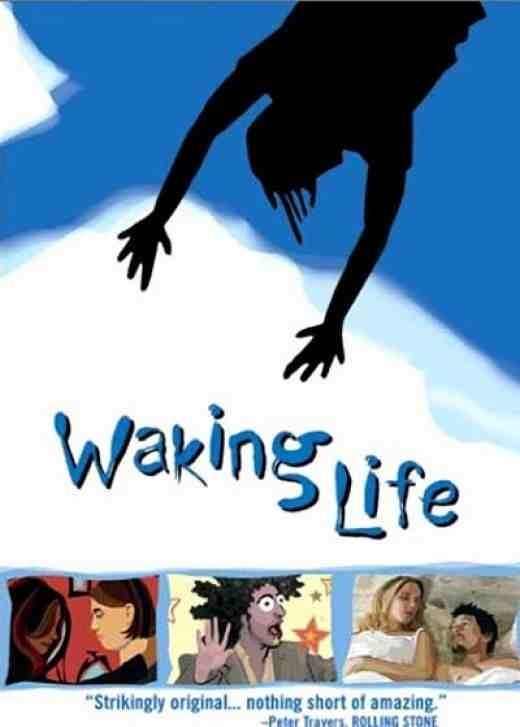
The locations are wonderful and perfectly captured by the excellent cinematographer Christopher Doyle, who crafts a dreamlike painting of a film. If you can imagine a crossover between the pace of Anton Corbijn’s “The American” with the philosophical surrealism of Richard Linklater’s “Waking Life” then this would be the result. Also, if you are familiar with the documentary “Exit Through the Gift Shop”, which explores the difference between art and pretentiousness, this would make a nice companion piece to discuss along with it. It’s undoubtedly a real audience splitter which I have heard many people disliking. In fact, I’m the only person I know that has rated it highly.
Ostentatious and experimental filmmaking from Jarmusch that’s definitely not for all tastes. However, it’s brave, bold, odd and highly meditative while epitomising it’s very title in ‘the limit of control’.
Posted in Drama, Fantasy on July 3, 2013 by Mark Walker
Director: Richard Linklater. Screenplay: Richard Linklater. Starring: Wiley Wiggins, Ethan Hawke, Julie Delpy, Adam Goldberg, Nicky Katt, David Sosa, Alex Jones, Otto Hofmann, Lorelei Linklater, Richard Linklater.
Richard Linklater has always been an interesting director; he’s ranged from his debut independant hit “Slacker” to refreshing 70’s nostalgia in “Dazed and Confused”, through anti-corporate polemic “Fast Food Nation” and cult sci-fi “A Scanner Darkly”. He’s effortless in his range and always involving, but none more so than this unsung gem.
A young man (Wiley Wiggins) walks through life as if in a dream. He talks to a variety of people about the meaning of life and the purpose of the universe, striving for answers as to his direction and his place in the cosmos.
Waking Life is the type of film that’s hard to put into words. The striking visuals are most certainly noteworthy and Linklater’s exploration of the bigger questions in life will only appeal to those who invest and bring something to the film themselves. It has many insightful philosophical ramblings and monologues on the nature of our existence; the purpose of our being; the difference between our dream state and waking life; whether dreams can be controlled and how much they have to tell us.
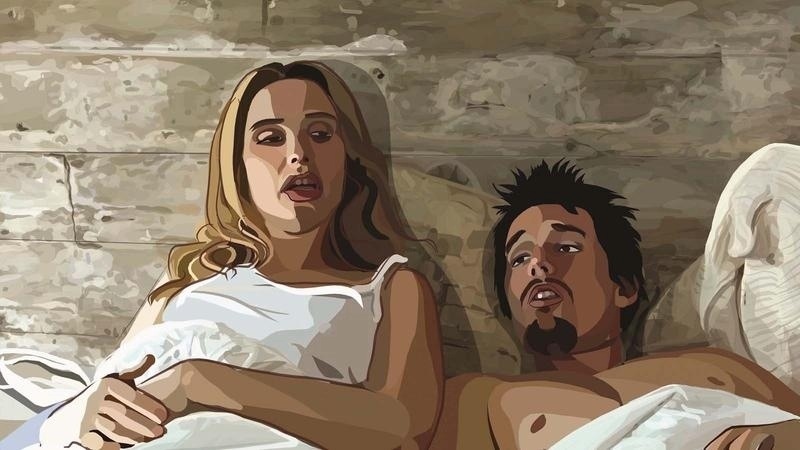
Using an animation technique called ‘rotoscoping’ – which he later used to equally excellent effect in “A Scanner Darkly” – Linklater works with a medium that allows him to fully explore his ideas and theories in capturing a perfect representation of the dream world and has crafted a highly innovative and wonderfully surreal piece of work. Throughout the journey he discusses essays by paranoid science-fiction writer and philospher Philip K. Dick to lucid dreaming and poses deeply involving existential questions. These questions are never answered fully, teasing us to get involved in the process, question ourselves and become part of the protagonists hallucinogenic, dreamlike trip.
A very intriguing and visually inventive film that isn’t afraid to wear it’s philosophical heart on it’s sleeve. Rarely are such movies delivered where they appeal to both the eye and the head. An existential treat.
Posted in Drama, thriller with tags 2010 on July 3, 2013 by Mark Walker
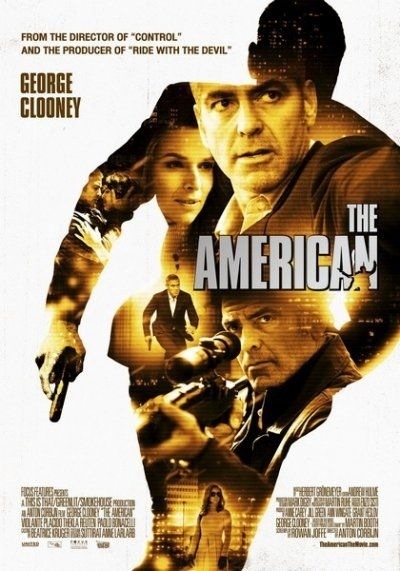
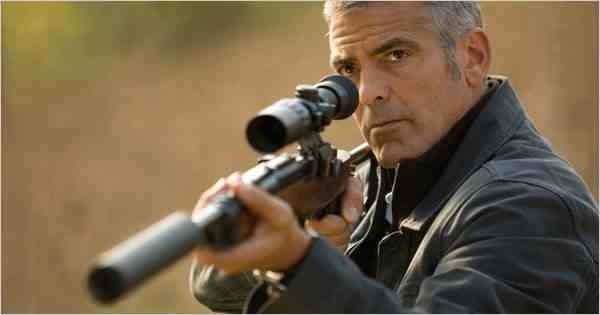
Director: Anton Corbijn. Screenplay: Rowan Joffe. Starring: George Clooney, Paolo Bonacelli, Violante Placido, Thekla Rueten, Johan Leysen, Irina Bjorkland, Filippo Timi.
He made his directorial debut with the life story of the band Joy Division’s frontman, Ian Curtis in “Control”. Now, renowned photographer Anton Corbijn shows some more control – and restraint – in his second feature, with a beautifully shot and unexpected meditative thriller.
Jack (George Clooney) is a hired assassin who goes into hiding in a small Italian village to let things settle after someone tries to assassinate him. Here he befriends a priest who he very nearly confides in and also falls in love with a local prostitute. His employer, meanwhile, sets up another job for him but all is not what it seems, and his identity is more exposed than is comfortable.
When a film opens with the Cloon-meister shooting an innocent woman in the back, you know things are going to be different. Although, not quite as different as what transpires. Done with a very slow, deliberate and meditative pace – reflective in the mood and existential angst of Clooney’s hitman – and as the title suggests, the only thing ‘American’ about this film, is this very character. Everything else is purely European; the supporting actors, the setting, the look and feel. Its almost an art-house thriller. Emphasis on the art-house (and arduous) as there are very few thrilling moments. When they do appear though, they are impressively handled by Corbijn but ultimately the very slow pace kills the action and on a couple of occasions we are treated to scenes of almost unbearable tension and then left unfulfilled as the tension dissipates, without the expected delivery. I enjoyed the simplicity of the whole thing but also found myself wondering if it was worth the time I was investing. I admire Corbijn’s attempt at going against the formula but it wasn’t entirely successful and I couldn’t help but wonder what could have been had he concentrated a little more on his obvious ability in handling suspense and jangling nerves. However, a brilliantly understated and subtly emotive performance from George Clooney, yet again, proves his versatility and holds the film together.
It doesn’t entirely excite enough for a thriller and isn’t quite as astute as a character study, but falls somewhere, awkwardly, in-between.
Posted in Drama with tags 2010 on June 20, 2013 by Mark Walker
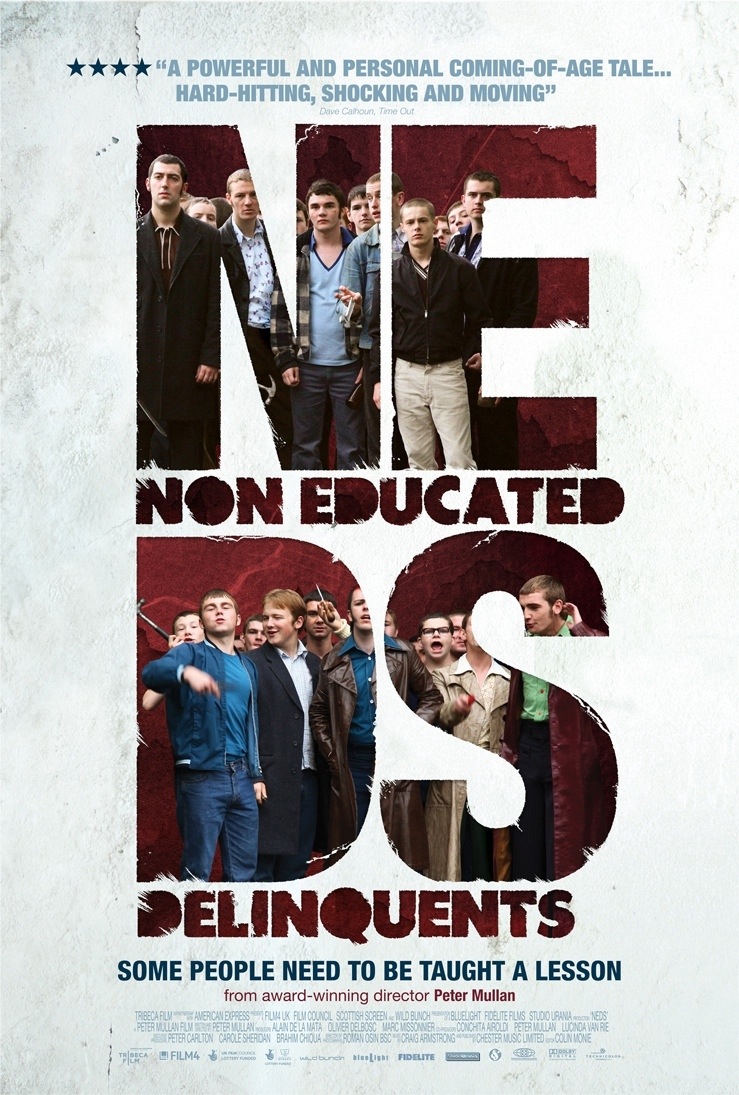
Director: Peter Mullan. Screenplay: Peter Mullan. Starring: Conor McCarron, Peter Mullan, Greg Forrest, Joe Szula, John Joe Hay, Richard Mack, Christopher Wallace, Gary Milligan, Steven Robertson, David McKay, Stephen McCole, Gary Lewis.
Following up the quality of “The Magdalene Sisters” was always going to be difficult for writer/director Peter Mullan and although he achieves a similiar hard-hitting authenticity with “Neds” and delivers an impressive retelling of youthful gang culture, he gets himself caught up in some artistic flourishes that don’t quite gel with the stark accomplishment on-screen.
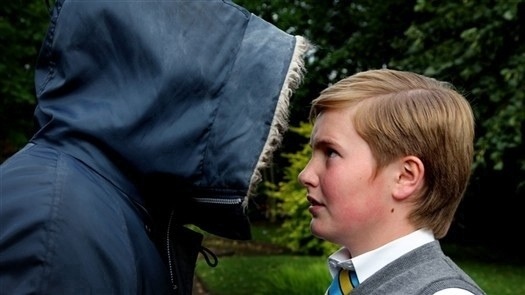
Glasgow, Scotland, 1973; the streets are filled with knife-wielding youths. Caught in the middle, is promising and aspiring teenager John McGill (Conor McCarron). He’s a bright and ambitious lad that’s held back by his alcoholic father (Peter Mullan) and the terrifying legend of his older brother (Joe Szula), who he feels the need to live up to. Peer pressure and a lack of chances in life, turn the young McGill feral. So much so, that his brooding anger surfaces to point of bloody violence, leaving him very little hope in achieving anything that he was fully capable of.
Having grown up in Glasgow, himself, Peter Mullan knows the time, the people and the city very well. This, undoubtedly, comes across in his choice of music, his eye for the style of the 70′s and his brilliant and effective use of Glasgow locations. He also assembles an impressive cast of young, unknown Scottish actors who deliver natural, colloquial, dialogue and excellent performances. Myself, being a working-class Glaswegian, could identify with these characters, their behaviour and the politics of gang culture and can confirm that this is an astute portrait of a very real problem that still exists in Glasgow today. For that reason, Mullan has to be given kudos in not only achieving such authenticity, but by delivering it so vividly.
Respected directors such as, Ken Loach and Mike Leigh, have made a name for themselves with similar ‘kitchen-sink’ dramas and Mullan’s efforts here, command a similar respect. However, despite the realism and attention to detail, Mullan makes the same mistake he did with “Orphans” and injects it with surreal moments – like visions of Christ – that don’t contribute anything positively to the story. It’s understandable why he’d make allusions to the power, manipulation and guilt that comes with a Catholic upbringing in a city like Glasgow – where there is a big religious divide – but they just seem as if they belong elsewhere. These moments are sporadic, buy they’re still jarring enough to make you believe that this is a director serving some egotistical delusion of his own artistic merit. Whereas, he could be concentrating on the very thing that he knows so well.
The film has a lot going for it in terms of it’s accurate portrayal of these times but as it draws to it’s conclusion and the unsure progression of the main character, the film ends rather ridiculously, not really knowing how to end.
Mullan’s attempt at profundity falls flat, but as a portrayal of Glasgow gang culture it’s very observant and accurate. It’s just a shame that he didn’t really know how to tie things up and delivers an ending that didn’t have the distinct aroma of desperation.
(For the record – and those that missed the poster above – NEDS is an abbreviation of ‘Non Educated Delinquents’. It’s the common term for the violent and anti-social youth in Scotland).
Posted in Drama with tags 2002 on June 20, 2013 by Mark Walker
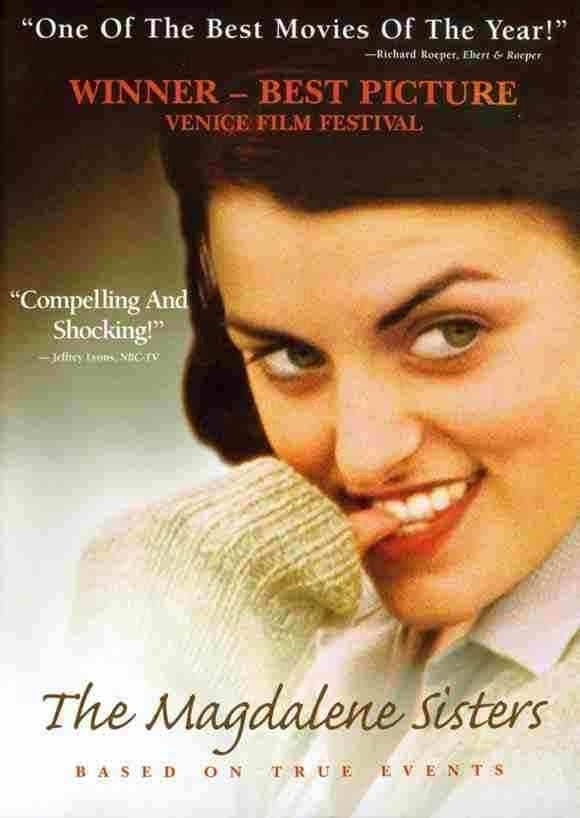
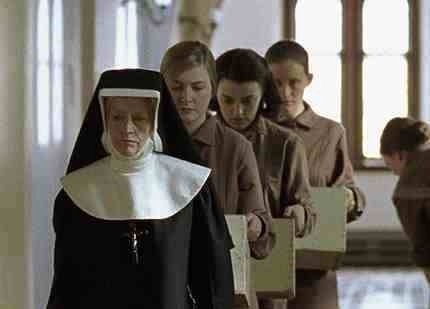
Director: Peter Mullan. Screenplay: Peter Mullan. Starring: Geraldine McEwan, Nora-Jane Noone, Anne-Marie Duff, Dorothy Duffy, Eileen Walsh, Mary Murray, Britta Smith, Frances Healy, Rebecca Walsh, Eamonn Owens, Eithne McGuinness, Phyllis McMahon, Sean Mackin, Stephen McCole, Peter Mullan.
In 1998, writer/director Peter Mullan made his feature film debut with the blackly humorous, Scottish family drama “Orphans”. Four years later, he made his second feature and decided to drop any form of humour and surrealism and delivered this hard-hitting account of the agonising and torturous true-story of the abuse that young women in Ireland faced in the name of religion.
In the 1960′s, many young women are incarcerated in a Irish convent, run by the Catholic church. Charged for committing such wrong-doing as flirting with boys, becoming pregnant out of wedlock, and being raped, they’re personal nightmares didn’t end there as they are physically and psychologically abused by the head nun and her sadistic staff, who are convinced they are doing the Lord’s work.
Having based his screenplay on actual Magdalene inmates’ experiences, Mullan achieves an authenticity of what life was like for the young women that had to endure the injustices, humiliation and brutality of these asylums and doesn’t pull any punches in his depiction of the events. At times it’s very difficult to stomach, such is the sheer power and uncompromising telling of this harrowing story and he’s aided, immeasurably, by an overwhelmingly excellent cast. As Sister Bridget, the head nun, Geraldine McEwan gives a very memorable and chilling performance that’s reminiscent of Louise Fletcher’s Nurse Ratched from “One Flew Over The Cuckoo’s Nest” in it’s absolute personification of evil and Eileen Walsh is heart-breakingly compelling as the naive, downtrodden and religiously devoted Crispina. This is an actress that I haven’t seen since but she’s thoroughly deserving of more work and her performance was worthy of so much more recognition than she recieved. Speaking of which, the entire cast and crew deserved more awards attention on it’s release. It did receive numerous nominations and awards internationally, including a British Independent Film award for Ensemble Cast and The Golden Lion at the Venice Film Festival. However, it didn’t receive much recognition across the pond and had this been directed by someone with a higher profile than Mullan and his crew, this film would have been hailed as a masterpiece. As it is, it’s had to rely on word-of-mouth to find an audience but this doesn’t lessen the effect or superb work by everyone involved here. Mullan’s direction is flawless, the cinematography by Nigel Willoughby is stark, and almost de-saturated, adding to the overall feeling of desperation and loneliness of the women and as mentioned, the performances are perfectly pitched from the largely unknown cast.
It may be hard for some to accept this behaviour went on but it’s even harder to accept that these asylums lasted until 1996, when the last one was finally shut down.
A harrowing and emotionally charged drama that while based on fact, is highly subversive. If the Vatican condemns a film on it’s release (which it did with this) then there’s no doubt that you’re in for a hard-hitting film. Painful, provocative and very important filmmaking.


















 MARKED MOVIES